
Other10 recipes
active dry yeast.
VegetarianVeganGluten-freeDairy-freeNut-freePeanut-freeSoy-freeEgg-freeShellfish-freeHoney-freeAlcohol-freeFermented
ALSO KNOWN AS
dry yeastADYbaker's yeast
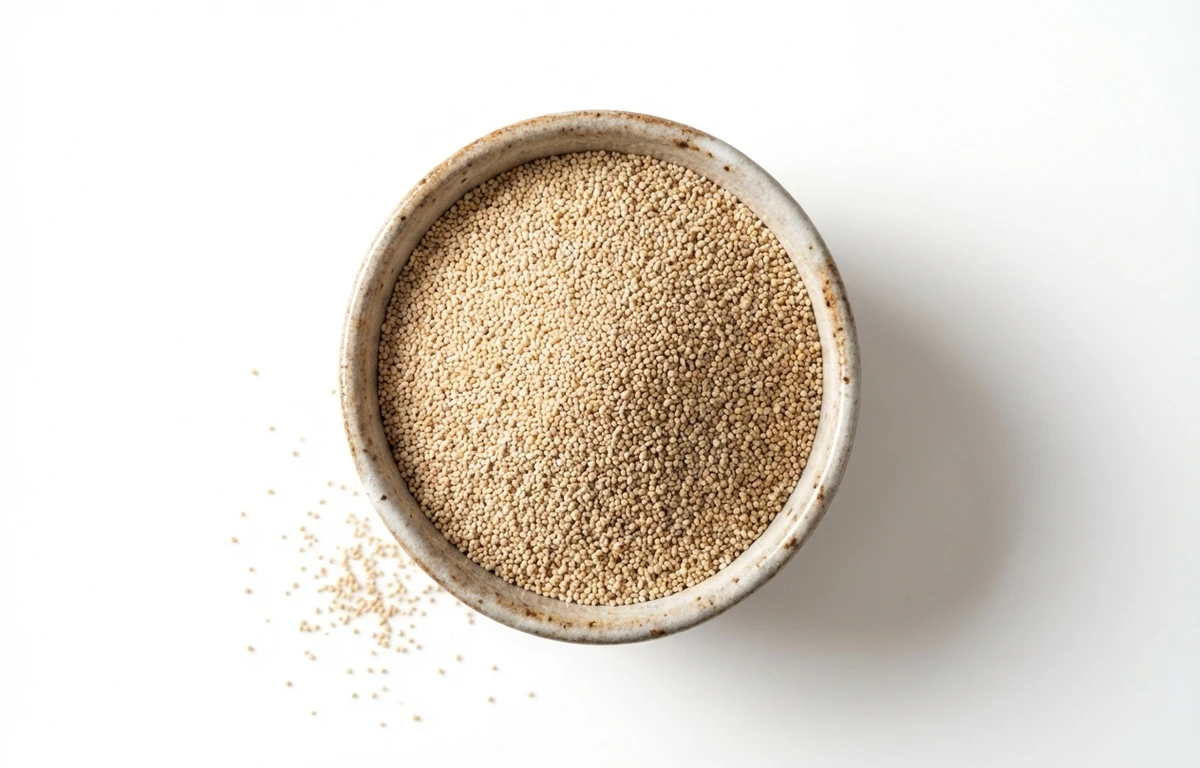
SERVING
CALORIES
325
PROTEIN
40.4g
CARBS
41.2g
FAT
7.6g
FIBER
26.9g
NUTRITION PROFILE · per 100 g
Everything in this ingredient.
MACRONUTRIENTS
Calories325kcal—
Protein40.4g81%
Carbohydrates41.2g15%
Fiber26.9g96%
Sugar0g0%
Total fat7.6g10%
Saturated fat1.3g7%
Trans fat0g—
Cholesterol0mg0%
Water5.1g—
MINERALS
Sodium51mg2%
Potassium1910mg41%
Calcium30mg2%
Iron5.0mg28%
Magnesium54mg13%
Phosphorus637mg51%
Zinc7.9mg72%
Copper0.40mg44%
Manganese0.30mg13%
Selenium35µg64%
VITAMINS
Vitamin A0µg0%
Vitamin C0.30mg0%
Vitamin D0µg0%
Vitamin E0mg0%
Vitamin K0µg0%
Thiamin (B1)2.3mg192%
Riboflavin (B2)4.0mg308%
Niacin (B3)40.2mg251%
Pantothenic acid (B5)13.5mg270%
Vitamin B61.5mg88%
Folate (B9)2340µg585%
Vitamin B120µg0%
%DV based on a 2,000 cal diet. Source: USDA FoodData Central. A dash in the %DV column means there’s no established Daily Value for that nutrient.
MEASUREMENT CONVERSIONS
How much is what.
1 cup150g
1 tablespoon9g
1 teaspoon3g
1 oz28.4g
1 lb453.6g
1 ml0.7g
1 piece7g
HEALTH BENEFITS
Why eat it.
- ✓Excellent source of B-complex vitamins
- ✓High protein content for a plant-based source
- ✓Rich in folate (Vitamin B9) for cell growth
- ✓Contains essential trace minerals like zinc and selenium
- ✓Supports healthy metabolism and energy levels
COOKING TIPS
In the kitchen.
- 1Proof in warm water (100°F-110°F) with a pinch of sugar to ensure it is active
- 2Avoid using boiling water as it will kill the yeast organisms
- 3Do not let yeast come into direct contact with salt when mixing, as salt can inhibit its growth
STORAGE
Keep it fresh.
- Store unopened packets in a cool, dry place away from heat
- Once opened, store in an airtight container in the refrigerator for up to 4 months
- Can be frozen in an airtight container for up to 6 months to extend shelf life
FAQ
Frequently asked questions.
Is active dry yeast healthy?
Active dry yeast is a nutrient-dense ingredient rich in B-vitamins like thiamin, riboflavin, and folate, which are essential for energy metabolism. It also provides minerals like selenium and zinc that support immune health. While used in small quantities, it contributes beneficial beta-glucans and complete protein to baked goods.
How much protein is in active dry yeast?
Active dry yeast is very high in protein, containing approximately 40.44g per 100g. It is a complete protein source, providing all nine essential amino acids necessary for tissue repair. However, because a standard recipe uses only a few grams, it acts as a nutritional supplement rather than a primary protein source.
Is active dry yeast vegan and gluten-free?
Yes, active dry yeast is naturally vegan and gluten-free. It is a single-celled fungus (Saccharomyces cerevisiae) and contains no animal products or grain-based proteins. Always check the packaging for 'certified gluten-free' labels if you are concerned about cross-contamination during processing.
Is active dry yeast keto-friendly?
Active dry yeast is considered keto-friendly because it is used in very small amounts. While it contains about 41g of carbs per 100g, a typical serving (one packet or 7g) contains less than 3g of carbs. Furthermore, much of the sugar and starch in the dough is consumed by the yeast during the fermentation process.
How do you activate active dry yeast?
To activate it, dissolve the yeast in warm water (between 100°F and 110°F) with a pinch of sugar. Let it sit for 5 to 10 minutes until it becomes foamy and develops a distinct yeasty aroma. If the mixture does not foam, the yeast may be dead and should not be used.
Can I substitute active dry yeast with instant yeast?
Yes, you can substitute them at a 1:1 ratio, but the method changes. Active dry yeast must be dissolved in warm liquid before use, whereas instant yeast can be mixed directly into dry ingredients. Additionally, active dry yeast may require a slightly longer rising time than instant yeast.
How should I store active dry yeast?
Unopened yeast should be stored in a cool, dry place. Once opened, store it in an airtight container in the refrigerator for up to 4 months or in the freezer for up to 6 months. Exposure to heat, air, and moisture will quickly kill the live yeast cells.
How do I know if my active dry yeast is still fresh?
You can test freshness by 'proofing' a small amount: mix 1 teaspoon of yeast with 1/2 cup warm water and a pinch of sugar. If it bubbles and doubles in volume within 10 minutes, it is fresh. If there is no reaction, the yeast is no longer active and your bread will not rise.
Can I eat active dry yeast raw?
It is not recommended to eat active dry yeast raw. Because the yeast is alive, it can continue to grow in your digestive tract, potentially causing significant bloating, gas, and stomach cramps. Always bake or cook the yeast to deactivate it before eating.
What is the difference between active dry yeast and nutritional yeast?
Active dry yeast is a living organism used to make bread rise through fermentation. Nutritional yeast is the same species but has been deactivated (killed) and toasted, resulting in a flaky powder with a cheesy, nutty flavor. They are not interchangeable; using active dry yeast as a seasoning will result in a bitter taste and digestive issues.
RECIPES
Cook with active dry yeast.
10 recipes · sorted by what’s quick



















