Protein1 recipes
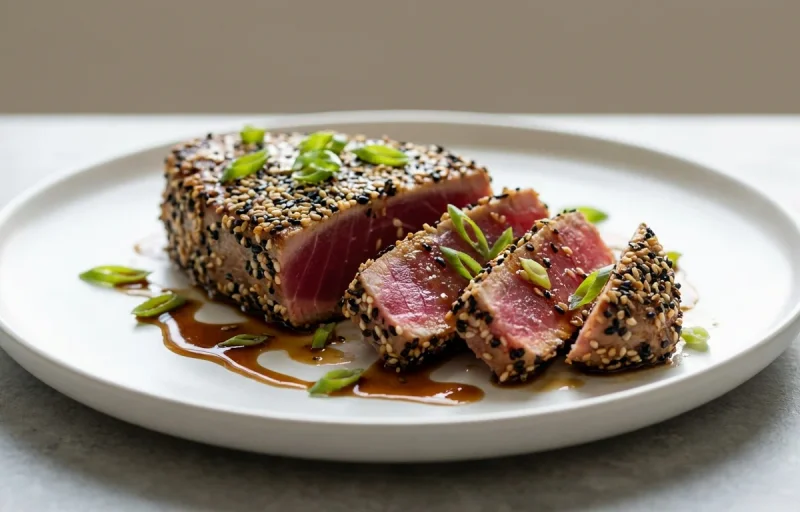
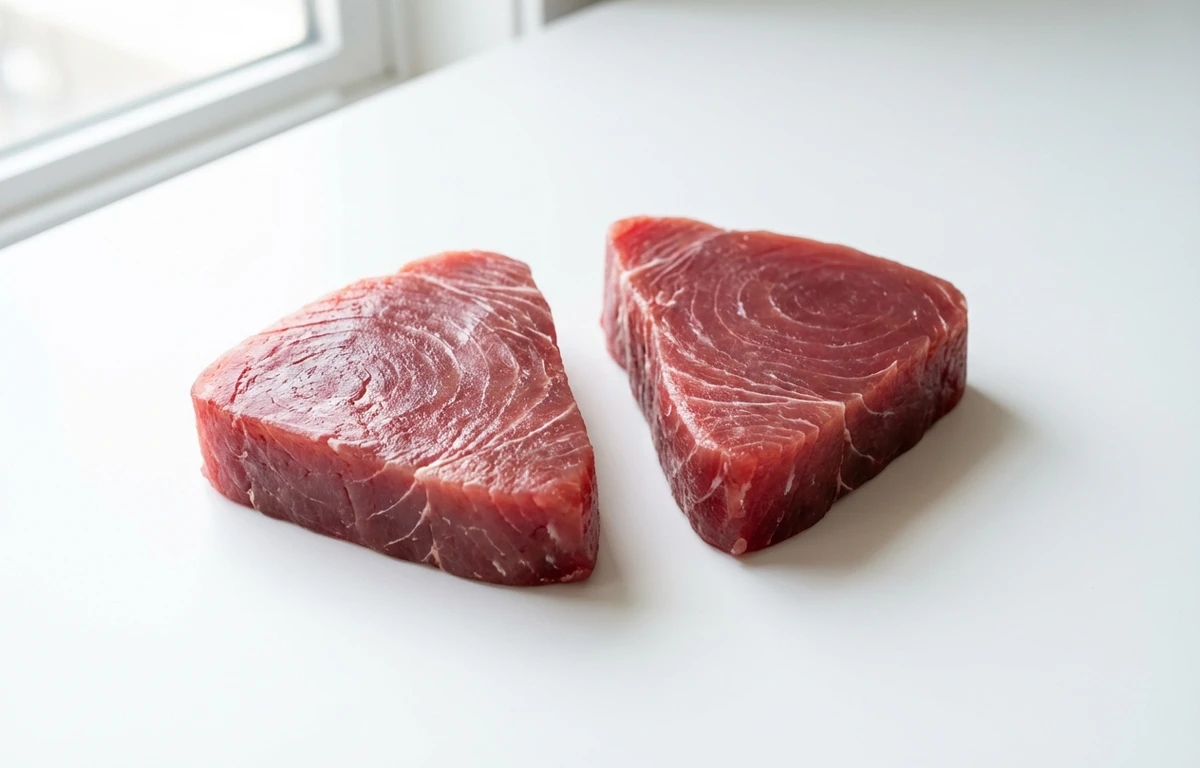
ahi tuna steaks.
VegetarianVeganGluten-freeDairy-freeNut-freePeanut-freeSoy-freeEgg-freeShellfish-freeHoney-freeAlcohol-free
ALSO KNOWN AS
raw yellowfin tuna steaks
SERVING
CALORIES
109
PROTEIN
24.4g
CARBS
0g
FAT
0.49g
FIBER
0g
NUTRITION PROFILE · per 100 g
Everything in this ingredient.
MACRONUTRIENTS
Calories109kcal—
Protein24.4g49%
Carbohydrates0g0%
Fiber0g0%
Sugar0g0%
Total fat0.49g1%
Saturated fat0.16g1%
Trans fat0g—
Cholesterol45mg15%
Water74g—
MINERALS
Sodium45mg2%
Potassium441mg9%
Calcium4.0mg0%
Iron0.77mg4%
Magnesium35mg8%
Phosphorus278mg22%
Zinc0.42mg4%
Copper0.05mg6%
Manganese0.02mg1%
Selenium36.5µg66%
VITAMINS
Vitamin A19µg2%
Vitamin C0mg0%
Vitamin D1.7µg9%
Vitamin E0.24mg2%
Vitamin K0.10µg0%
Thiamin (B1)0.12mg10%
Riboflavin (B2)0.12mg9%
Niacin (B3)18.4mg115%
Pantothenic acid (B5)0.45mg9%
Vitamin B60.93mg55%
Folate (B9)2.0µg1%
Vitamin B122.1µg90%
%DV based on a 2,000 cal diet. Source: USDA FoodData Central. A dash in the %DV column means there’s no established Daily Value for that nutrient.
MEASUREMENT CONVERSIONS
How much is what.
1 oz28.4g
1 lb453.6g
1 piece170g
HEALTH BENEFITS
Why eat it.
- ✓Excellent source of high-quality lean protein
- ✓Rich in Omega-3 fatty acids for heart health
- ✓High in Selenium which acts as a powerful antioxidant
- ✓Provides significant amounts of Vitamin B12 for nerve function
- ✓Contains Niacin which helps improve cholesterol levels
COOKING TIPS
In the kitchen.
- 1Pat the steaks completely dry before cooking to ensure a proper sear
- 2Sear over very high heat for 1-2 minutes per side to keep the center rare
- 3Avoid overcooking as tuna becomes very dry and tough when well-done
STORAGE
Keep it fresh.
- Store in the coldest part of the refrigerator for no more than 1-2 days
- Keep tightly wrapped in plastic wrap or vacuum-sealed to prevent oxidation
- If freezing, use within 3 months for optimal texture and flavor
FAQ
Frequently asked questions.
How long does raw ahi tuna last in the fridge?
Raw ahi tuna is highly perishable and should be consumed within 1 to 2 days of purchase when stored at 40°F (4°C) or below.
Can I freeze ahi tuna steaks?
Yes, you can freeze them. For best results, vacuum seal the steaks to prevent freezer burn and use them within 3 months.
How can I tell if ahi tuna has gone bad?
Spoiled tuna will have a strong 'fishy' or ammonia-like smell, a slimy texture, or visible brown/grey discoloration.
Is ahi tuna safe to eat raw?
It is safe to eat raw only if it is labeled 'sushi-grade' or 'sashimi-grade,' meaning it has been flash-frozen to kill parasites.
What is the best internal temperature for ahi tuna?
For a rare center, aim for an internal temperature of 115°F (46°C). For medium-rare, aim for 125°F (52°C).
What are good substitutes for ahi tuna steaks?
Swordfish, albacore tuna, or salmon steaks are the best substitutes due to their firm texture.
Is ahi tuna high in mercury?
Ahi (yellowfin) tuna contains moderate levels of mercury. It is generally recommended to limit consumption to 2-3 servings per week.
How should I thaw frozen ahi tuna?
Thaw it slowly in the refrigerator overnight. Do not thaw at room temperature to avoid bacterial growth.
What does 'Ahi' mean?
'Ahi' is the Hawaiian name for yellowfin tuna and bigeye tuna.
What flavors pair well with ahi tuna?
It pairs excellently with soy sauce, ginger, sesame oil, wasabi, lime, and avocado.
RECIPES
Cook with ahi tuna steaks.
1 recipes · sorted by what’s quick