
Oil
anhydrous butter oil.
VegetarianVeganGluten-freeDairy-freeNut-freePeanut-freeSoy-freeEgg-freeShellfish-freeHoney-freeAlcohol-free
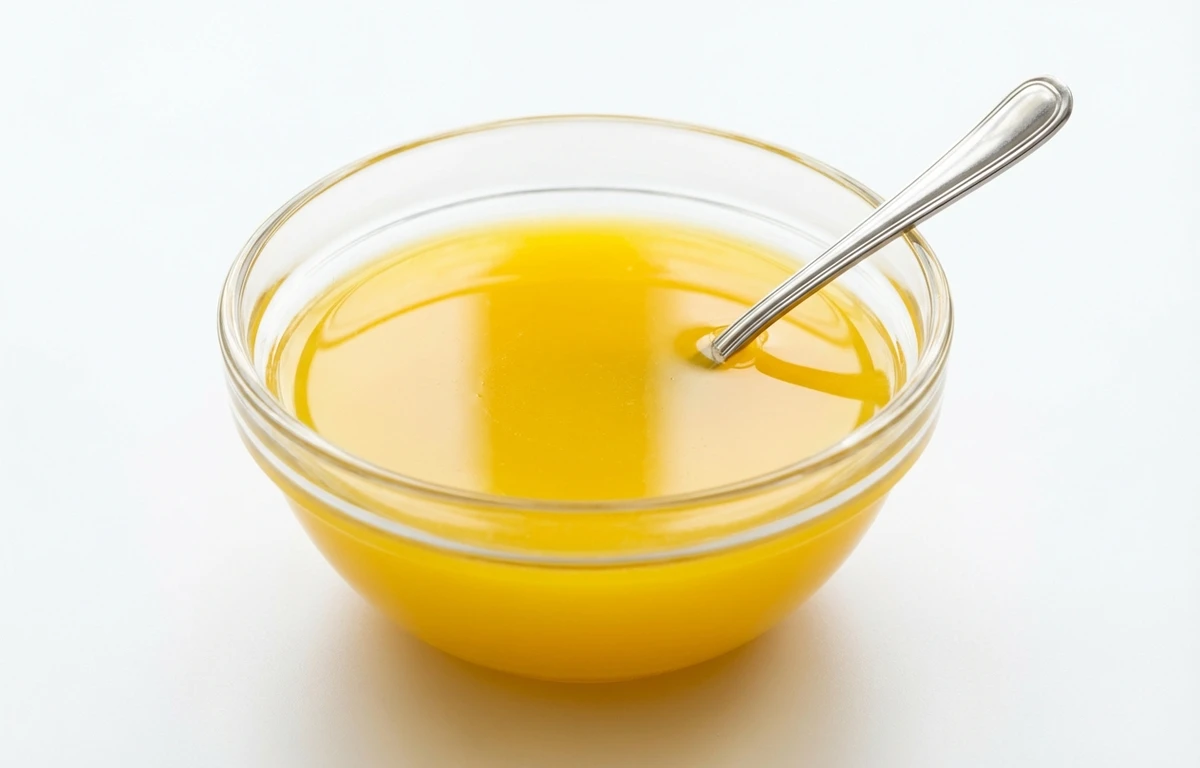
SERVING
CALORIES
876
PROTEIN
0.28g
CARBS
0g
FAT
99.5g
FIBER
0g
NUTRITION PROFILE · per 100 g
Everything in this ingredient.
MACRONUTRIENTS
Calories876kcal—
Protein0.28g1%
Carbohydrates0g0%
Fiber0g0%
Sugar0g0%
Total fat99.5g128%
Saturated fat61.9g310%
Cholesterol256mg85%
Water0.24g—
MINERALS
Sodium2.0mg0%
Potassium5.0mg0%
Calcium4.0mg0%
Iron0mg0%
Magnesium0mg0%
Phosphorus3.0mg0%
Zinc0.01mg0%
Copper0mg0%
Manganese0mg0%
Selenium0µg0%
VITAMINS
Vitamin A840µg93%
Vitamin C0mg0%
Vitamin D0µg0%
Vitamin E2.8mg19%
Vitamin K8.6µg7%
Thiamin (B1)0mg0%
Riboflavin (B2)0.01mg1%
Niacin (B3)0mg0%
Pantothenic acid (B5)0.01mg0%
Vitamin B60mg0%
Folate (B9)0µg0%
Vitamin B120.01µg0%
%DV based on a 2,000 cal diet. Source: USDA FoodData Central. A dash in the %DV column means there’s no established Daily Value for that nutrient.
MEASUREMENT CONVERSIONS
How much is what.
1 cup205g
1 tablespoon12.8g
1 teaspoon4.3g
1 ml0.9g
1 liter853.3g
HEALTH BENEFITS
Why eat it.
- ✓High smoke point (around 485°F or 252°C) makes it suitable for high-heat cooking without producing harmful compounds.
- ✓Rich source of fat-soluble vitamins such as Vitamin A, Vitamin E, and Vitamin K2.
- ✓Contains butyrate, a short-chain fatty acid that may support gut health and reduce inflammation.
- ✓Virtually lactose-free and casein-free, making it a more digestible option for some individuals with dairy sensitivities.
COOKING TIPS
In the kitchen.
- 1Use for high-heat cooking methods like searing, frying, and roasting due to its high smoke point.
- 2Ideal for baking to achieve a rich buttery flavor and a tender, flaky texture in pastries and cookies.
- 3Can be used as a direct substitute for ghee or clarified butter in Indian and Middle Eastern cuisines.
- 4Drizzle over popcorn, vegetables, or seafood as a finishing oil for enhanced flavor.
STORAGE
Keep it fresh.
- Store in an airtight container in a cool, dark place for up to 3-6 months.
- For long-term storage (up to a year), refrigerate to prevent oxidation and maintain freshness.
FAQ
Frequently asked questions.
Is anhydrous butter oil healthy?
Anhydrous butter oil is a healthy source of fat-soluble vitamins A, E, and K2, and it contains butyrate, which supports gut health. However, it is very calorie-dense (876 calories per 100g) and high in saturated fat, so it should be consumed in moderation as part of a balanced diet.
What is the difference between anhydrous butter oil and regular butter?
Regular butter contains about 16-20% water and milk solids, whereas anhydrous butter oil is processed to remove almost all moisture and non-fat components. This results in a product that is 99.8% pure milk fat with a much higher smoke point and longer shelf life.
Is anhydrous butter oil lactose-free?
It is virtually lactose-free and casein-free because the milk solids are removed during production. This makes it a much more digestible option for individuals with lactose intolerance or sensitivities to dairy proteins.
What is the smoke point of anhydrous butter oil, and why does it matter?
It has a high smoke point of approximately 485°F (252°C). This allows you to cook at high temperatures, such as searing or deep-frying, without the oil breaking down and producing harmful free radicals or acrid flavors.
Is anhydrous butter oil keto-friendly?
Yes, it is highly keto-friendly as it contains 0g of carbohydrates and is nearly 100% fat. It is an excellent source of clean energy for those following a ketogenic or low-carb lifestyle.
Is anhydrous butter oil vegan?
No, anhydrous butter oil is not vegan. Although it is stripped of most dairy solids, it is still an animal-derived product made from cow's milk fat.
How should I store anhydrous butter oil?
It should be stored in an airtight container in a cool, dark place. Because it lacks moisture and milk solids, it is shelf-stable and does not require refrigeration, though refrigerating it can further extend its freshness.
What does anhydrous butter oil taste like?
It has a rich, concentrated, and slightly nutty buttery flavor. Because the water is removed, the taste is more intense than regular butter, allowing you to use smaller amounts to achieve a deep flavor profile.
How long does anhydrous butter oil last?
When stored properly in a cool, dry place, it can last for 6 to 12 months. If kept in the refrigerator, it can remain fresh for over a year. Always check for a rancid smell or discoloration before use.
Can I substitute anhydrous butter oil for regular butter in baking?
Yes, but with adjustments. Since it lacks the water content of regular butter, you may need to add a small amount of liquid to your recipe or use about 20% less oil than the amount of butter called for to avoid an overly greasy texture.



















