vegetable
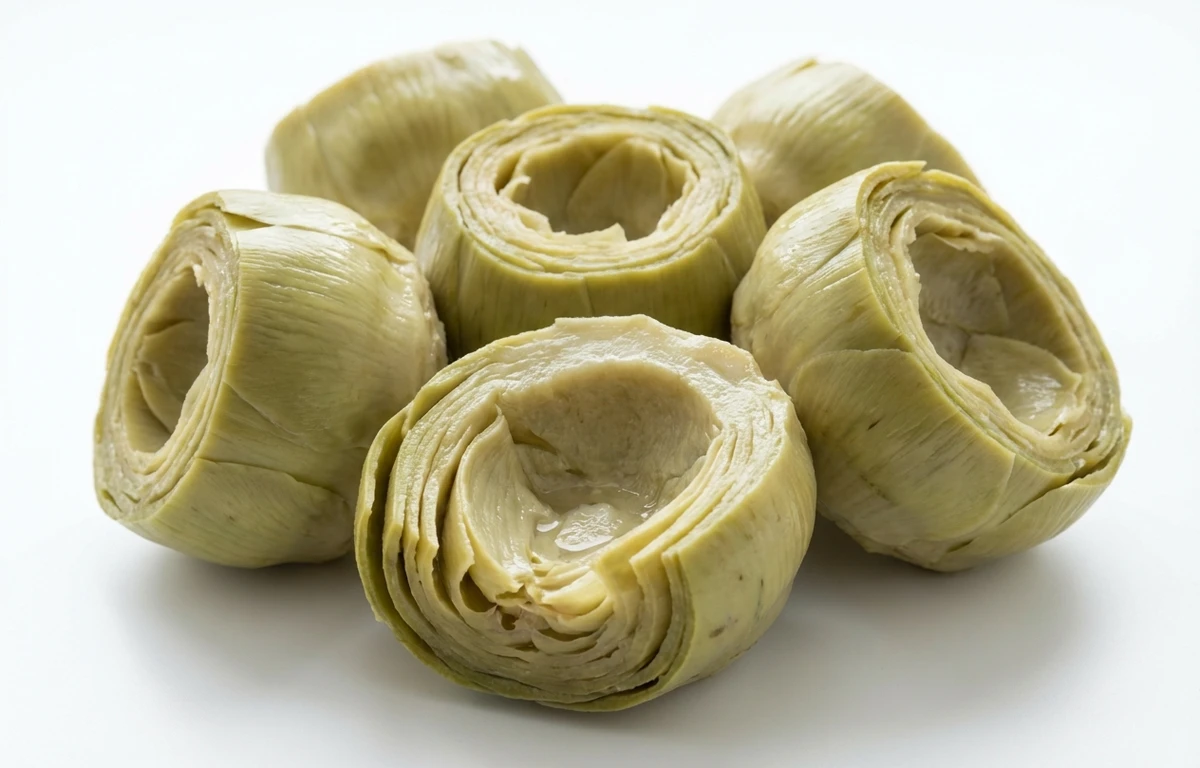
artichoke bottoms.
VegetarianVeganGluten-freeDairy-freeNut-freePeanut-freeSoy-freeEgg-freeShellfish-freeHoney-freeAlcohol-free
ALSO KNOWN AS
fonds d'artichautsartichoke baseshathi chak bottoms
SERVING
CALORIES
47
PROTEIN
3.3g
CARBS
10.5g
FAT
0.15g
FIBER
5.4g
NUTRITION PROFILE · per 100 g
Everything in this ingredient.
MACRONUTRIENTS
Calories47kcal—
Protein3.3g7%
Carbohydrates10.5g4%
Fiber5.4g19%
Sugar0.99g2%
Total fat0.15g0%
Saturated fat0.04g0%
Trans fat0g—
Cholesterol0mg0%
Water84.9g—
MINERALS
Sodium94mg4%
Potassium370mg8%
Calcium44mg3%
Iron1.3mg7%
Magnesium60mg14%
Phosphorus90mg7%
Zinc0.49mg4%
Copper0.23mg26%
Manganese0.26mg11%
Selenium0.20µg0%
VITAMINS
Vitamin A1.0µg0%
Vitamin C11.7mg13%
Vitamin D0µg0%
Vitamin E0.19mg1%
Vitamin K14.8µg12%
Thiamin (B1)0.07mg6%
Riboflavin (B2)0.07mg5%
Niacin (B3)1.1mg7%
Pantothenic acid (B5)0.34mg7%
Vitamin B60.12mg7%
Folate (B9)68µg17%
Vitamin B120µg0%
%DV based on a 2,000 cal diet. Source: USDA FoodData Central. A dash in the %DV column means there’s no established Daily Value for that nutrient.
MEASUREMENT CONVERSIONS
How much is what.
1 cup170g
1 oz28.4g
1 lb453.6g
1 piece45g
HEALTH BENEFITS
Why eat it.
- ✓High in dietary fiber which aids digestive health
- ✓Rich in antioxidants like cynarin and silymarin
- ✓Supports liver health and bile production
- ✓Low in calories and fat, making it heart-healthy
- ✓Good source of folate, essential for cell repair
COOKING TIPS
In the kitchen.
- 1Rub with lemon juice immediately after trimming to prevent browning (oxidation)
- 2Steam or braise in a mixture of olive oil, lemon, and herbs for the best texture
- 3If using canned bottoms, rinse thoroughly to remove excess sodium before cooking
STORAGE
Keep it fresh.
- Store fresh artichoke bottoms in a damp paper towel inside a plastic bag in the fridge for up to 5 days
- Once cooked, store in an airtight container for 3-4 days
- Canned or jarred bottoms should be transferred to a glass container with their brine after opening
FAQ
Frequently asked questions.
What is the difference between artichoke hearts and bottoms?
The heart includes the bottom and the tender inner leaves, while the bottom is just the fleshy, cup-shaped base of the vegetable.
How do I pick the best fresh artichokes for the bottoms?
Look for heavy, firm artichokes with tightly closed leaves that squeak when squeezed.
Can artichoke bottoms be frozen?
Yes, they can be frozen after blanching in lemon water for 3-5 minutes to preserve color and texture.
What is a good substitute for artichoke bottoms?
Artichoke hearts are the closest substitute. Hearts of palm or even thick slices of eggplant can work in some cooked recipes.
Are artichoke bottoms high in sodium?
Fresh artichoke bottoms are naturally low in sodium, but canned or jarred versions are often stored in brine and can be very high in salt.
How do you prepare a fresh artichoke to get to the bottom?
Snap off all leaves, scoop out the fuzzy 'choke' in the center, and trim the outer green skin until only the pale, fleshy base remains.
What are common ways to serve artichoke bottoms?
They are often stuffed with meat, cheese, or vegetables, added to salads, or served as a side dish braised in lemon and oil.
Are artichoke bottoms keto-friendly?
Yes, they are relatively low in net carbs (about 5g per 100g) and high in fiber, making them suitable for most keto diets in moderation.
Do artichoke bottoms contain gluten?
No, artichoke bottoms are naturally gluten-free.
RECIPES
Cook with artichoke bottoms.
0 recipes · sorted by what’s quick