
legume product3 recipes
axone paste.
VegetarianVeganGluten-freeDairy-freeNut-freePeanut-freeSoy-freeEgg-freeShellfish-freeHoney-freeAlcohol-freeFermented
ALSO KNOWN AS
akhunifermented soybean pastenaga fermented soybeanaxonemisodoenjangtaucojiangKorean soybean pasteKorean misotoenjangFermented soybeanNaga Axone
SERVING
CALORIES
173
PROTEIN
16.6g
CARBS
9.9g
FAT
9.0g
FIBER
6.0g
NUTRITION PROFILE · per 100 g
Everything in this ingredient.
MACRONUTRIENTS
Calories173kcal—
Protein16.6g33%
Carbohydrates9.9g4%
Fiber6.0g21%
Sugar1.2g2%
Total fat9.0g12%
Saturated fat1.3g7%
Trans fat0g—
Cholesterol0mg0%
Water65g—
MINERALS
Sodium15mg1%
Potassium515mg11%
Calcium102mg8%
Iron5.1mg28%
Magnesium86mg20%
Phosphorus174mg14%
Zinc1.2mg11%
Copper0.40mg44%
Manganese0.80mg35%
Selenium1.5µg3%
VITAMINS
Vitamin A1.0µg0%
Vitamin C0mg0%
Vitamin D0µg0%
Vitamin E0.80mg5%
Vitamin K25µg21%
Thiamin (B1)0.15mg13%
Riboflavin (B2)0.25mg19%
Niacin (B3)0.50mg3%
Pantothenic acid (B5)0.20mg4%
Vitamin B60.10mg6%
Folate (B9)15µg4%
Vitamin B120.10µg4%
%DV based on a 2,000 cal diet. Source: USDA FoodData Central. A dash in the %DV column means there’s no established Daily Value for that nutrient.
MEASUREMENT CONVERSIONS
How much is what.
1 cup250g
1 tablespoon15.5g
1 teaspoon5.2g
1 oz28.4g
1 lb453.6g
1 ml1.1g
1 liter1050g
HEALTH BENEFITS
Why eat it.
- ✓Rich source of plant-based protein
- ✓Contains probiotics from fermentation for gut health
- ✓High in essential minerals like iron and calcium
- ✓Good source of Vitamin K2
- ✓Supports heart health through soy isoflavones
COOKING TIPS
In the kitchen.
- 1Sauté with chilies and tomatoes to balance the pungent flavor
- 2Commonly used as a base for chutneys or added to smoked meat stews
- 3A little goes a long way; start with small amounts due to its potency
STORAGE
Keep it fresh.
- Store in an airtight container to contain the strong aroma
- Refrigerate for up to 6 months to maintain freshness
- Can be frozen for longer storage without losing flavor
FAQ
Frequently asked questions.
What is axone paste?
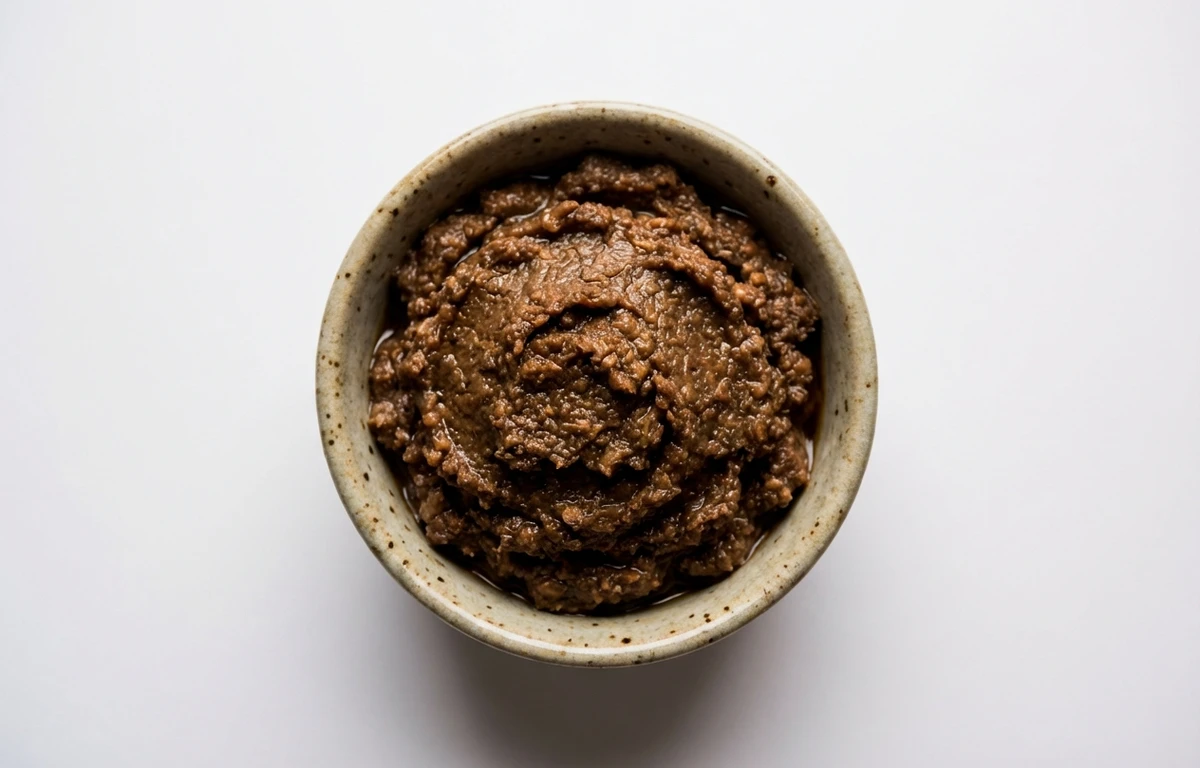
Axone (or akhuni) is a popular Naga ingredient made from fermented soybeans, known for its distinct pungent aroma and deep umami flavor.
How long does axone paste last?
When stored in an airtight container in the refrigerator, it can last for 6 months or more. Its flavor intensifies over time.
Why does axone have such a strong smell?
The strong, pungent smell is a natural result of the alkaline fermentation process of the soybeans.
Is axone paste vegan?
Yes, traditional axone paste is made entirely from soybeans and is 100% vegan and vegetarian.
What can I use as a substitute for axone?
Japanese Miso or Korean Doenjang are the closest substitutes, though they are milder and less pungent than axone.
How do you use axone in cooking?
It is typically used in small quantities to flavor stews, especially with smoked pork or beef, or mashed into spicy chutneys.
Does axone contain gluten?
Pure axone paste is naturally gluten-free as it is made from soybeans, but always check labels for commercial additives.
Is axone healthy?
Yes, it is high in protein and the fermentation process makes it rich in probiotics which are beneficial for digestion.
Can axone be eaten raw?
While it is fermented and technically safe, it is almost always cooked or incorporated into chutneys to mellow its intense flavor.
RECIPES
Cook with axone paste.
3 recipes · sorted by what’s quick
SAME CATEGORY



















