
Vegetable1 recipes
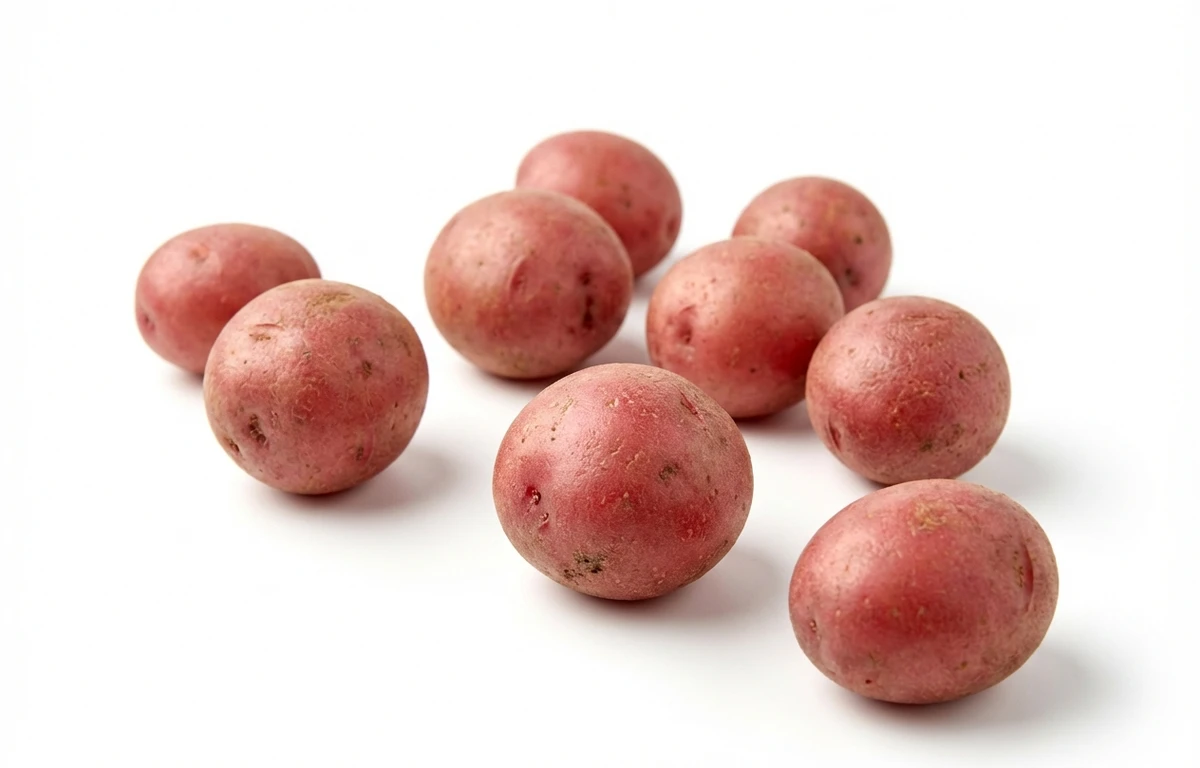
baby red potatoes.
VegetarianVeganGluten-freeDairy-freeNut-freePeanut-freeSoy-freeEgg-freeShellfish-freeHoney-freeAlcohol-free
ALSO KNOWN AS
new potatoesred-skinned potatoesboiling potatoesred potatoesfingerling potatoesFrench fingerling potatoesWaxy Potatoessmall red potatoesearly potatoesbaby red potatoesnew red potatoescreamer red potatoeschote lal aloolal aloored bliss potatoes
SERVING
CALORIES
77
PROTEIN
2.0g
CARBS
17.5g
FAT
0.09g
FIBER
2.1g
NUTRITION PROFILE · per 100 g
Everything in this ingredient.
MACRONUTRIENTS
Calories77kcal—
Protein2.0g4%
Carbohydrates17.5g6%
Fiber2.1g8%
Sugar0.82g2%
Total fat0.09g0%
Saturated fat0.02g0%
Cholesterol0mg0%
Water79.3g—
MINERALS
Sodium6.0mg0%
Potassium421mg9%
Calcium12mg1%
Iron0.73mg4%
Magnesium22mg5%
Phosphorus58mg5%
Zinc0.29mg3%
Copper0.08mg9%
Manganese0.14mg6%
Selenium0.30µg1%
VITAMINS
Vitamin A0µg0%
Vitamin C19.7mg22%
Vitamin D0µg0%
Vitamin E0.01mg0%
Vitamin K1.9µg2%
Thiamin (B1)0.08mg7%
Riboflavin (B2)0.03mg2%
Niacin (B3)1.1mg7%
Pantothenic acid (B5)0.30mg6%
Vitamin B60.29mg17%
Folate (B9)20µg5%
Vitamin B120µg0%
%DV based on a 2,000 cal diet. Source: USDA FoodData Central. A dash in the %DV column means there’s no established Daily Value for that nutrient.
MEASUREMENT CONVERSIONS
How much is what.
1 cup150g
1 tablespoon9.4g
1 teaspoon3.1g
1 ml0.6g
1 liter625g
1 piece60g
HEALTH BENEFITS
Why eat it.
- ✓Rich in potassium, which is crucial for blood pressure regulation and heart health.
- ✓The skin is a good source of dietary fiber, aiding digestion and promoting satiety.
- ✓Contains antioxidants, particularly in the skin, such as anthocyanins, which help combat oxidative stress.
- ✓Provides a good source of Vitamin C, an essential nutrient for immune function and skin health.
COOKING TIPS
In the kitchen.
- 1Their waxy texture and thin skin make them ideal for roasting, boiling, or adding to salads, as they hold their shape well after cooking.
- 2For roasting, toss with olive oil, herbs (like rosemary and thyme), salt, and pepper, and cook at 400°F (200°C) until tender and crispy.
- 3No need to peel; the skin is thin, nutritious, and adds color and texture to dishes. Just scrub them well before cooking.
STORAGE
Keep it fresh.
- Store in a cool, dark, and well-ventilated place, such as a pantry or cellar, ideally between 45-50°F (7-10°C).
- Avoid storing in the refrigerator, as the cold can convert starches to sugar, affecting taste and texture. Keep them away from onions to prevent premature sprouting.
FAQ
Frequently asked questions.
Are baby red potatoes healthy?
Yes, baby red potatoes are highly nutritious. They are an excellent source of potassium for heart health, Vitamin C for immune support, and antioxidants like anthocyanins found in their red skins.
How many calories and carbs are in baby red potatoes?
A 100g serving of baby red potatoes contains approximately 77 calories and 17.47g of carbohydrates. They are a low-fat food, providing only 0.09g of fat and about 2.05g of protein per serving.
Are baby red potatoes good for weight loss?
When prepared by roasting or boiling without heavy fats, they can support weight loss. Their dietary fiber content promotes satiety, helping you feel full longer, while their moderate calorie density makes them a better choice than refined starches.
Are baby red potatoes keto-friendly?
No, baby red potatoes are not considered keto-friendly. With over 17g of carbohydrates per 100g, they are too high in starch for a standard ketogenic diet, which typically restricts daily net carbs to under 50g.
Are baby red potatoes gluten-free and vegan?
Yes, baby red potatoes are naturally gluten-free and vegan. They are a whole, unprocessed vegetable, making them safe for individuals with celiac disease or those following a plant-based lifestyle.
Do I need to peel baby red potatoes before cooking?
No, you should leave the skin on. The skin of baby red potatoes is very thin and contains the majority of the vegetable's fiber and health-boosting antioxidants.
What is the best way to cook baby red potatoes?
They are best suited for roasting, boiling, or steaming because they hold their shape well. A popular method is to toss them in olive oil and herbs and roast them at 400°F (200°C) until the skins are crispy and the centers are tender.
How should I store baby red potatoes and how long do they last?
Store them in a cool, dark, and dry place like a pantry or cellar; do not refrigerate them as the cold turns their starch into sugar. When stored properly in a breathable bag, they can last for 2 to 3 weeks.
How can I tell if baby red potatoes have gone bad?
Check for soft or mushy spots, shriveled skin, or a foul odor. If the potatoes have turned green or have significant sprouts, they should be discarded as they may contain solanine, a natural toxin.
Can I eat baby red potatoes raw?
It is not recommended to eat them raw. Raw potatoes contain resistant starches that are difficult for the human digestive system to process, which can lead to bloating and gas; cooking makes the nutrients more bioavailable.
RECIPES
Cook with baby red potatoes.
1 recipes · sorted by what’s quick



















