
Protein2 recipes
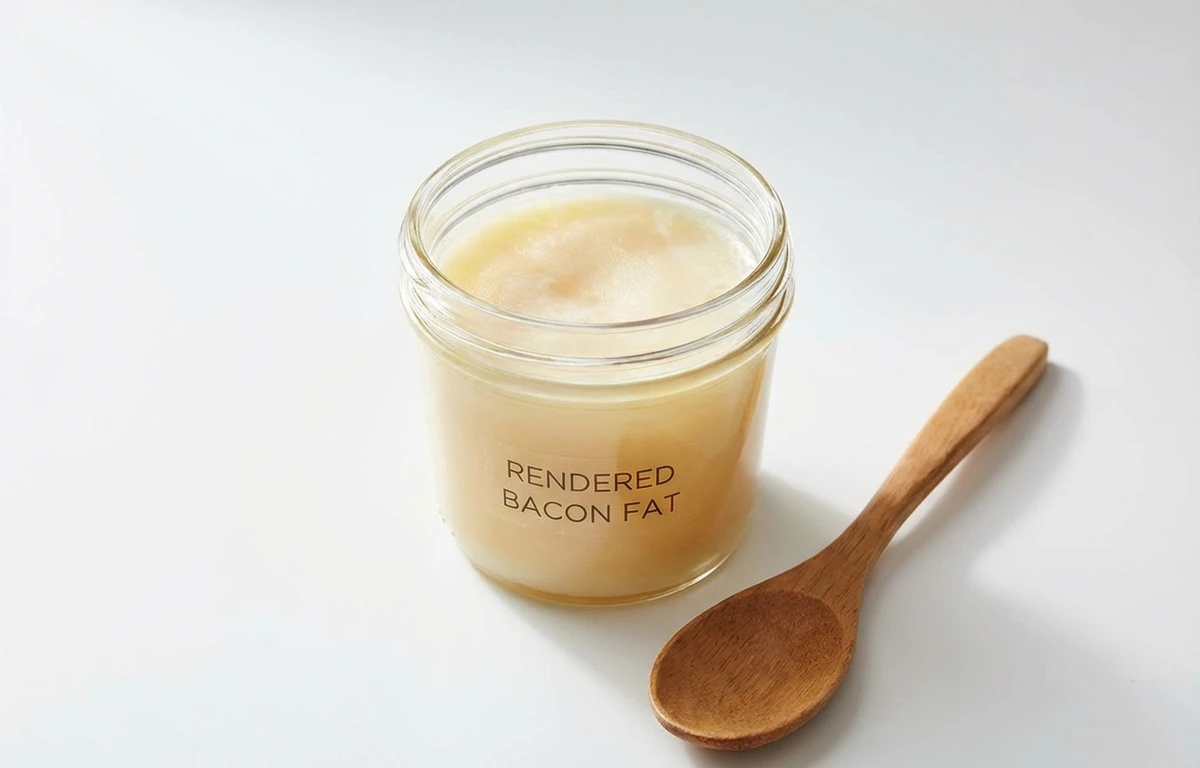
bacon fat.
VegetarianVeganGluten-freeDairy-freeNut-freePeanut-freeSoy-freeEgg-freeShellfish-freeHoney-freeAlcohol-freeHalalKosher
ALSO KNOWN AS
bacon drippingsrendered bacon fatbacon fatbacon grease
SERVING
CALORIES
897
PROTEIN
0g
CARBS
0g
FAT
99.5g
FIBER
0g
NUTRITION PROFILE · per 100 g
Everything in this ingredient.
MACRONUTRIENTS
Calories897kcal—
Protein0g0%
Carbohydrates0g0%
Fiber0g0%
Sugar0g0%
Total fat99.5g128%
Saturated fat39g195%
Cholesterol95mg32%
Water0.05g—
MINERALS
Sodium150mg7%
Potassium0mg0%
Calcium0mg0%
Iron0mg0%
Magnesium0mg0%
Phosphorus0mg0%
Zinc0.11mg1%
Copper0mg0%
Selenium0µg0%
VITAMINS
Vitamin A0µg0%
Vitamin C0mg0%
Vitamin D2.5µg13%
Vitamin E0.60mg4%
Vitamin K0µg0%
Thiamin (B1)0mg0%
Riboflavin (B2)0mg0%
Niacin (B3)0mg0%
Pantothenic acid (B5)0mg0%
Vitamin B60mg0%
Folate (B9)0µg0%
Vitamin B120µg0%
%DV based on a 2,000 cal diet. Source: USDA FoodData Central. A dash in the %DV column means there’s no established Daily Value for that nutrient.
MEASUREMENT CONVERSIONS
How much is what.
1 cup224g
1 tablespoon12.9g
1 teaspoon4.3g
1 ml0.9g
1 liter860g
HEALTH BENEFITS
Why eat it.
- ✓Provides a rich, savory flavor, allowing for reduced use of salt or other sodium-heavy seasonings.
- ✓Contains monounsaturated fats, primarily oleic acid, which is also found in olive oil.
- ✓A source of choline, an essential nutrient important for brain health, liver function, and metabolism.
- ✓Can be used as a natural, whole-food alternative to highly processed cooking fats like margarine or shortening.
COOKING TIPS
In the kitchen.
- 1Use as a cooking medium for frying eggs, potatoes, or sautéing vegetables like Brussels sprouts, cabbage, or green beans for a smoky flavor.
- 2Substitute for butter or shortening in savory baked goods like cornbread or biscuits to create a tender texture and rich taste.
- 3Whisk into warm vinaigrettes for salads, especially those with spinach or bitter greens, to add depth and a savory note.
- 4Add a spoonful to soups, stews, or bean dishes to enhance umami and add a silky mouthfeel.
STORAGE
Keep it fresh.
- Strain the rendered fat through a fine-mesh sieve or cheesecloth to remove solid bits, which can cause it to spoil faster.
- Store in a sealed, airtight container (like a glass jar) in the refrigerator for up to 3 months, or in the freezer for up to one year.
FAQ
Frequently asked questions.
Is bacon fat healthy?
Bacon fat contains beneficial monounsaturated fats like oleic acid and the essential nutrient choline, which supports brain and liver health. However, it is extremely calorie-dense and high in saturated fat, so it should be consumed in moderation as part of a balanced diet.
How many calories and fat are in bacon fat?
Bacon fat is nearly 100% fat, providing approximately 897 calories and 99.5g of fat per 100g. It contains no carbohydrates or protein, making it a pure energy source.
Is bacon fat keto-friendly?
Yes, bacon fat is excellent for a ketogenic or low-carb diet. Since it contains zero carbohydrates and is high in fat, it helps individuals meet their daily fat macros while adding significant flavor to meals.
Is bacon fat vegan or vegetarian?
No, bacon fat is an animal-derived product rendered from pork. It is not suitable for vegans or vegetarians, though it is a natural, whole-food alternative to processed fats like margarine.
What is the smoke point of bacon fat?
The smoke point of bacon fat is approximately 325°F (163°C). This makes it ideal for medium-heat cooking, such as sautéing vegetables or frying eggs, but it is not recommended for high-heat deep frying.
How do you store bacon fat and how long does it last?
Store bacon fat in a sealed glass jar in the refrigerator, where it will stay fresh for up to 6 months. For longer storage, it can be frozen for up to a year; always check for a rancid smell before use.
What are the best ways to use bacon fat in cooking?
Bacon fat is perfect for pan-searing meats, roasting potatoes, or greasing a skillet for cornbread. Its rich, smoky flavor often allows you to reduce the amount of additional salt or seasoning needed in a dish.
How do you properly strain bacon fat?
To ensure a long shelf life, pour warm (not hot) liquid fat through a fine-mesh sieve or cheesecloth into a clean container. Removing leftover meat particles prevents the fat from spoiling or developing off-flavors.
Can I substitute bacon fat for butter or oil?
Yes, bacon fat can be used as a 1:1 substitute for butter, shortening, or oil in savory recipes. It works particularly well in biscuits, pie crusts, and sautéed dishes where a smoky undertone is desired.
Does bacon fat contain any vitamins or minerals?
While primarily a lipid, bacon fat contains choline, an essential nutrient for metabolism and brain function. It also provides oleic acid, a monounsaturated fatty acid similar to those found in olive oil.
RECIPES
Cook with bacon fat.
2 recipes · sorted by what’s quick



















