
Vegetable
baked unsalted potato.
VegetarianVeganGluten-freeDairy-freeNut-freePeanut-freeSoy-freeEgg-freeShellfish-freeHoney-freeAlcohol-free
ALSO KNOWN AS
baked aloooven-roasted potato
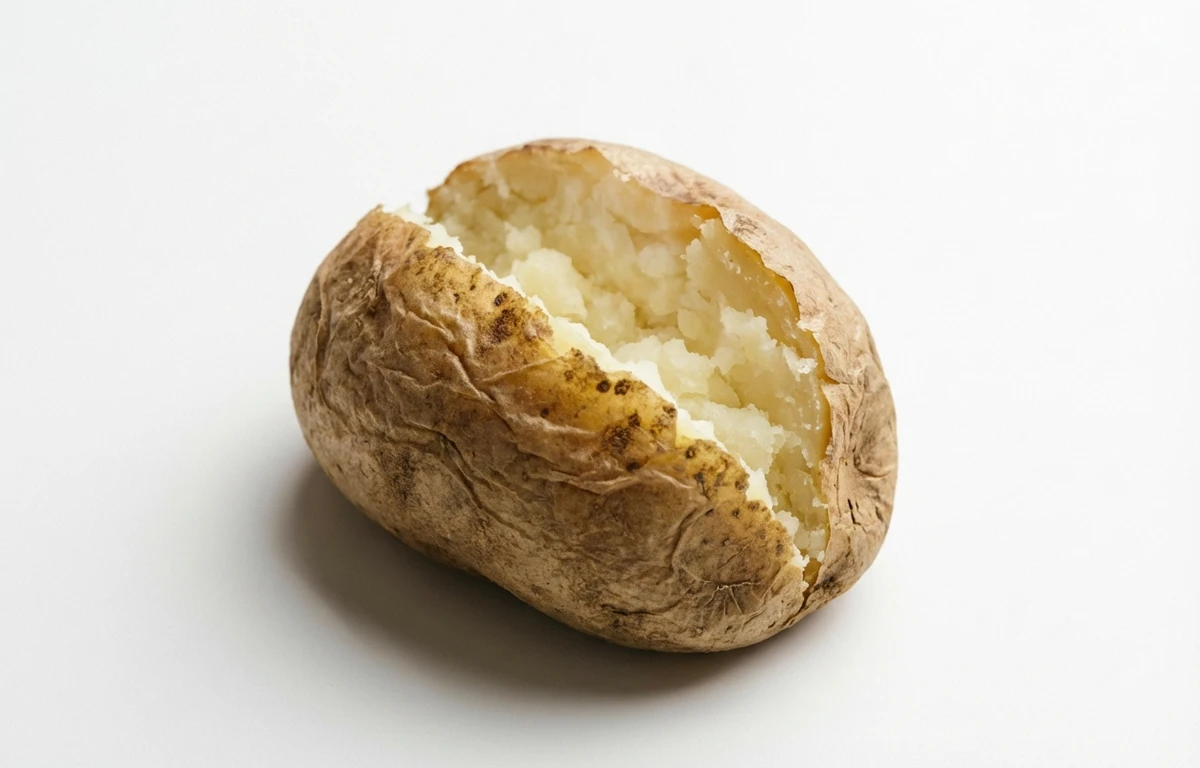
SERVING
CALORIES
93
PROTEIN
2.5g
CARBS
21.1g
FAT
0.10g
FIBER
2.2g
NUTRITION PROFILE · per 100 g
Everything in this ingredient.
MACRONUTRIENTS
Calories93kcal—
Protein2.5g5%
Carbohydrates21.1g8%
Fiber2.2g8%
Sugar1.2g2%
Total fat0.10g0%
Saturated fat0.03g0%
Trans fat0g—
Cholesterol0mg0%
Water75g—
MINERALS
Sodium5.0mg0%
Potassium535mg11%
Calcium10mg1%
Iron1.1mg6%
Magnesium28mg7%
Phosphorus70mg6%
Zinc0.35mg3%
Copper0.11mg12%
Manganese0.15mg7%
Selenium0.40µg1%
VITAMINS
Vitamin A0µg0%
Vitamin C9.6mg11%
Vitamin D0µg0%
Vitamin E0.01mg0%
Vitamin K2.0µg2%
Thiamin (B1)0.11mg9%
Riboflavin (B2)0.05mg4%
Niacin (B3)1.4mg9%
Pantothenic acid (B5)0.50mg10%
Vitamin B60.30mg18%
Folate (B9)28µg7%
Vitamin B120µg0%
%DV based on a 2,000 cal diet. Source: USDA FoodData Central. A dash in the %DV column means there’s no established Daily Value for that nutrient.
MEASUREMENT CONVERSIONS
How much is what.
1 cup210g
1 oz28.4g
1 lb453.6g
1 piece173g
HEALTH BENEFITS
Why eat it.
- ✓Excellent source of potassium for heart health
- ✓Provides complex carbohydrates for sustained energy
- ✓Contains Vitamin C which supports immune function
- ✓High in Vitamin B6 for brain health and metabolism
- ✓Dietary fiber in the skin aids digestion
COOKING TIPS
In the kitchen.
- 1Prick the skin with a fork before baking to allow steam to escape
- 2Bake at 400°F (200°C) for approximately 45-60 minutes for a fluffy interior
- 3Leave the skin on to retain the majority of the fiber and mineral content
STORAGE
Keep it fresh.
- Store in an airtight container in the refrigerator for 3-5 days
- Avoid freezing whole baked potatoes as the texture becomes grainy
- Reheat in the oven or air fryer to maintain skin texture
FAQ
Frequently asked questions.
How long do baked potatoes last in the fridge?
Baked potatoes can be safely stored in the refrigerator for 3 to 5 days when kept in an airtight container.
What is the best potato variety for baking?
Russet potatoes are generally considered the best for baking due to their high starch content, which results in a light, fluffy texture.
Can I eat the skin of a baked potato?
Yes, the skin is highly nutritious and contains most of the potato's fiber and a significant portion of its vitamins and minerals.
Is a baked potato healthy?
Yes, a plain baked potato is a nutrient-dense, low-fat food high in potassium and Vitamin C. Health concerns usually arise from high-calorie toppings like butter or sour cream.
How do I reheat a baked potato without it getting soggy?
Reheating in an oven or air fryer at 350°F (175°C) until hot is the best way to maintain a crisp skin and fluffy interior.
Can I freeze baked potatoes?
While you can freeze them, the texture often becomes watery or grainy upon thawing. If you must freeze them, it is better to mash them first.
What can I use as a healthy substitute for butter on a baked potato?
Greek yogurt, salsa, hummus, or a squeeze of lemon with fresh herbs are excellent low-fat, nutrient-rich alternatives.
Do I need to wrap potatoes in foil to bake them?
Wrapping in foil steams the potato, resulting in a soft skin. For a classic crispy baked potato skin, bake them uncovered directly on the oven rack or a baking sheet.



















