Other10 recipes
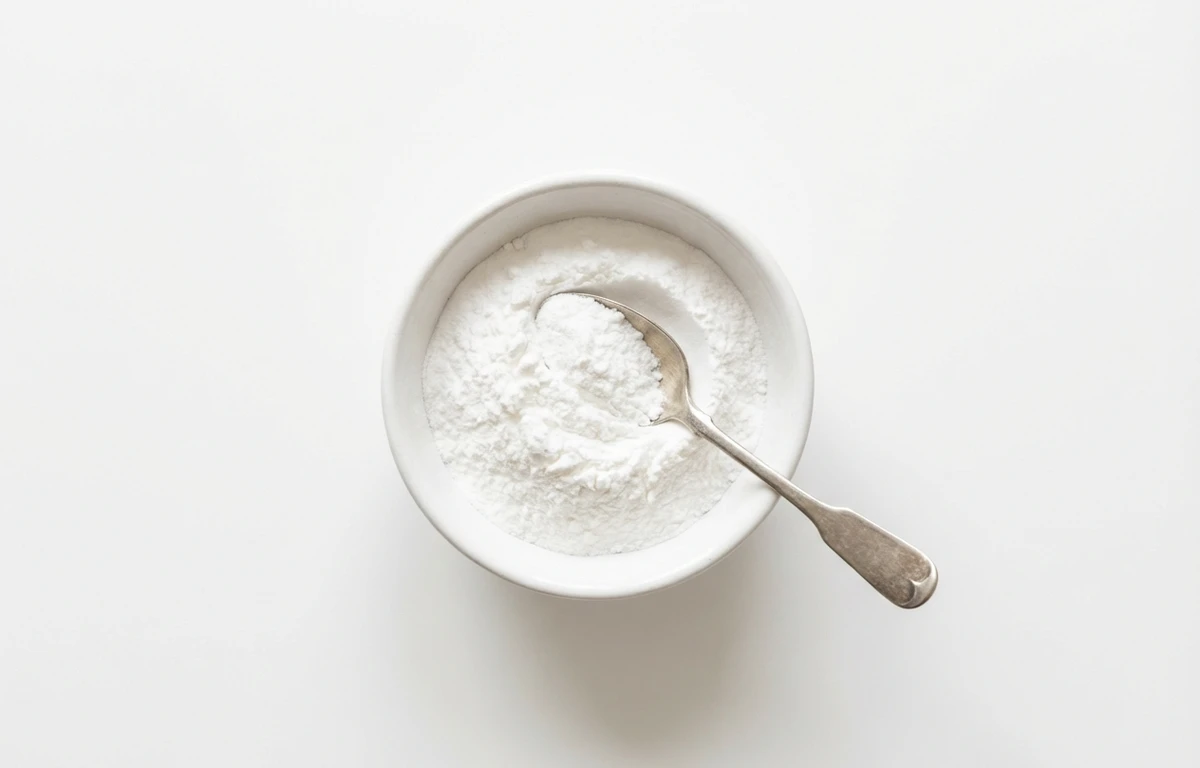
baking powder.
VegetarianVeganGluten-freeDairy-freeNut-freePeanut-freeSoy-freeEgg-freeShellfish-freeHoney-freeAlcohol-free
SERVING
CALORIES
53
PROTEIN
0g
CARBS
27.7g
FAT
0g
FIBER
0g
This ingredient is flagged as naturally gluten-free. Per 100 g, it provides 0 µg of vitamin K.
NUTRITION PROFILE · per 100 g
Everything in this ingredient.
MACRONUTRIENTS
Calories53kcal—
Protein0g0%
Carbohydrates27.7g10%
Fiber0g0%
Sugar0g0%
Total fat0g0%
Saturated fat0g0%
Trans fat0g—
Cholesterol0mg0%
Water5.0g—
MINERALS
Sodium10600mg461%
Potassium20mg0%
Calcium5876mg452%
Iron11mg61%
Magnesium15mg4%
Phosphorus1550mg124%
Zinc0.10mg1%
Copper0.02mg2%
Manganese0.10mg4%
Selenium0.50µg1%
VITAMINS
Vitamin A0µg0%
Vitamin C0mg0%
Vitamin D0µg0%
Vitamin E0mg0%
Vitamin K0µg0%
Thiamin (B1)0mg0%
Riboflavin (B2)0mg0%
Niacin (B3)0mg0%
Pantothenic acid (B5)0mg0%
Vitamin B60mg0%
Folate (B9)0µg0%
Vitamin B120µg0%
%DV based on a 2,000 cal diet. Source: USDA FoodData Central. A dash in the %DV column means there’s no established Daily Value for that nutrient.
MEASUREMENT CONVERSIONS
How much is what.
1 cup192g
1 tablespoon13.8g
1 teaspoon4.6g
1 oz28.4g
1 lb453.6g
1 ml0.9g
HEALTH BENEFITS
Why eat it.
- ✓Provides significant dietary calcium
- ✓Essential leavening agent for texture in baked goods
- ✓Gluten-free alternative to yeast for rising
COOKING TIPS
In the kitchen.
- 1Sift with flour to ensure even distribution in batter
- 2Do not overmix batter after adding to preserve air bubbles
- 3Bake immediately after mixing with wet ingredients
STORAGE
Keep it fresh.
- Store in a cool, dry place away from moisture
- Keep the container tightly sealed to prevent clumping
- Check potency by dropping a teaspoon into hot water
FAQ
Frequently asked questions.
How long does baking powder last?
It typically lasts 6 to 12 months. Always check the expiration date as it loses its leavening power over time.
How can I test if my baking powder is still active?
Mix half a teaspoon of baking powder with a splash of hot water. If it bubbles vigorously, it is still active.
What is a good substitute for baking powder?
Mix 1/4 teaspoon baking soda with 1/2 teaspoon cream of tartar to replace 1 teaspoon of baking powder.
Is baking powder gluten-free?
Most commercial baking powders use cornstarch as a buffer and are gluten-free, but always check the label for wheat starch.
What is the difference between baking powder and baking soda?
Baking powder contains both an acid and a base, while baking soda is just a base and requires an added acid to react.
Can I use baking powder instead of yeast?
Yes, in 'quick breads' like biscuits or soda bread, but it will not provide the same flavor or elasticity as yeast in traditional breads.
Why did my cake fail to rise?
This is often due to expired baking powder or over-mixing the batter, which causes the gas bubbles to escape.
Does baking powder contain aluminum?
Some brands use sodium aluminum sulfate. If you want to avoid a metallic taste, look for 'aluminum-free' labels.
Is baking powder high in sodium?
Yes, it is very high in sodium. Those on low-sodium diets should use it sparingly or look for low-sodium alternatives.
RECIPES
Cook with baking powder.
10 recipes · sorted by what’s quick