
Vegetable
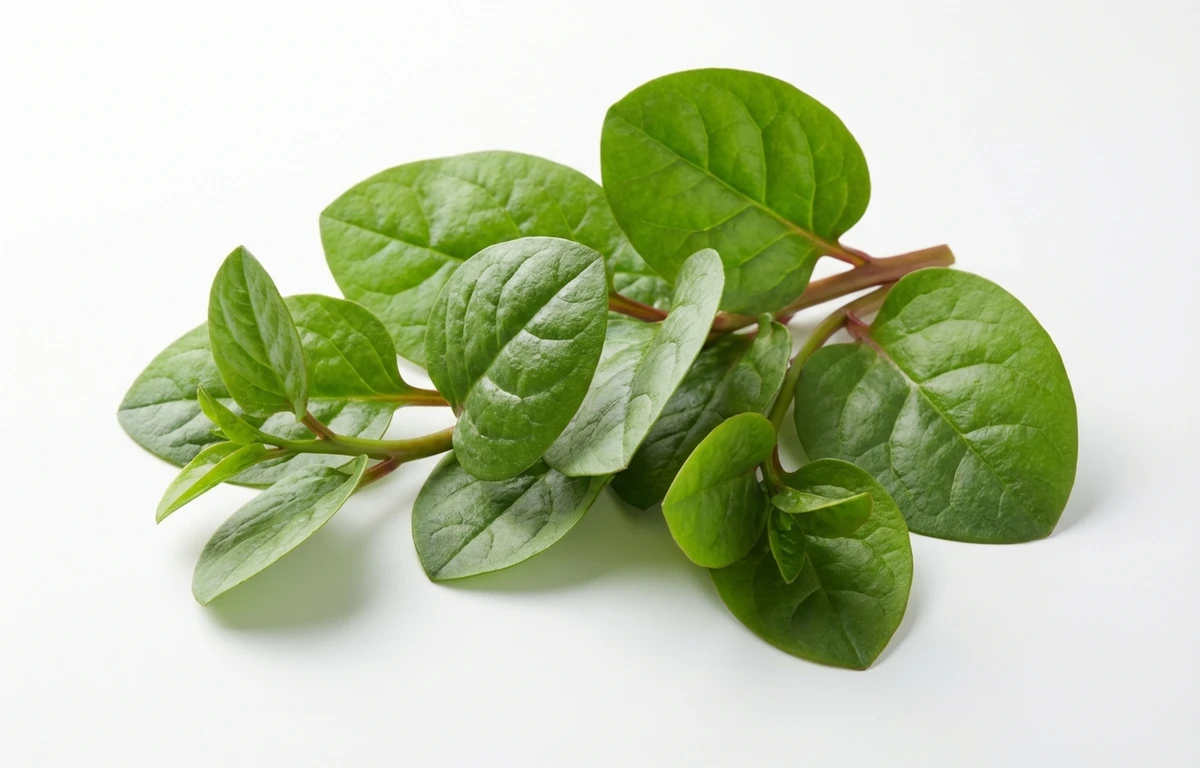
basella leaves.
VegetarianVeganGluten-freeDairy-freeNut-freePeanut-freeSoy-freeEgg-freeShellfish-freeHoney-freeAlcohol-freeHalalKosher
ALSO KNOWN AS
Malabar spinachCeylon spinachVine spinachPui shakBasella albaBasella rubraMayaluBachaliBasalePoi saag
SERVING
CALORIES
19
PROTEIN
1.8g
CARBS
3.4g
FAT
0.30g
FIBER
0.90g
NUTRITION PROFILE · per 100 g
Everything in this ingredient.
MACRONUTRIENTS
Calories19kcal—
Protein1.8g4%
Carbohydrates3.4g1%
Fiber0.90g3%
Sugar0.50g1%
Total fat0.30g0%
Saturated fat0.06g0%
Trans fat0g—
Cholesterol0mg0%
Water93.1g—
MINERALS
Sodium24mg1%
Potassium510mg11%
Calcium109mg8%
Iron1.2mg7%
Magnesium65mg15%
Phosphorus52mg4%
Zinc0.43mg4%
Copper0.11mg12%
Manganese0.74mg32%
Selenium0.80µg1%
VITAMINS
Vitamin A400µg44%
Vitamin C102mg113%
Vitamin D0µg0%
Vitamin E0.10mg1%
Vitamin K160µg133%
Thiamin (B1)0.05mg4%
Riboflavin (B2)0.15mg12%
Niacin (B3)0.50mg3%
Pantothenic acid (B5)0.05mg1%
Vitamin B60.24mg14%
Biotin (B7)1.1µg4%
Folate (B9)140µg35%
Vitamin B120µg0%
%DV based on a 2,000 cal diet. Source: USDA FoodData Central. A dash in the %DV column means there’s no established Daily Value for that nutrient.
MEASUREMENT CONVERSIONS
How much is what.
1 cup30g
1 tablespoon1.8g
1 teaspoon0.6g
1 oz28.4g
1 lb453.6g
1 ml0.1g
1 liter125g
1 piece5g
HEALTH BENEFITS
Why eat it.
- ✓Extremely high in Vitamin A for eye health
- ✓Excellent source of Vitamin C to boost immunity
- ✓Rich in folate which is essential for DNA repair
- ✓High antioxidant content helps reduce oxidative stress
- ✓Low calorie and high water content aids weight management
COOKING TIPS
In the kitchen.
- 1The leaves have a mucilaginous (slimy) texture which acts as a natural thickener for soups
- 2Can be used as a heat-tolerant substitute for regular spinach in stir-fries
- 3Stems are also edible; cook them slightly longer than the leaves for a tender crunch
STORAGE
Keep it fresh.
- Wrap in a damp paper towel and store in a perforated plastic bag in the fridge
- Use within 2 to 3 days as the leaves wilt quickly
- Do not wash the leaves until you are ready to cook them to prevent rot
FAQ
Frequently asked questions.
How long do basella leaves last in the fridge?
They typically last 2-3 days when stored in a cool, humid environment like a vegetable crisper drawer.
What is the best way to pick high-quality basella leaves?
Look for leaves that are thick, fleshy, and deep green with no signs of yellowing, wilting, or dark spots.
What can I use as a substitute for basella leaves?
Regular spinach, Swiss chard, or beet greens are the best alternatives, though they lack the same thickening property.
How should I prepare basella leaves for cooking?
Rinse them thoroughly in cold water to remove any soil or grit, then separate the leaves from the thicker stems.
Are basella leaves high in calories?
No, they are very low in calories, providing only about 19 calories per 100 grams.
Can basella leaves be eaten raw?
Yes, young leaves can be eaten raw in salads, though they have a slightly peppery and citrusy flavor with a unique texture.
Why do basella leaves get slimy when cooked?
They contain mucilage, a soluble fiber that becomes gelatinous when heated, similar to okra.
Can I freeze basella leaves?
Yes, blanch them for 2 minutes, cool in ice water, squeeze out excess moisture, and store in airtight bags for up to 6 months.
Are the purple-stemmed varieties different nutritionally?
Basella rubra (purple stems) contains more anthocyanins (antioxidants) than the green variety, but they are otherwise nutritionally similar.



















