grain
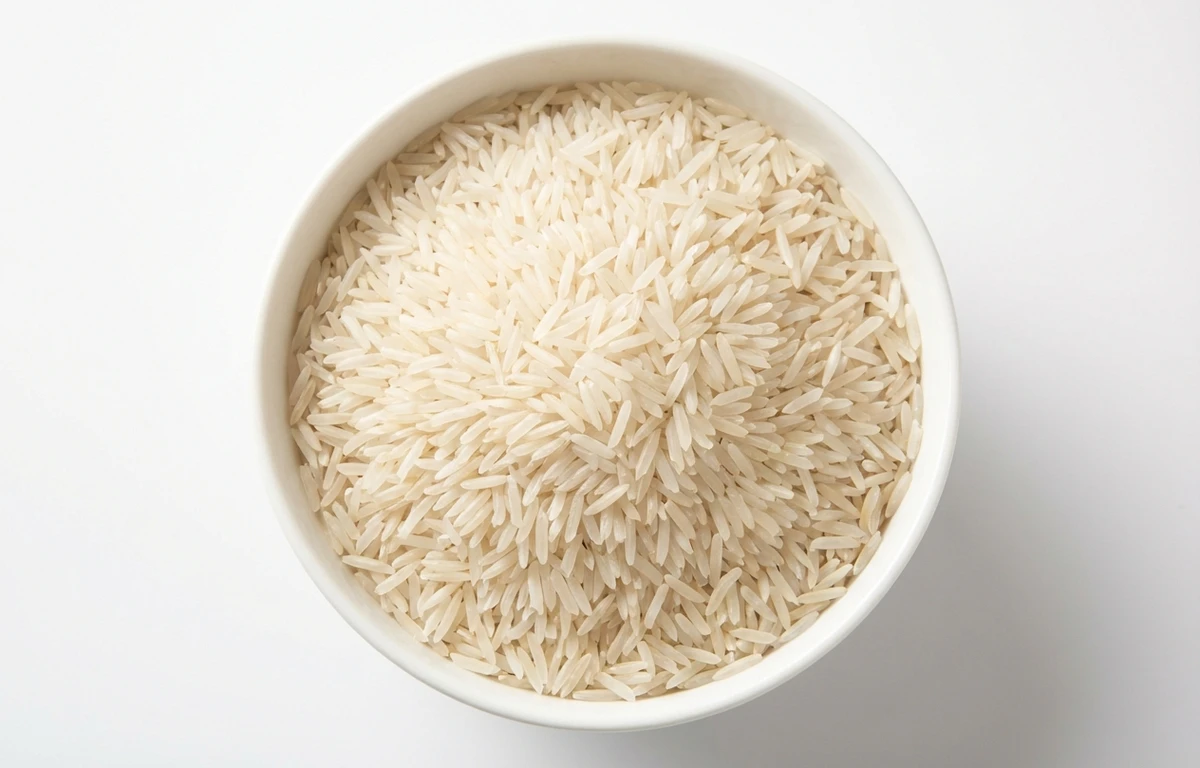
Basmati Rice, cooked and chilled.
VegetarianVeganGluten-freeDairy-freeNut-freePeanut-freeSoy-freeEgg-freeShellfish-freeHoney-freeAlcohol-free
SERVING
CALORIES
130
PROTEIN
2.7g
CARBS
28.2g
FAT
0.30g
FIBER
0.40g
This ingredient is flagged as naturally gluten-free. Per 100 g, it provides 0.10 µg of vitamin K.
NUTRITION PROFILE · per 100 g
Everything in this ingredient.
MACRONUTRIENTS
Calories130kcal—
Protein2.7g5%
Carbohydrates28.2g10%
Fiber0.40g1%
Sugar0.05g0%
Total fat0.30g0%
Saturated fat0.10g1%
Cholesterol0mg0%
Water68.5g—
MINERALS
Sodium1.0mg0%
Potassium55mg1%
Calcium10mg1%
Iron0.20mg1%
Magnesium12mg3%
Phosphorus40mg3%
Zinc0.40mg4%
Copper0.05mg6%
Manganese0.20mg9%
Selenium7.5µg14%
VITAMINS
Vitamin A0µg0%
Vitamin C0mg0%
Vitamin D0µg0%
Vitamin E0.05mg0%
Vitamin K0.10µg0%
Thiamin (B1)0.02mg2%
Riboflavin (B2)0.01mg1%
Niacin (B3)1.5mg9%
Pantothenic acid (B5)0.20mg4%
Vitamin B60.05mg3%
Folate (B9)10µg3%
Vitamin B120µg0%
%DV based on a 2,000 cal diet. Source: USDA FoodData Central. A dash in the %DV column means there’s no established Daily Value for that nutrient.
MEASUREMENT CONVERSIONS
How much is what.
1 cup190g
1 tablespoon10.3g
1 teaspoon4g
1 oz3.5g
1 lb0.2g
1 liter0.2g
HEALTH BENEFITS
Why eat it.
- ✓Good source of energy
- ✓Naturally gluten-free
- ✓Low in fat
- ✓May contain resistant starch when chilled, beneficial for gut health
- ✓Easy to digest
COOKING TIPS
In the kitchen.
- 1Rinse basmati rice thoroughly before cooking to remove excess starch and achieve a fluffier texture.
- 2Use a 1:1.5 or 1:2 rice to water ratio for cooking, depending on desired texture.
- 3Fluff with a fork after cooking and chilling to separate grains.
STORAGE
Keep it fresh.
- Store cooked and chilled rice in an airtight container in the refrigerator.
- Consume within 3-4 days to ensure freshness and safety.
- Cool rice quickly after cooking before chilling to minimize bacterial growth.
FAQ
Frequently asked questions.
Is cooked and chilled basmati rice healthy?
Yes, it is a healthy source of energy that is naturally low in fat and sodium. Chilling the rice after cooking increases its resistant starch content, which can improve gut health and result in a lower glycemic index compared to freshly cooked rice.
How many calories and carbs are in 100g of cooked basmati rice?
A 100g serving of cooked basmati rice contains approximately 130 calories and 28.2g of carbohydrates. It also provides about 2.7g of protein and a negligible 0.3g of fat.
Is basmati rice keto-friendly?
No, basmati rice is not keto-friendly. With over 28g of carbohydrates per 100g, it is too high in carbs for a standard ketogenic diet, which typically limits daily intake to under 50g.
Is it safe to reheat chilled basmati rice?
Yes, it is safe to reheat as long as it was cooled and stored properly. Ensure the rice is steaming hot throughout (reaching 165°F or 74°C) to kill any bacteria, and avoid reheating the same portion more than once.
How do I know if chilled basmati rice has gone bad?
Spoiled rice may have an unpleasant or sour odor, a slimy or sticky texture, or visible mold growth. If the rice has been in the fridge for more than 4 days, it should be discarded even if it looks and smells fine.