grain
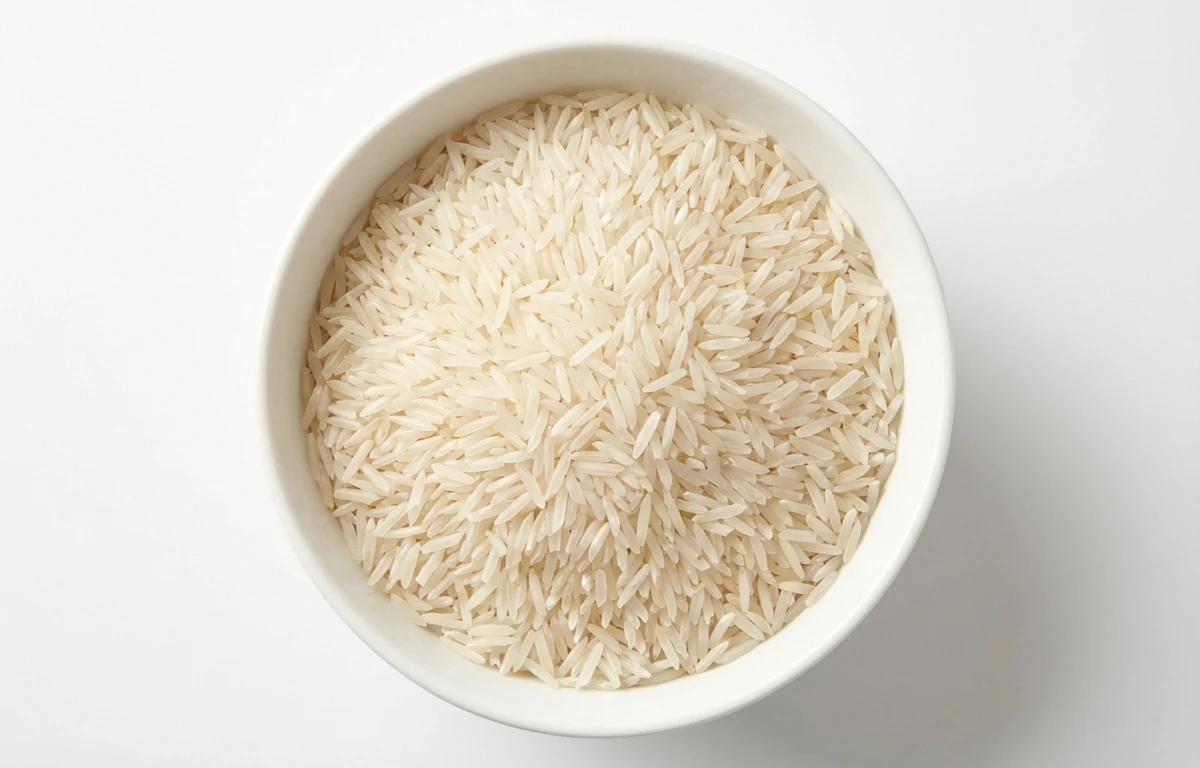
Basmati Rice, cooked and cooled.
VegetarianVeganGluten-freeDairy-freeNut-freePeanut-freeSoy-freeEgg-freeShellfish-freeHoney-freeAlcohol-free
SERVING
CALORIES
130
PROTEIN
2.7g
CARBS
28.2g
FAT
0.30g
FIBER
0.40g
This ingredient is flagged as naturally gluten-free.
NUTRITION PROFILE · per 100 g
Everything in this ingredient.
MACRONUTRIENTS
Calories130kcal—
Protein2.7g5%
Carbohydrates28.2g10%
Fiber0.40g1%
Sugar0.05g0%
Total fat0.30g0%
Saturated fat0.10g1%
Cholesterol0mg0%
Water68.4g—
MINERALS
Sodium1.0mg0%
Potassium55mg1%
Calcium7.0mg1%
Iron0.20mg1%
Magnesium13mg3%
Phosphorus39mg3%
Zinc0.30mg3%
Copper0.05mg6%
Manganese0.20mg9%
Selenium7.0µg13%
VITAMINS
Thiamin (B1)0.05mg4%
Riboflavin (B2)0.01mg1%
Niacin (B3)1.2mg8%
Pantothenic acid (B5)0.20mg4%
Vitamin B60.07mg4%
Folate (B9)8.0µg2%
%DV based on a 2,000 cal diet. Source: USDA FoodData Central. A dash in the %DV column means there’s no established Daily Value for that nutrient.
MEASUREMENT CONVERSIONS
How much is what.
1 cup170g
1 tablespoon11g
1 teaspoon3.5g
1 oz28.4g
1 lb453.6g
1 ml0.7g
1 liter650g
HEALTH BENEFITS
Why eat it.
- ✓Good source of energy
- ✓Naturally gluten-free
- ✓Low in fat
- ✓Contains resistant starch when cooled, which may benefit gut health
- ✓Provides essential B vitamins
COOKING TIPS
In the kitchen.
- 1Rinse Basmati rice thoroughly before cooking to remove excess starch.
- 2Use a 1:1.5 or 1:2 rice to water ratio for fluffy rice (e.g., 1 cup rice to 1.5-2 cups water).
- 3Allow cooked rice to rest, covered, for 5-10 minutes after cooking before fluffing with a fork.
STORAGE
Keep it fresh.
- Refrigerate cooked and cooled rice within one hour of cooking.
- Store in an airtight container in the refrigerator for up to 3-4 days.
- Do not reheat more than once.
FAQ
Frequently asked questions.
Is cooked and cooled Basmati rice healthy?
Yes, it is a low-fat source of energy and essential B vitamins. Cooling the rice increases its resistant starch content, which acts as a prebiotic to support gut health and may improve insulin sensitivity compared to freshly cooked rice.
How many calories and carbs are in 100g of cooked Basmati rice?
A 100g serving of cooked Basmati rice contains approximately 130 calories, 28.2g of carbohydrates, 2.7g of protein, and 0.3g of fat. It is a dense source of complex carbohydrates with virtually no cholesterol.
Is Basmati rice keto-friendly?
No, Basmati rice is not keto-friendly. With over 28g of carbohydrates per 100g, it exceeds the daily carb limit for most ketogenic diets, even when accounting for the resistant starch formed during cooling.
What are the best ways to use cooled Basmati rice?
Cooled Basmati rice is perfect for fried rice because the grains are firm and don't stick together. It is also excellent for cold rice salads, meal-prep bowls, or as a base for sushi-style grain bowls.
Is it safe to eat cold Basmati rice?
Yes, it is safe to eat cold as long as it was cooled quickly and stored properly in the refrigerator. However, leaving rice at room temperature for too long can allow Bacillus cereus spores to grow, which are not always killed by reheating.
How do you reheat cooled Basmati rice without it getting hard?
To maintain moisture, add a tablespoon of water per cup of rice and cover it while reheating in the microwave or on the stovetop. Ensure it is steaming hot throughout before serving to ensure food safety.