Other10 recipes
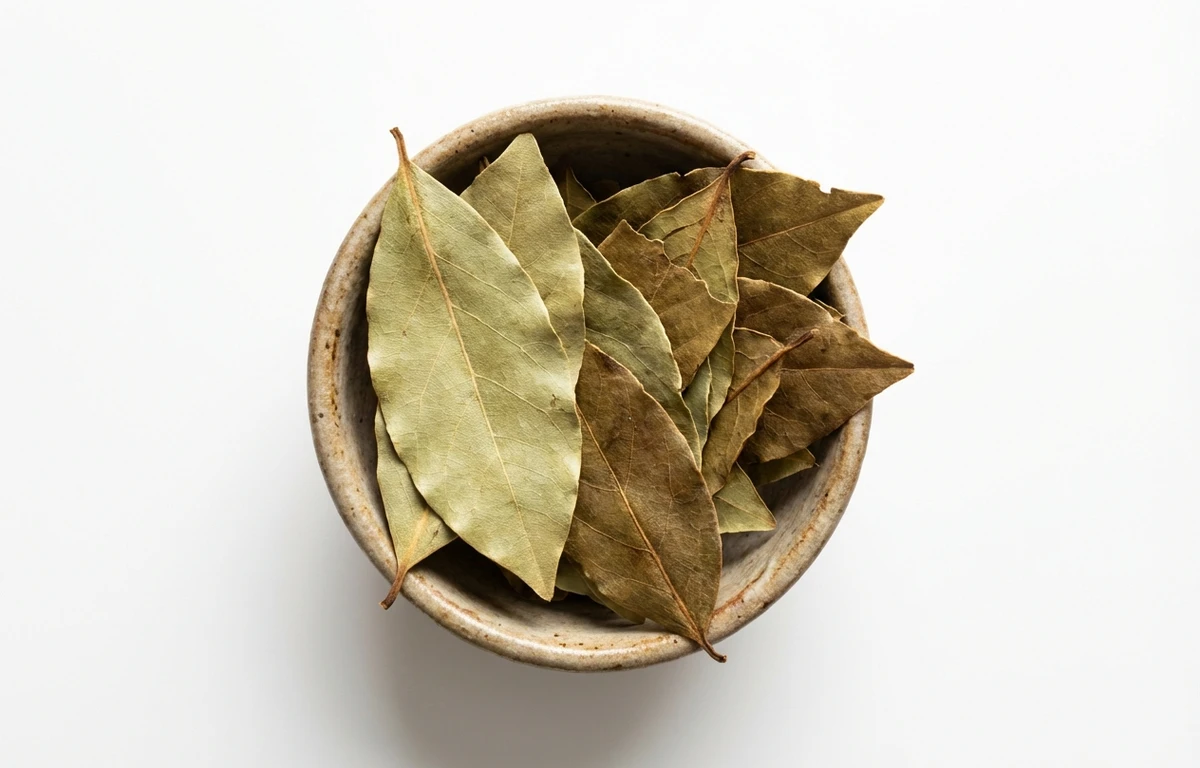
bay leaves.
VegetarianVeganGluten-freeDairy-freeNut-freePeanut-freeSoy-freeEgg-freeShellfish-freeHoney-freeAlcohol-free
ALSO KNOWN AS
bayleaves
SERVING
CALORIES
406
PROTEIN
7.6g
CARBS
75g
FAT
8.4g
FIBER
26.3g
NUTRITION PROFILE · per 100 g
Everything in this ingredient.
MACRONUTRIENTS
Calories406kcal—
Protein7.6g15%
Carbohydrates75g27%
Fiber26.3g94%
Sugar0g0%
Total fat8.4g11%
Saturated fat2.3g11%
Trans fat0g—
Cholesterol0mg0%
Water5.4g—
MINERALS
Sodium23mg1%
Potassium529mg11%
Calcium834mg64%
Iron43mg239%
Magnesium120mg29%
Phosphorus113mg9%
Zinc3.7mg34%
Copper0.42mg47%
Manganese8.2mg355%
Selenium2.8µg5%
VITAMINS
Vitamin A309µg34%
Vitamin C46.5mg52%
Vitamin D0µg0%
Vitamin E0mg0%
Vitamin K0µg0%
Thiamin (B1)0.01mg1%
Riboflavin (B2)0.42mg32%
Niacin (B3)2.0mg13%
Pantothenic acid (B5)0mg0%
Vitamin B61.7mg102%
Folate (B9)180µg45%
Vitamin B120µg0%
%DV based on a 2,000 cal diet. Source: USDA FoodData Central. A dash in the %DV column means there’s no established Daily Value for that nutrient.
MEASUREMENT CONVERSIONS
How much is what.
1 piece0.5g
HEALTH BENEFITS
Why eat it.
- ✓Rich in antioxidants, particularly parthenolide and eugenol, which can help combat oxidative stress.
- ✓Traditionally used to aid digestion by stimulating digestive enzymes and reducing bloating.
- ✓Contains compounds like linalool which may have anti-inflammatory and stress-reducing properties.
- ✓Provides small amounts of essential nutrients like vitamin A, vitamin C, iron, and manganese.
COOKING TIPS
In the kitchen.
- 1Add whole bay leaves to slow-cooking dishes like soups, stews, braises, and stocks to allow their complex, herbal flavor to infuse.
- 2Always remove the bay leaf before serving, as it remains tough and can be a choking hazard if swallowed.
- 3Crushing or tearing the leaf slightly before adding it to a dish can help release more of its aromatic oils and flavor.
- 4Use sparingly; one or two leaves are typically sufficient for a large pot, as too many can impart a bitter, medicinal taste.
STORAGE
Keep it fresh.
- Store dried bay leaves in an airtight container in a cool, dark, and dry place for up to 6 months to a year for optimal flavor.
- Fresh bay leaves can be stored in a sealed plastic bag in the refrigerator for up to two weeks.
FAQ
Frequently asked questions.
Are bay leaves healthy?
Yes, bay leaves are healthy as they are rich in antioxidants like parthenolide and eugenol, which help combat oxidative stress. They also contain anti-inflammatory compounds like linalool and provide small amounts of essential nutrients including vitamin A, vitamin C, iron, and manganese.
Can you eat bay leaves whole?
While bay leaves are non-toxic, they should not be eaten whole because they remain stiff and sharp even after long cooking times. They can pose a choking hazard or cause small cuts in the digestive tract, so they are typically used to infuse flavor and then removed before serving.
What do bay leaves taste like?
Bay leaves have a subtle, herbal, and slightly floral flavor with notes of oregano and thyme. When simmered, they release a woodsy aroma and a cooling, menthol-like undertone that adds depth and complexity to savory dishes.
Are bay leaves keto-friendly and low-carb?
Yes, bay leaves are keto-friendly. While they contain approximately 75g of carbohydrates per 100g, the amount used in a typical recipe (usually 1-2 leaves) adds a negligible amount of calories and carbs to the overall meal.
Do bay leaves help with digestion?
Traditionally, bay leaves are used to aid digestion by stimulating digestive enzymes and reducing symptoms like bloating and gas. Some compounds in the leaves may also help soothe the stomach lining and improve gastrointestinal comfort.
Are bay leaves vegan and gluten-free?
Yes, bay leaves are a natural, plant-based spice and are both vegan and gluten-free. They are safe for individuals with celiac disease or those following a strict plant-based diet.
How should I store bay leaves and how long do they last?
Store dried bay leaves in an airtight container in a cool, dark, and dry place for up to one year. For even longer shelf life and better flavor retention, you can store them in the freezer, where they can stay fresh for up to two years.
What is a good substitute for bay leaves?
If you are out of bay leaves, you can substitute them with 1/4 teaspoon of dried thyme or oregano for every bay leaf called for in the recipe. While the flavor won't be identical, these herbs provide a similar earthy and herbal depth to the dish.
Why are bay leaves added to soups and stews?
Bay leaves act as a 'flavor bridge' in slow-cooked dishes, helping to meld the flavors of other ingredients together. They add a subtle bitterness and aromatic complexity that balances the richness of meats, beans, and heavy sauces.
How can I tell if my bay leaves are still fresh?
To check for freshness, bend a leaf slightly or crush a small piece and smell it; it should have a strong, distinct herbal aroma. If the leaf is very brittle, has turned brown/grey, or has lost its scent, it has lost its potency and should be replaced.
RECIPES
Cook with bay leaves.
10 recipes · sorted by what’s quick