
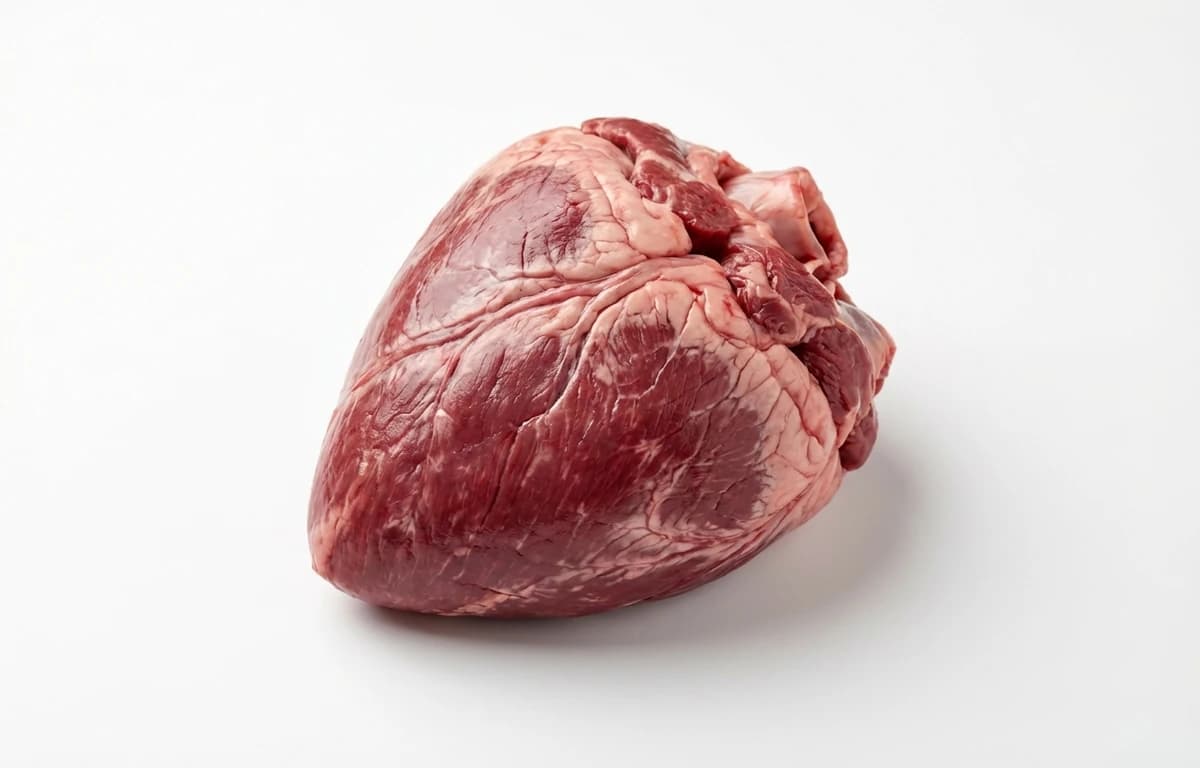
beef heart
Also known as:
Loading...
Also known as:
Per 100g
Nutrition data source: USDA FoodData Central
Common measurement equivalents in grams
Yes, beef heart is an exceptionally nutrient-dense lean protein. It is one of the best natural sources of Coenzyme Q10 (CoQ10), which supports cardiovascular health, and it is packed with B vitamins, iron, and selenium for immune and energy support.
A 100g serving of beef heart contains approximately 103.49 calories and 17.68g of high-quality protein. With only 3.57g of fat and 0g of carbohydrates, it is a very lean and efficient protein source.
Beef heart tastes like a more intense, beefy version of a lean steak. Because it is a hard-working muscle rather than a typical organ like liver, it has a firm, dense texture without the 'metallic' or 'mushy' taste often associated with offal.
Yes, beef heart is excellent for keto and low-carb diets as it contains zero carbohydrates. Its high protein content and rich micronutrient profile make it a popular choice for those following carnivore or ketogenic lifestyles.
Beef heart is best prepared using two extremes: either sliced thin and seared very quickly over high heat (like a steak) or braised slowly for several hours. Cooking it at a medium pace for too long can result in a tough, rubbery texture.
Yes, for the best eating experience, you should trim away any visible silver skin, hard connective tissues, and the thick layer of fat at the top. Removing these 'valves' and tough bits ensures the remaining meat is tender and palatable.
Raw beef heart is naturally 100% gluten-free. However, if you are purchasing pre-marinated heart or ordering it at a restaurant (such as Peruvian Anticuchos), ensure the sauces or marinades do not contain soy sauce or wheat-based thickeners.
beef heart is a versatile ingredient found in cuisines around the world. With 103.49 calories per 100g and 17.68 grams of protein, it's a nutritious addition to many dishes.
Explore more ingredients in the other category with complete nutrition information.
View all other →Fresh beef heart should be stored in the coldest part of your refrigerator and used within 1 to 2 days. For longer storage, it can be frozen in airtight packaging or vacuum-sealed for 6 to 12 months without significant loss of quality.
Like most organ meats, beef heart contains more cholesterol than standard muscle cuts, providing about 124mg per 100g. While dietary cholesterol has a limited impact on blood cholesterol for most people, those with specific medical restrictions should consume it in moderation.
Fresh beef heart should have a deep red color, a firm texture, and a clean, slightly metallic scent. Avoid any meat that looks grey or brown, feels slimy to the touch, or has a strong, sour, or off-putting odor.