
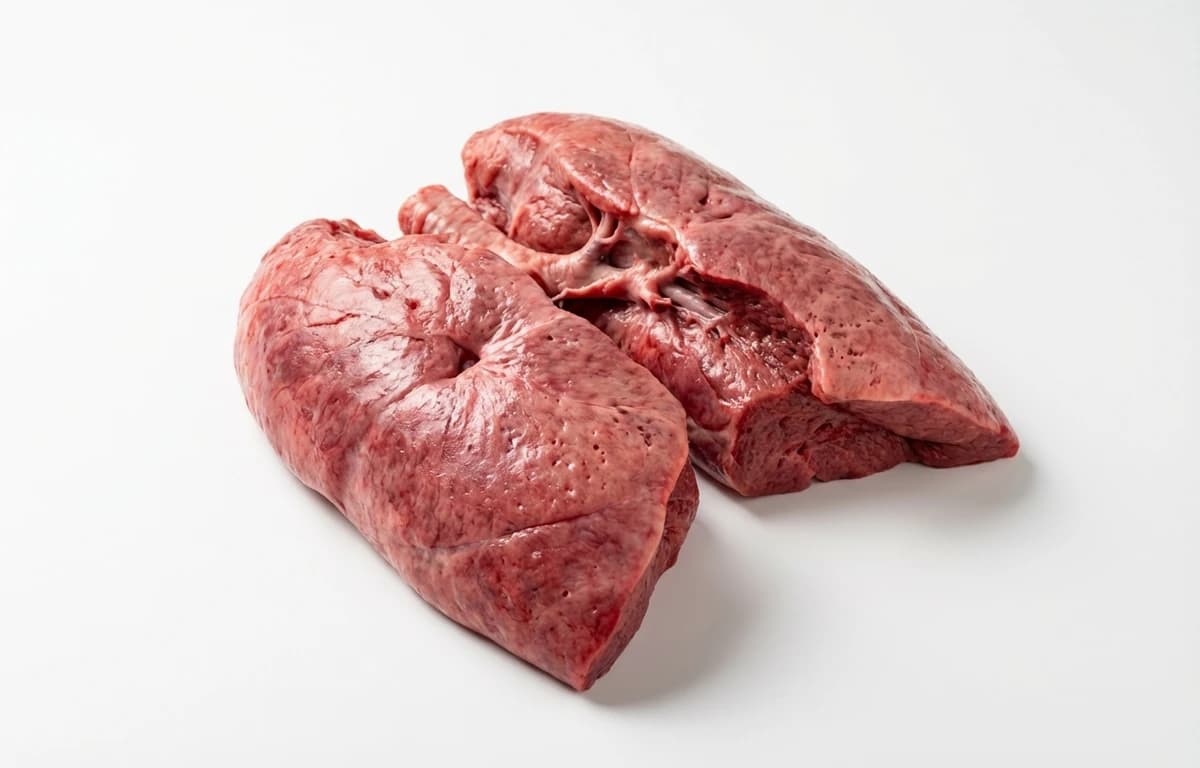
beef lungs
Also known as:
Loading...
Also known as:
Per 100g
Nutrition data source: USDA FoodData Central
Common measurement equivalents in grams
Yes, beef lungs are highly nutritious, offering a lean source of protein with very low fat and calories. They are exceptionally rich in Vitamin B12, heme iron, and Vitamin C, which supports immune health and aids in the absorption of the iron they provide.
A 100g serving of beef lungs contains approximately 15.66g of protein and only 2.28g of fat. This makes it an excellent high-protein, low-calorie option for those looking to build muscle or manage their weight while consuming only about 84 calories.
Beef lungs have a mild, slightly sweet flavor compared to more intense organ meats like liver. Their texture is their most distinctive feature; they are spongy and light when raw, becoming firm and somewhat 'bouncy' or chewy once cooked.
Beef lungs are typically boiled first to firm up the texture, then sliced and stir-fried, stewed, or deep-fried. They are popular in traditional dishes like Indonesian 'paru goreng' or various offal stews, as they absorb the flavors of spices and sauces very well.
Yes, beef lungs are very keto-friendly as they contain 0g of carbohydrates. While they are lower in fat than some other keto staples, they provide high-quality protein and essential micronutrients without impacting blood sugar levels.
Absolutely. With only about 84 calories per 100g and a high protein content, beef lungs are very satiating and calorie-efficient. They help maintain muscle mass and provide essential nutrients while keeping overall caloric intake low.
In the United States, beef lungs are currently prohibited for human consumption by the USDA due to concerns about potential contaminants during the slaughter process. However, they are widely consumed and considered a delicacy in many other countries across Asia, Europe, and South America.
beef lungs is a versatile ingredient found in cuisines around the world. With 83.89 calories per 100g and 15.66 grams of protein, it's a nutritious addition to many dishes.
Explore more ingredients in the other category with complete nutrition information.
View all other →Fresh beef lungs should be stored in the coldest part of the refrigerator and used within 1-2 days. For longer storage, they can be frozen for up to 3-4 months if wrapped tightly in airtight packaging to prevent freezer burn.
Yes, they are an excellent source of heme iron, which is the form of iron most easily absorbed by the human body. This makes them particularly beneficial for individuals looking to prevent or treat iron-deficiency anemia.
Beef lungs are generally considered halal if the animal was slaughtered according to Islamic law. In Jewish dietary law (kosher), lungs must be carefully inspected for adhesions or defects to determine if the meat is 'glatt' or kosher-compliant.