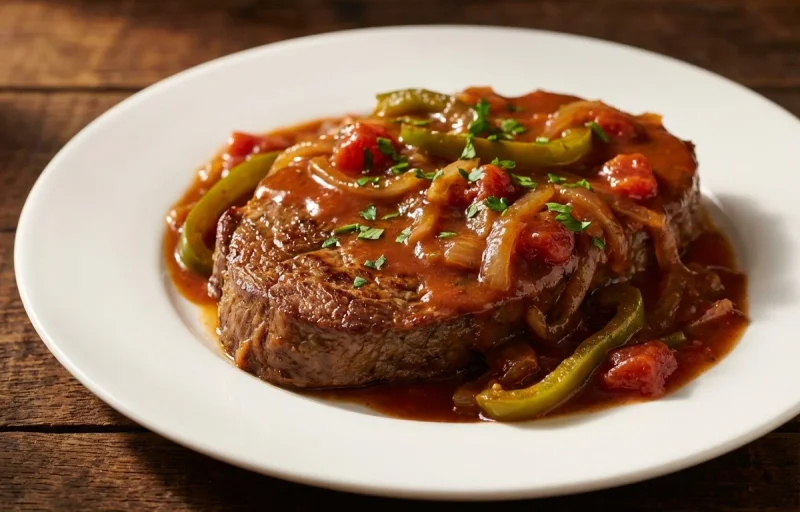
Protein2 recipes
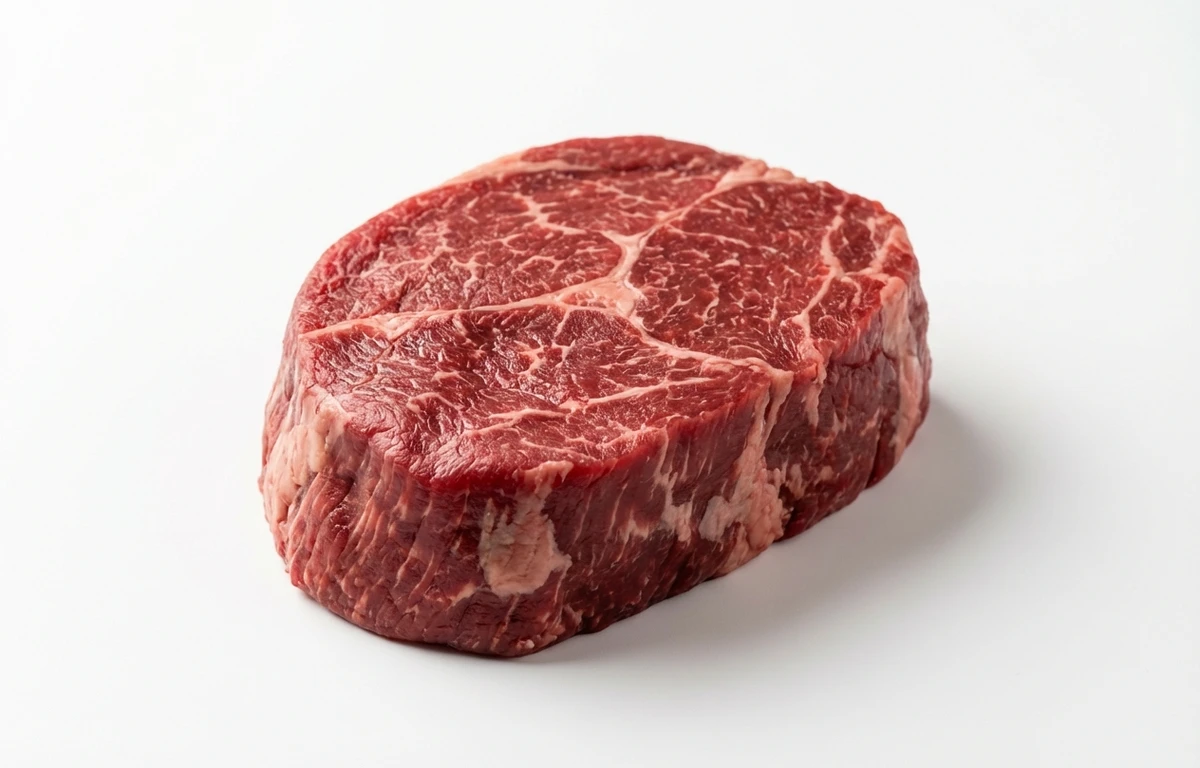
beef round steak.
VegetarianVeganGluten-freeDairy-freeNut-freePeanut-freeSoy-freeEgg-freeShellfish-freeHoney-freeAlcohol-free
ALSO KNOWN AS
round steak
SERVING
CALORIES
150
PROTEIN
21.2g
CARBS
0g
FAT
6.6g
FIBER
0g
NUTRITION PROFILE · per 100 g
Everything in this ingredient.
MACRONUTRIENTS
Calories150kcal—
Protein21.2g42%
Carbohydrates0g0%
Fiber0g0%
Sugar0g0%
Total fat6.6g8%
Saturated fat2.3g12%
Trans fat0.19g—
Cholesterol61mg20%
Water71.5g—
MINERALS
Sodium63mg3%
Potassium338mg7%
Calcium5.0mg0%
Iron2.3mg13%
Magnesium24mg6%
Phosphorus209mg17%
Zinc3.8mg34%
Copper0.14mg16%
Manganese0.02mg1%
Selenium33.3µg61%
VITAMINS
Vitamin A0µg0%
Vitamin C0mg0%
Vitamin E0.08mg1%
Vitamin K0µg0%
Thiamin (B1)0.06mg5%
Riboflavin (B2)0.19mg15%
Niacin (B3)6.4mg40%
Pantothenic acid (B5)0.65mg13%
Vitamin B60.72mg42%
Folate (B9)6.0µg2%
Vitamin B124.7µg196%
%DV based on a 2,000 cal diet. Source: USDA FoodData Central. A dash in the %DV column means there’s no established Daily Value for that nutrient.
MEASUREMENT CONVERSIONS
How much is what.
1 cup150g
1 oz28.4g
1 lb453.6g
1 piece120g
HEALTH BENEFITS
Why eat it.
- ✓Excellent source of high-quality complete protein, essential for building and repairing muscle tissue.
- ✓Rich in heme iron, which is highly bioavailable and helps prevent iron-deficiency anemia.
- ✓Provides significant amounts of Vitamin B12, crucial for nerve function and the formation of red blood cells.
- ✓Good source of zinc, a mineral vital for immune system function, wound healing, and cell growth.
COOKING TIPS
In the kitchen.
- 1Due to its leanness and toughness, round steak is ideal for slow, moist-heat cooking methods like braising or stewing to break down connective tissue and become tender.
- 2To make it more tender for grilling or pan-frying, use a meat mallet to tenderize it or marinate for at least 4-6 hours in an acidic marinade (containing vinegar, citrus, or wine).
- 3Slice the steak very thinly against the grain before cooking for use in stir-fries, fajitas, or cheesesteaks to ensure a tender bite.
STORAGE
Keep it fresh.
- Refrigerate raw beef round steak at 40°F (4°C) or below and use within 3 to 5 days.
- For longer storage, wrap tightly in freezer-safe plastic wrap and foil or a vacuum-sealed bag and freeze at 0°F (-18°C) for up to 6-12 months.
FAQ
Frequently asked questions.
Is beef round steak healthy?
Yes, beef round steak is one of the leanest cuts of beef available. It is low in saturated fat and calories while being packed with high-quality protein, making it a heart-healthy option for those looking to include red meat in their diet.
How much protein is in beef round steak?
A 100g serving of beef round steak provides approximately 21.24g of protein. This high protein density makes it an excellent choice for muscle building, repair, and maintaining satiety throughout the day.
Is beef round steak good for weight loss?
Yes, it is very effective for weight loss because it is nutrient-dense but relatively low in calories (150 per 100g). The high protein content helps boost metabolism and reduces appetite by keeping you feeling full longer.
Is beef round steak keto-friendly?
Absolutely. With 0g of carbohydrates, beef round steak is perfectly suited for ketogenic and other low-carb diets. It provides the necessary fats and proteins required to maintain ketosis.
Is beef round steak gluten-free?
In its natural, raw state, beef round steak is 100% gluten-free. However, if you are buying pre-marinated or seasoned steaks, always check the label for hidden gluten in sauces or spice blends.
What is the best way to cook beef round steak?
Because it is a lean cut from the hind leg, it can be tough if overcooked. It is best suited for slow-cooking methods like braising or stewing, or it can be marinated and quickly seared then sliced thinly against the grain.
What does beef round steak taste like?
It has a very pronounced, beefy flavor but lacks the buttery richness of fattier cuts like ribeye. It is a 'clean' tasting meat that absorbs marinades and aromatics very well during the cooking process.
How long does beef round steak last in the fridge?
Raw beef round steak typically stays fresh in the refrigerator for 3 to 5 days when kept in its original packaging. If you don't plan to cook it within that timeframe, it should be frozen to maintain quality.
How can I tell if beef round steak has spoiled?
Signs of spoilage include a distinct sour or ammonia-like smell, a slimy or tacky texture on the surface, and a color shift from bright red to a dull grey or green. If any of these signs are present, discard the meat.
What are the main health benefits of beef round steak?
It is an excellent source of heme iron for preventing anemia, Vitamin B12 for nerve function, and zinc for immune support. Its complete protein profile also provides all essential amino acids needed for tissue repair.
RECIPES
Cook with beef round steak.
2 recipes · sorted by what’s quick