
Vegetable
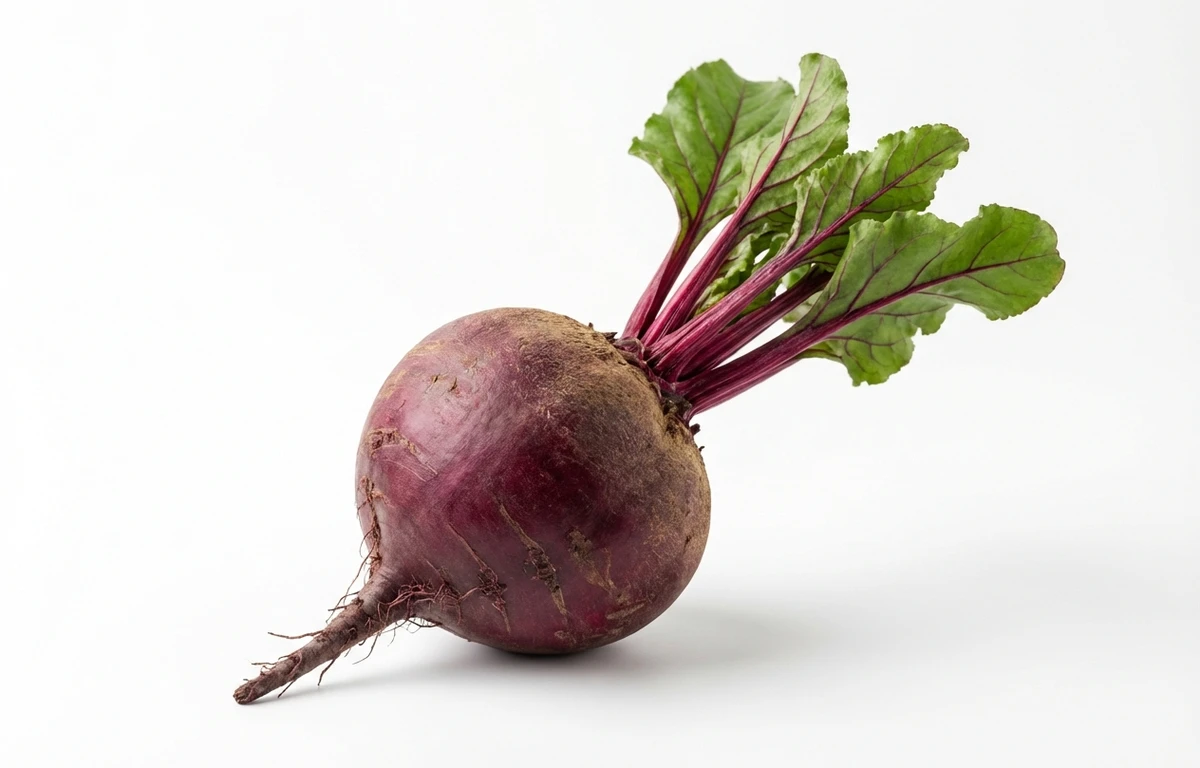
beet root.
VegetarianVeganGluten-freeDairy-freeNut-freePeanut-freeSoy-freeEgg-freeShellfish-freeHoney-freeAlcohol-freeHalalKosher
SERVING
CALORIES
36
PROTEIN
1.9g
CARBS
6.2g
FAT
0.14g
FIBER
3.3g
NUTRITION PROFILE · per 100 g
Everything in this ingredient.
MACRONUTRIENTS
Calories35.6kcal—
Protein1.9g4%
Carbohydrates6.2g2%
Fiber3.3g12%
Sugar4.3g9%
Total fat0.14g0%
Saturated fat0.03g0%
Trans fat0g—
Cholesterol0mg0%
Water87g—
MINERALS
Sodium69.4mg3%
Potassium306mg7%
Calcium17.3mg1%
Iron0.76mg4%
Magnesium33.2mg8%
Phosphorus36.3mg3%
Zinc0.30mg3%
Copper0.12mg13%
Manganese0.57mg25%
Selenium0.25µg0%
VITAMINS
Vitamin A10.1µg1%
Vitamin C5.3mg6%
Vitamin D0.18µg1%
Vitamin E0.09mg1%
Vitamin K3.0µg2%
Thiamin (B1)0.01mg1%
Riboflavin (B2)0.01mg1%
Niacin (B3)0.21mg1%
Pantothenic acid (B5)0.26mg5%
Vitamin B60.07mg4%
Biotin (B7)2.6µg9%
Folate (B9)97.4µg24%
%DV based on a 2,000 cal diet. Source: USDA FoodData Central. A dash in the %DV column means there’s no established Daily Value for that nutrient.
MEASUREMENT CONVERSIONS
How much is what.
1 cup144.3g
1 tablespoon9g
1 teaspoon3g
1 oz28.4g
1 lb453.6g
1 ml0.6g
1 liter610g
1 piece90g
HEALTH BENEFITS
Why eat it.
- ✓Rich in dietary nitrates, which can help lower blood pressure and improve cardiovascular health.
- ✓A good source of fiber, promoting digestive health, regular bowel movements, and feeding beneficial gut bacteria.
- ✓Contains potent antioxidants called betalains, which have anti-inflammatory properties and may protect cells from damage.
- ✓May enhance athletic performance by improving oxygen efficiency, stamina, and time to exhaustion.
COOKING TIPS
In the kitchen.
- 1Roasting beets concentrates their natural sweetness. Wrap individual beets in foil and bake at 400°F (200°C) until tender; the skins will peel off easily once cooled.
- 2To avoid staining hands and surfaces, wear gloves when handling and cut on a non-porous cutting board or a surface lined with parchment paper.
- 3Grate raw beets into salads for a vibrant color and crunchy texture, or add them to smoothies and juices for a nutrient boost.
- 4When boiling or steaming, leave the skin on and a bit of the stem attached to minimize color bleeding. Add a splash of vinegar or lemon juice to the water to help retain their bright color.
STORAGE
Keep it fresh.
- Trim the leaves about two inches from the root to prevent moisture loss. Store unwashed beets in a perforated plastic bag in the refrigerator's crisper drawer for up to 3 weeks.
- For long-term storage, cook beets until tender, then peel, slice or dice, and freeze in an airtight container for up to 12 months.
FAQ
Frequently asked questions.
Is beetroot healthy?
Yes, beetroot is highly nutritious and offers several health benefits. It is rich in dietary nitrates that support cardiovascular health, fiber for digestion, and betalains, which are potent antioxidants with anti-inflammatory properties.
How many calories and carbs are in beetroot?
A 100g serving of beetroot contains approximately 35.61 calories and 6.18g of carbohydrates. It is also low in fat (0.14g) and provides about 1.95g of protein, making it a nutrient-dense, low-calorie vegetable.
Can beetroot improve athletic performance?
Yes, the dietary nitrates in beetroot can enhance athletic performance by improving oxygen efficiency and stamina. Many athletes consume beetroot juice before workouts to reduce the time to exhaustion and improve cardiovascular output.
Is beetroot keto-friendly?
Beetroot is moderately high in natural sugars and contains about 6.18g of carbs per 100g. While it can be included in a keto diet in small portions, it should be consumed in moderation to avoid exceeding daily carbohydrate limits.
Can diabetics eat beetroot?
Yes, diabetics can eat beetroot. Although it contains natural sugars, its high fiber content helps slow down glucose absorption, and its nitrates may help improve insulin sensitivity and blood pressure.
How do you cook and prepare beetroot?
Beetroot can be roasted, boiled, steamed, or pickled. Roasting them whole in foil at 400°F (200°C) for 45-60 minutes is a popular method that concentrates their natural sweetness and makes the skins easy to peel.
Can you eat beetroot raw?
Yes, raw beetroot is safe and very nutritious. It is commonly grated into salads or slaws for a crunchy texture, or processed into fresh juices and smoothies to preserve all of its heat-sensitive vitamins.
How do you store beetroot and how long does it last?
Store raw beetroots in a plastic bag in the refrigerator's crisper drawer, where they will stay fresh for 2 to 3 weeks. If they have greens attached, cut them off before storing, as the leaves draw moisture out of the root.
Why does beetroot turn urine or stool red?
This condition is called beeturia and occurs when the red pigments in beets, called betalains, are not fully broken down by the body. It is a harmless occurrence that affects about 10-14% of the population and typically resolves within a day.
How do you know if beetroot has gone bad?
Fresh beetroot should be firm to the touch and have smooth, unblemished skin. If the root feels soft, squishy, or shriveled, or if you see any signs of mold or a slimy texture, the beetroot has spoiled and should be discarded.



















