vegetable
bendekayi.
VegetarianVeganGluten-freeDairy-freeNut-freePeanut-freeSoy-freeEgg-freeShellfish-freeHoney-freeAlcohol-freeHalalKosher
SERVING
CALORIES
33
PROTEIN
1.9g
CARBS
7.5g
FAT
0.19g
FIBER
3.2g
This ingredient is flagged as naturally gluten-free. Per 100 g, it provides 31.3 µg of vitamin K.
NUTRITION PROFILE · per 100 g
Everything in this ingredient.
MACRONUTRIENTS
Calories33kcal—
Protein1.9g4%
Carbohydrates7.5g3%
Fiber3.2g11%
Sugar1.5g3%
Total fat0.19g0%
Saturated fat0.03g0%
Trans fat0g—
Cholesterol0mg0%
Water89.6g—
MINERALS
Sodium7.0mg0%
Potassium299mg6%
Calcium82mg6%
Iron0.62mg3%
Magnesium57mg14%
Phosphorus61mg5%
Zinc0.58mg5%
Copper0.11mg12%
Manganese0.94mg41%
Selenium0.70µg1%
VITAMINS
Vitamin A36µg4%
Vitamin C23mg26%
Vitamin D0µg0%
Vitamin E0.27mg2%
Vitamin K31.3µg26%
Thiamin (B1)0.20mg17%
Riboflavin (B2)0.06mg5%
Niacin (B3)1.0mg6%
Pantothenic acid (B5)0.25mg5%
Vitamin B60.22mg13%
Folate (B9)60µg15%
Vitamin B120µg0%
%DV based on a 2,000 cal diet. Source: USDA FoodData Central. A dash in the %DV column means there’s no established Daily Value for that nutrient.
MEASUREMENT CONVERSIONS
How much is what.
1 cup95g
HEALTH BENEFITS
Why eat it.
- ✓The mucilage can bind with cholesterol during digestion, potentially helping to lower overall cholesterol levels.
COOKING TIPS
In the kitchen.
- 1To minimize sliminess, cook okra quickly at high temperatures, such as stir-frying, roasting, or grilling.
- 2Ensure okra is completely dry before chopping and cooking to reduce the release of mucilage.
- 3Adding acidic ingredients like tomatoes, lemon juice, or vinegar towards the end of cooking can help cut down on the slimy texture.
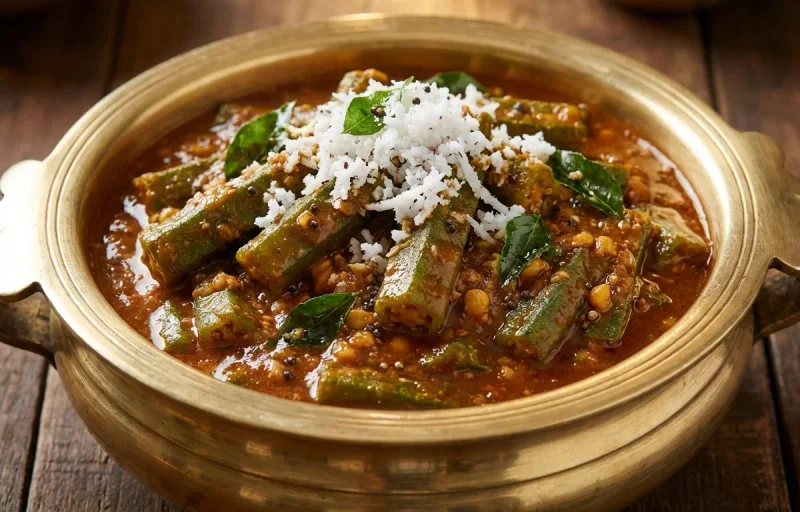
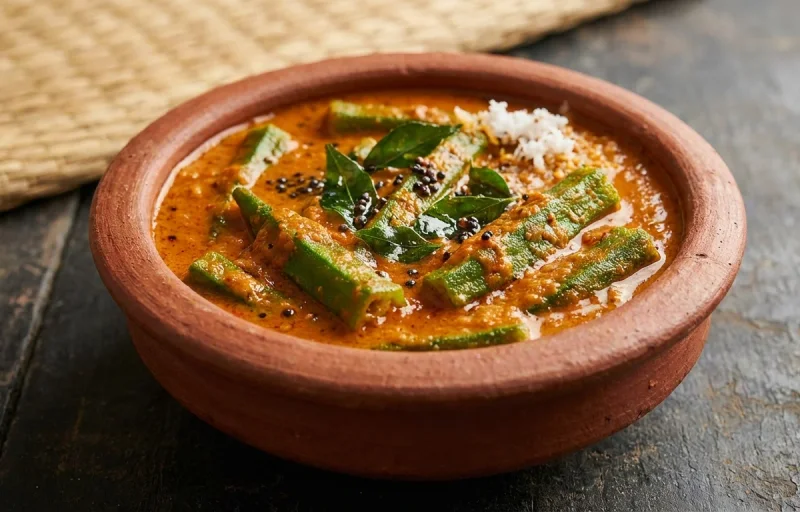
- 4Okra is a key ingredient in dishes like Indian 'bhindi masala' and American 'gumbo', where its mucilage acts as a natural thickener.
STORAGE
Keep it fresh.
- Store fresh, unwashed okra in a paper bag or a perforated plastic bag in the refrigerator's vegetable crisper for up to 3-4 days.
- Avoid washing until just before use, as moisture can accelerate sliminess and spoilage.
- For long-term storage, blanch whole or sliced pods for 2-3 minutes, cool in an ice bath, drain well, and freeze in airtight containers.
FAQ
Frequently asked questions.
Is bendekayi keto-friendly?
Bendekayi is considered keto-friendly as it contains approximately 7.45g of carbohydrates per 100g. When you subtract the high fiber content, the net carbs are low enough to fit into most low-carb and ketogenic meal plans.
Is bendekayi vegan and gluten-free?
Yes, bendekayi is a natural plant-based vegetable and is both 100% vegan and gluten-free. It is a safe and healthy option for those with gluten sensitivities or those following a strict plant-based diet.
What does bendekayi taste like?
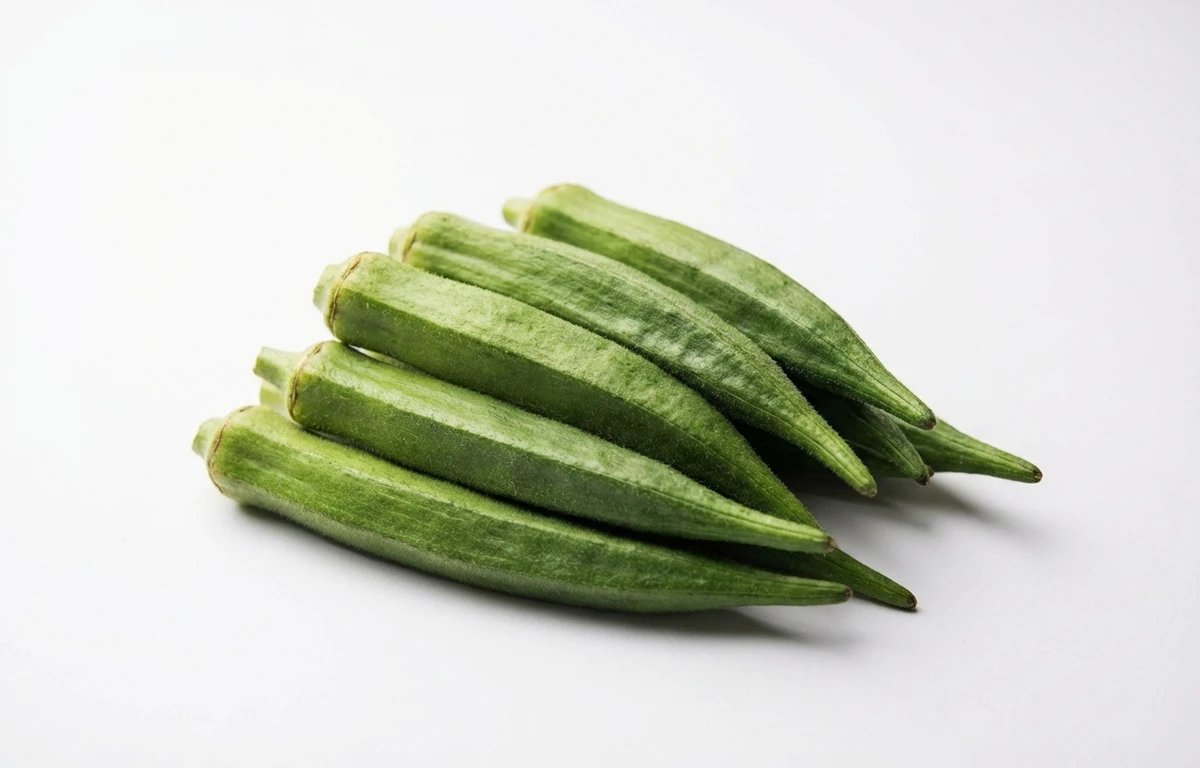
Bendekayi has a mild, slightly earthy, and grassy flavor similar to green beans or eggplant. Its texture is unique, offering a slight crunch on the outside with a soft, seed-filled, and moist interior.
How should I store bendekayi to keep it fresh?
Store bendekayi in a paper bag or wrapped in paper towels inside a loose plastic bag in the refrigerator's crisper drawer. Moisture causes it to mold quickly, so do not wash the pods until you are ready to cook them.
How can I tell if bendekayi is fresh when buying it?
Look for pods that are bright green, firm, and snap easily when the tip is bent. Avoid pods that are overly large, limp, or have many dark brown spots, as these are signs that the vegetable is old, fibrous, and tough.
RECIPES
Cook with bendekayi.
0 recipes · sorted by what’s quick