
Other
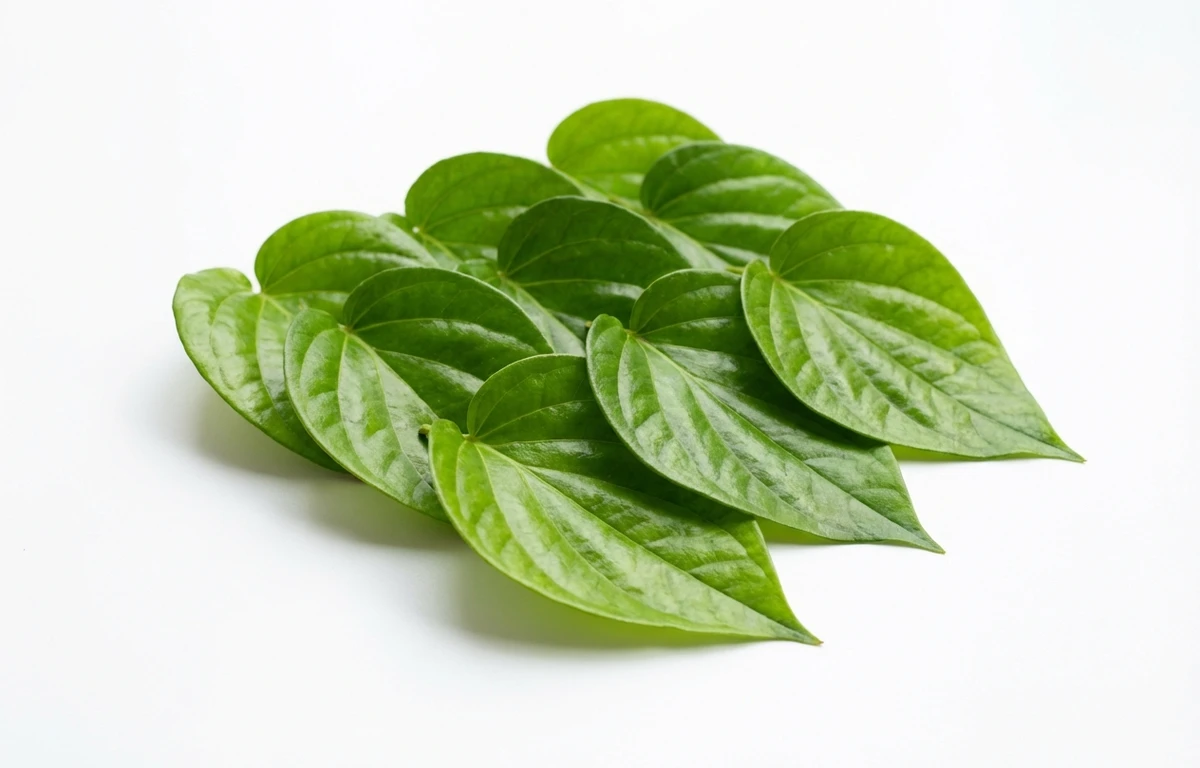
betel leaf.
VegetarianVeganGluten-freeDairy-freeNut-freePeanut-freeSoy-freeEgg-freeShellfish-freeHoney-freeAlcohol-free
ALSO KNOWN AS
paan leafpaan ka patta
SERVING
CALORIES
44
PROTEIN
3.3g
CARBS
8.3g
FAT
0.40g
FIBER
2.3g
NUTRITION PROFILE · per 100 g
Everything in this ingredient.
MACRONUTRIENTS
Calories44kcal—
Protein3.3g7%
Carbohydrates8.3g3%
Fiber2.3g8%
Sugar0.50g1%
Total fat0.40g1%
Saturated fat0.10g1%
Cholesterol0mg0%
Water86.1g—
MINERALS
Sodium10mg0%
Potassium460mg10%
Calcium240mg18%
Iron2.9mg16%
Magnesium61mg15%
Phosphorus40mg3%
Zinc0.40mg4%
Copper0.20mg22%
Manganese0.70mg30%
Selenium0.70µg1%
VITAMINS
Vitamin A100µg11%
Vitamin C13mg14%
Vitamin D0µg0%
Vitamin E0.90mg6%
Vitamin K62.8µg52%
Thiamin (B1)0.03mg3%
Riboflavin (B2)0.06mg5%
Niacin (B3)0.40mg3%
Pantothenic acid (B5)0.10mg2%
Vitamin B60.03mg2%
Folate (B9)78µg20%
Vitamin B120µg0%
%DV based on a 2,000 cal diet. Source: USDA FoodData Central. A dash in the %DV column means there’s no established Daily Value for that nutrient.
MEASUREMENT CONVERSIONS
How much is what.
1 piece2g
HEALTH BENEFITS
Why eat it.
- ✓Aids digestion by stimulating the release of saliva and digestive enzymes.
- ✓Possesses antiseptic and antimicrobial properties, traditionally used as a natural mouth freshener.
- ✓Rich in antioxidants like flavonoids and tannins that help combat oxidative stress in the body.
- ✓Contains essential oils like eugenol and chavicol which may have anti-inflammatory effects.
COOKING TIPS
In the kitchen.
- 1Use as a flavorful wrapper for grilling or steaming meats, fish, or rice, which imparts a unique peppery and smoky aroma (e.g., Vietnamese Bò lá lốt).
- 2Finely shred fresh, tender leaves and add them raw to salads, stir-fries, or curries for a pungent, aromatic flavor.
- 3Blanch the leaves for a few seconds in hot water to make them more pliable and easier to use for wrapping without tearing.
- 4The peppery flavor pairs well with rich ingredients like coconut, peanuts, and grilled meats.
STORAGE
Keep it fresh.
- Wrap fresh leaves in a damp paper towel and store them in an airtight container or zip-top bag in the refrigerator for up to one week.
- To prolong freshness, trim the stems and place them in a glass of water, covering the leaves loosely with a plastic bag in the fridge, similar to fresh herbs.
FAQ
Frequently asked questions.
Is betel leaf healthy?
Yes, betel leaf is highly nutritious and contains antioxidants like flavonoids and tannins that combat oxidative stress. It also possesses antimicrobial properties and essential oils like eugenol, which may provide anti-inflammatory benefits.
What are the nutritional values of betel leaf?
Per 100g, betel leaf contains approximately 44 calories, 3.3g of protein, 8.3g of carbohydrates, and 0.4g of fat. It is a low-calorie herb that can easily fit into most balanced diets.
How does betel leaf aid digestion?
Betel leaf stimulates the production of saliva and essential digestive enzymes, which helps the body break down food more effectively. It is traditionally chewed after meals to prevent indigestion and bloating.
Is betel leaf vegan and gluten-free?
Yes, betel leaf is a natural plant-based herb and is both vegan and gluten-free. It is suitable for individuals with celiac disease or those following a strict plant-based lifestyle.
Is betel leaf keto-friendly?
Yes, betel leaf is keto-friendly as it contains only 8.3g of carbohydrates per 100g. Since the leaves are typically consumed in very small quantities, the net carb impact is minimal.
What does betel leaf taste like?
Betel leaf has a unique, pungent, and slightly peppery flavor with a hint of bitterness. It is highly aromatic and provides a cooling, refreshing sensation when chewed.
How do you eat or cook with betel leaf?
Betel leaves are often eaten raw as a wrap for snacks like 'Miang Kham' or 'Paan.' They can also be finely shredded into salads or used as a flavorful base for steaming fish and meats in Southeast Asian cuisine.
How should you store fresh betel leaves?
Store fresh betel leaves by wrapping them in a damp paper towel and placing them in a sealed plastic bag in the refrigerator. They generally stay fresh for about 5 to 7 days using this method.
Is betel leaf the same as betel nut?
No, they are different. The betel leaf is from the Piper betle vine, while the betel nut is the seed of the Areca palm. While they are often consumed together, the leaf itself does not contain the addictive stimulants found in the nut.
Can betel leaf be used for oral health?
Yes, betel leaf is traditionally used as a natural mouth freshener due to its antiseptic and antimicrobial properties. It helps reduce oral bacteria and can assist in maintaining gum health.



















