grain4 recipes
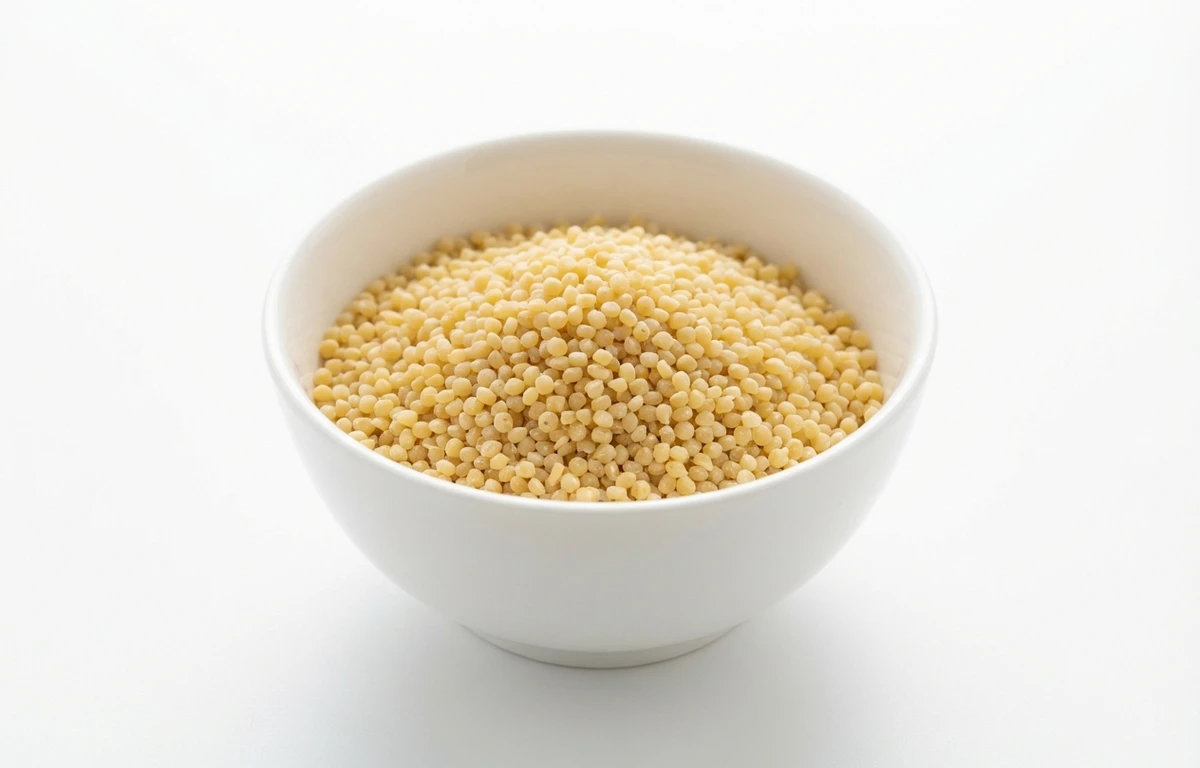
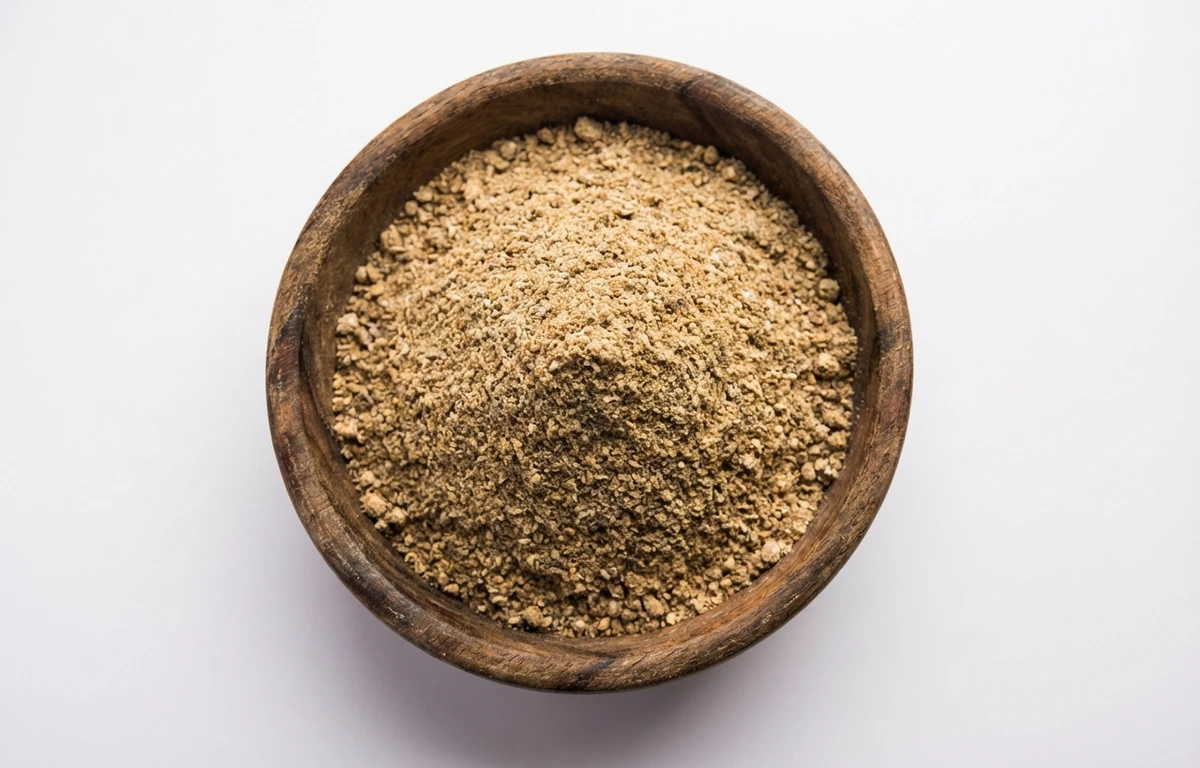
bhajani flour.
VegetarianVeganGluten-freeDairy-freeNut-freePeanut-freeSoy-freeEgg-freeShellfish-freeHoney-freeAlcohol-freeHalalKosherWhole grain
SERVING
CALORIES
345
PROTEIN
13.4g
CARBS
68.2g
FAT
4.4g
FIBER
11g
Per 100 g, it provides 1.2 µg of vitamin K.
NUTRITION PROFILE · per 100 g
Everything in this ingredient.
MACRONUTRIENTS
Calories345kcal—
Protein13.4g27%
Carbohydrates68.2g25%
Fiber11g39%
Sugar1.5g3%
Total fat4.4g6%
Saturated fat0.60g3%
Trans fat0g—
Cholesterol0mg0%
Water11.5g—
MINERALS
Sodium8.0mg0%
Potassium450mg10%
Calcium80mg6%
Iron4.5mg25%
Magnesium140mg33%
Phosphorus320mg26%
Zinc2.5mg23%
Copper0.30mg33%
Manganese1.8mg78%
Selenium15µg27%
VITAMINS
Vitamin A0µg0%
Vitamin C0.50mg1%
Vitamin D0µg0%
Vitamin E0.80mg5%
Vitamin K1.2µg1%
Thiamin (B1)0.40mg33%
Riboflavin (B2)0.15mg12%
Niacin (B3)3.5mg22%
Pantothenic acid (B5)0.80mg16%
Vitamin B60.30mg18%
Folate (B9)80µg20%
Vitamin B120µg0%
%DV based on a 2,000 cal diet. Source: USDA FoodData Central. A dash in the %DV column means there’s no established Daily Value for that nutrient.
MEASUREMENT CONVERSIONS
How much is what.
1 cup125g
1 tablespoon8g
1 teaspoon3g
HEALTH BENEFITS
Why eat it.
- ✓Provides complex carbohydrates for sustained energy release, making it a low-glycemic index option compared to refined flours.
- ✓The combination of cereals (like rice, millet) and pulses (like lentils, chickpeas) offers a complementary protein profile, providing a wider range of amino acids.
- ✓Rich source of essential micronutrients including iron, magnesium, and B-vitamins derived from its diverse ingredients.
COOKING TIPS
In the kitchen.
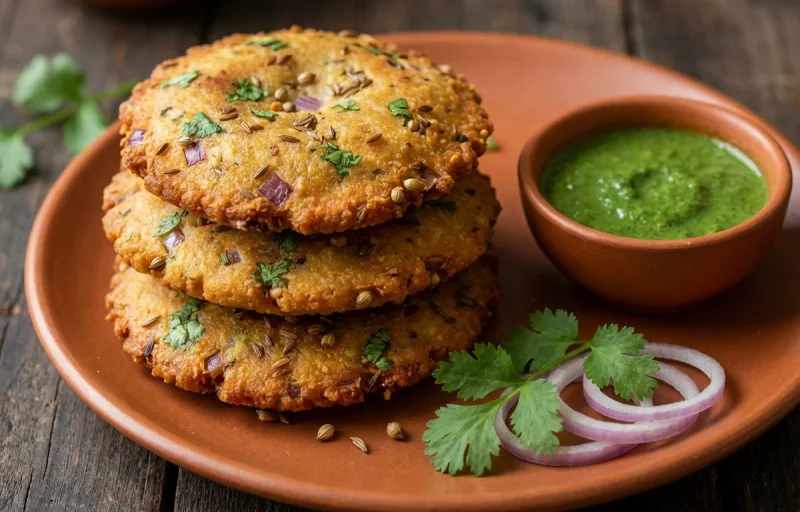
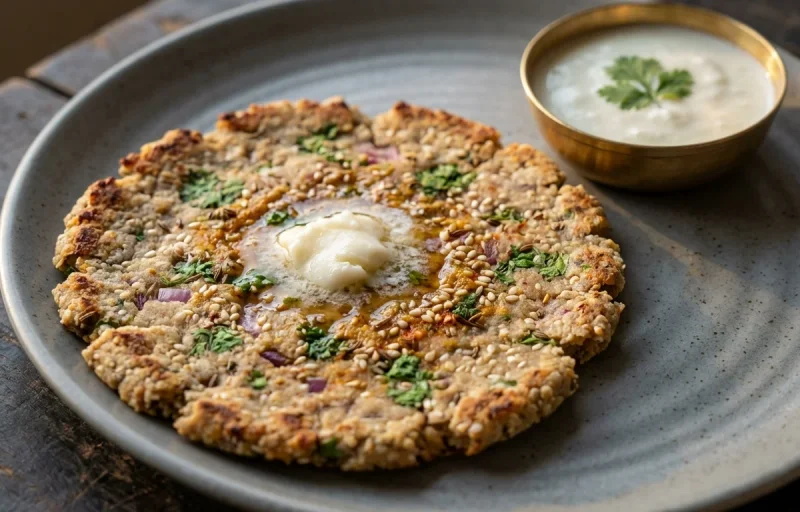
- 1Primarily used to make Thalipeeth, a savory Maharashtrian pancake. Combine the flour with water, chopped onions, cilantro, and spices to form a soft dough.
- 2Use warm water when making the dough, as it helps to hydrate the different types of grains and makes the dough more pliable and easier to handle.
- 3To shape Thalipeeth, pat the dough out on a wet cloth, parchment paper, or a banana leaf before carefully transferring it to a hot, greased griddle (tawa).
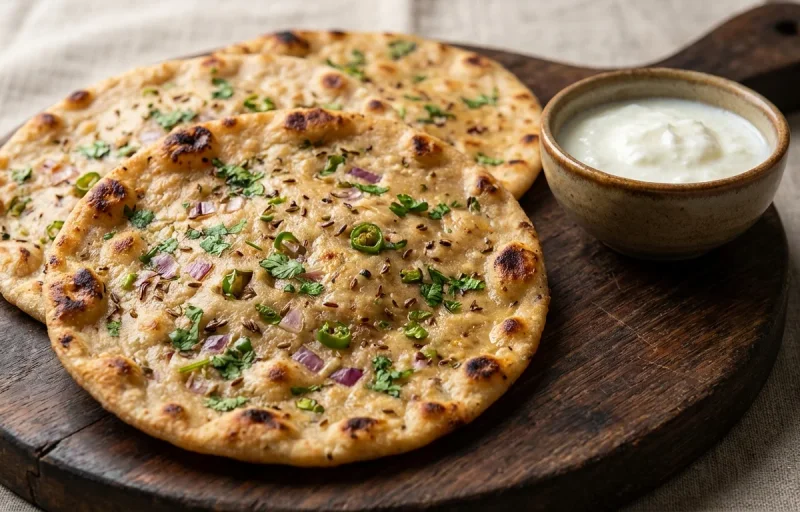
- 4This flour can also be used as a nutritious addition to other flatbreads (like roti or paratha), or as a binder for savory patties and cutlets.
STORAGE
Keep it fresh.
- Store in a cool, dark, and dry place in an airtight container to prevent moisture absorption and pest infestation.
- For longer shelf life (beyond 3-4 months), store the flour in the refrigerator or freezer to maintain its freshness and prevent the oils from turning rancid.
FAQ
Frequently asked questions.
Is bhajani flour healthy?
Yes, bhajani flour is highly nutritious as it is made from a blend of roasted grains and legumes. It is rich in dietary fiber, complex carbohydrates, and essential minerals like iron and magnesium, which support digestive health and provide sustained energy.
How much protein is in bhajani flour?
Bhajani flour contains approximately 13.4 grams of protein per 100 grams. Because it combines cereals like millet and rice with pulses like chickpeas and lentils, it provides a more complete amino acid profile than most single-grain flours.
Is bhajani flour gluten-free?
Traditional bhajani flour is often gluten-free as it typically consists of millets, rice, and lentils. However, some commercial blends may include wheat or be processed in facilities that handle gluten, so always check the ingredient label if you have a strict intolerance.
Is bhajani flour keto-friendly?
No, bhajani flour is not keto-friendly. With approximately 68.2 grams of carbohydrates per 100 grams, it is a high-carb food that would exceed the daily carbohydrate limits of a strict ketogenic diet.
What does bhajani flour taste like?
Bhajani flour has a distinctively nutty, earthy, and slightly smoky flavor. This unique profile comes from the traditional process of roasting the individual grains and legumes before they are ground into flour.
What is bhajani flour used for?
It is primarily used in Indian cuisine to make Thalipeeth, a savory multi-grain pancake. It is also the base for Bhajani Chakli, a popular crunchy snack made during festivals like Diwali.
How do you prepare bhajani flour for cooking?
To make Thalipeeth, mix the flour with water, chopped onions, chilies, and spices to form a soft dough. Pat the dough into flat discs directly onto a greased pan and cook with a little oil until both sides are golden and crisp.
How should I store bhajani flour?
Store bhajani flour in an airtight container in a cool, dry place to protect it from moisture and pests. Because the grains are pre-roasted, it typically stays fresh for 2 to 3 months, but can be kept in the refrigerator to extend its shelf life further.
Why is bhajani flour considered a superior protein source to plain wheat flour?
Bhajani flour uses a combination of cereals and pulses, which creates a complementary protein profile. This means it provides a wider range of essential amino acids that are often missing when consuming a single type of grain.
RECIPES
Cook with bhajani flour.
4 recipes · sorted by what’s quick