grain1 recipes
Bhutanese Red Rice.
VegetarianVeganGluten-freeDairy-freeNut-freePeanut-freeSoy-freeEgg-freeShellfish-freeHoney-freeAlcohol-freeWhole grain

SERVING
CALORIES
356
PROTEIN
7.5g
CARBS
76g
FAT
2.5g
FIBER
4.0g
This ingredient is flagged as naturally gluten-free. Per 100 g, it provides 0.50 µg of vitamin K.
NUTRITION PROFILE · per 100 g
Everything in this ingredient.
MACRONUTRIENTS
Calories356kcal—
Protein7.5g15%
Carbohydrates76g28%
Fiber4.0g14%
Sugar0.80g2%
Total fat2.5g3%
Saturated fat0.50g3%
Trans fat0g—
Cholesterol0mg0%
Water12g—
MINERALS
Sodium5.0mg0%
Potassium250mg5%
Calcium15mg1%
Iron1.5mg8%
Magnesium120mg29%
Phosphorus300mg24%
Zinc2.0mg18%
Copper0.30mg33%
Manganese3.5mg152%
Selenium15µg27%
VITAMINS
Vitamin A0µg0%
Vitamin C0mg0%
Vitamin D0µg0%
Vitamin E0.10mg1%
Vitamin K0.50µg0%
Thiamin (B1)0.40mg33%
Riboflavin (B2)0.05mg4%
Niacin (B3)4.5mg28%
Pantothenic acid (B5)1.0mg20%
Vitamin B60.50mg29%
Folate (B9)20µg5%
Vitamin B120µg0%
%DV based on a 2,000 cal diet. Source: USDA FoodData Central. A dash in the %DV column means there’s no established Daily Value for that nutrient.
MEASUREMENT CONVERSIONS
How much is what.
1 cup190g
1 tablespoon12g
1 teaspoon4g
1 oz28.4g
1 lb453.6g
COOKING TIPS
In the kitchen.
- 1Rinse thoroughly in cold water until the water runs clear to remove excess starch
- 2Soak for 20-30 minutes before cooking to achieve a softer, more even texture
- 3Use a ratio of 2 cups of water to 1 cup of rice and let it rest for 10 minutes after cooking
STORAGE
Keep it fresh.
- Store in an airtight container in a cool, dark, and dry pantry
- Keep away from moisture and direct sunlight to prevent spoilage
- For extended shelf life beyond one year, store in the refrigerator or freezer
FAQ
Frequently asked questions.
How long does dry Bhutanese red rice last?
When stored in an airtight container in a cool, dry place, it can last for 12 to 18 months.
Can I freeze cooked Bhutanese red rice?
Yes, cooked rice can be frozen in airtight bags for up to 3 months. Reheat with a tablespoon of water.
What is the best way to identify high-quality Bhutanese red rice?
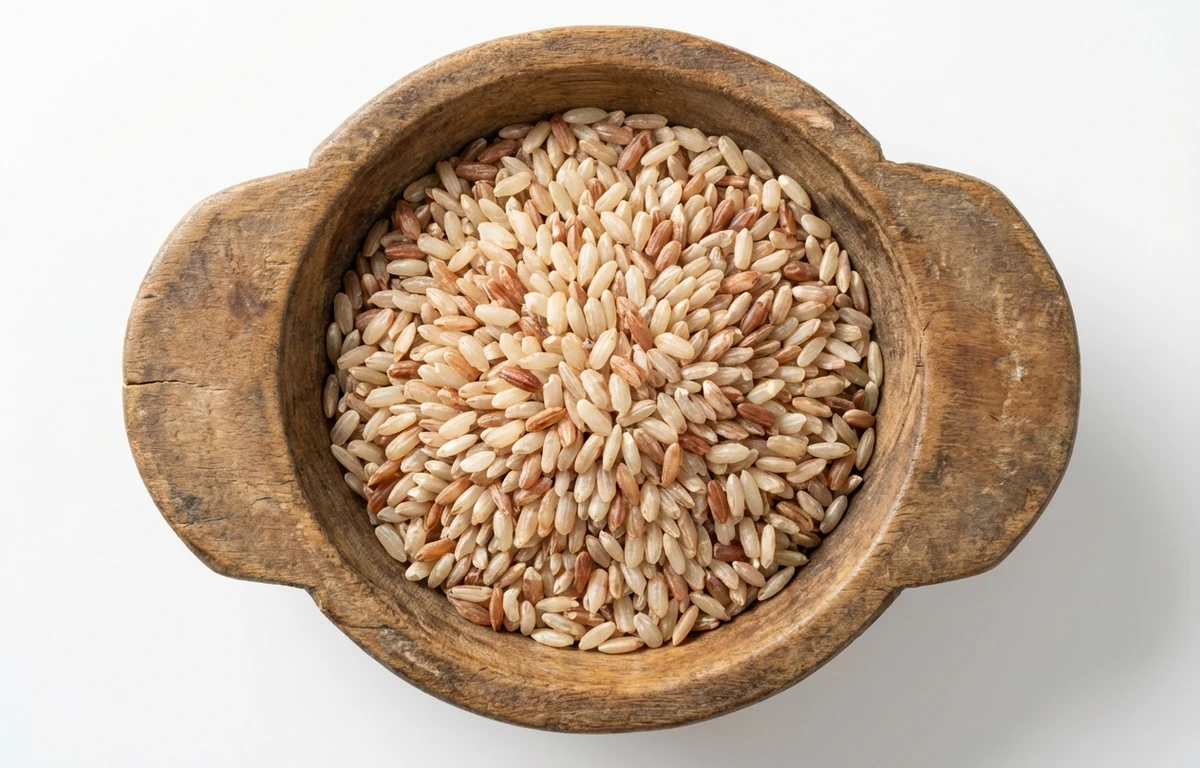
Look for uniform, deep reddish-pink grains that are not broken or dusty, and ensure the packaging is well-sealed.
What are the best substitutes for Bhutanese red rice?
Brown rice, Camargue red rice, or Himalayan red rice are the closest alternatives in texture and flavor.
Does Bhutanese red rice contain gluten?
No, it is naturally gluten-free and safe for individuals with gluten sensitivities.
How do I prepare it for cooking?
Rinse the rice several times to remove surface starch and debris, then soak if a softer texture is desired.
What does Bhutanese red rice taste like?
It has a distinct nutty, earthy flavor with a firm and slightly chewy texture compared to white rice.
Is Bhutanese red rice a whole grain?
Yes, it is a whole grain because the nutrient-dense bran and germ layers are left intact during processing.
What dishes pair well with this rice?
It pairs excellently with hearty stews, roasted vegetables, stir-fries, and traditional Bhutanese dishes like Ema Datshi.
RECIPES
Cook with bhutanese red rice.
1 recipes · sorted by what’s quick