
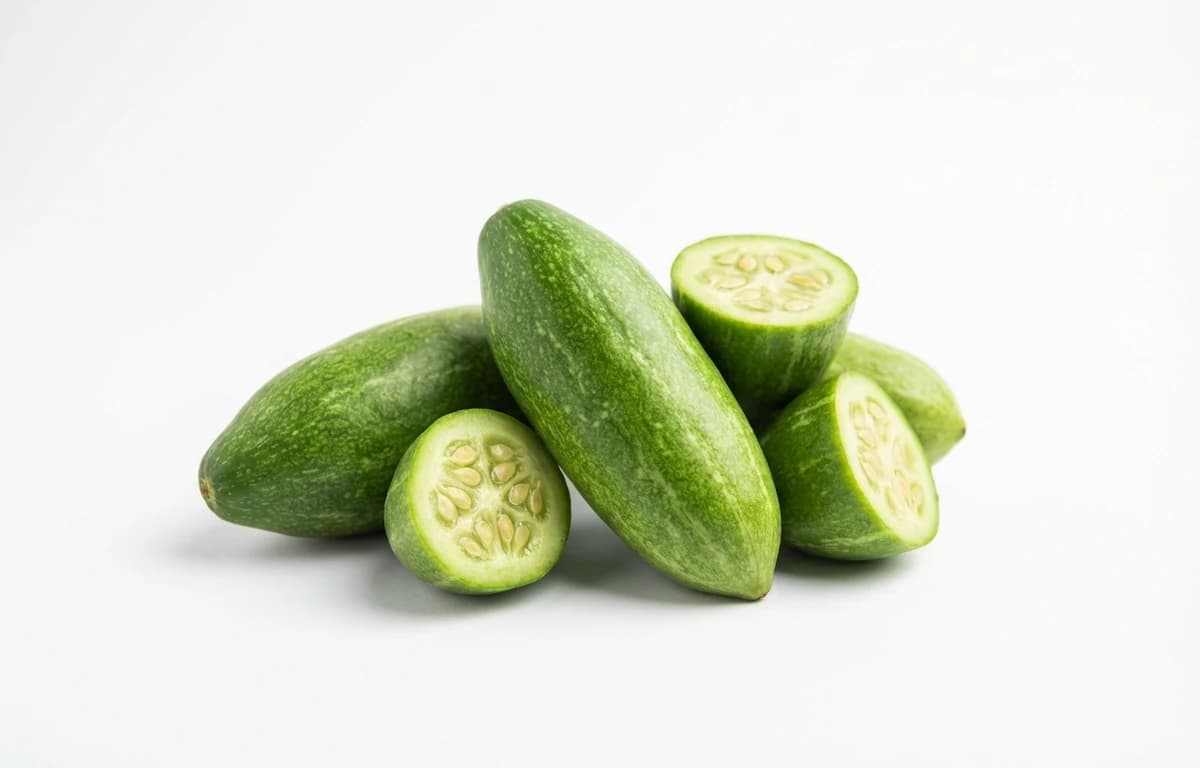
big kovai
Also known as: ivy gourd, tindora, kundru, tondli, dondakaya, kovakkai, scarlet gourd, big ivy gourd, gentleman's toes
Loading...
Also known as: ivy gourd, tindora, kundru, tondli, dondakaya, kovakkai, scarlet gourd, big ivy gourd, gentleman's toes
Per 100g
Nutrition data source: USDA FoodData Central
Common measurement equivalents in grams
Big kovai, also known as Ivy Gourd or Tindora, is a tropical vine vegetable widely used in Indian and Southeast Asian cuisine for its mild flavor and crunchy texture.
Look for firm, bright green gourds. Avoid those that are soft, shriveled, or have turned red/orange inside, as these are overripe and may taste bitter or mushy.
Yes, young and tender kovai can be eaten raw in salads, though it is most commonly stir-fried, sautéed, or added to curries.
Zucchini, chayote squash, or green beans are the best substitutes as they offer a similar mild flavor and firm texture when cooked.
Yes, several studies suggest that ivy gourd has glucose-lowering properties and is frequently recommended in Ayurvedic diets for managing blood sugar.
Wash them thoroughly, trim off the stem and blossom ends, and slice them into thin rounds or long strips depending on the recipe.
Yes, you can blanch sliced kovai for 2 minutes, cool them in ice water, dry them, and then freeze them in airtight bags for up to 3 months.
A red interior indicates the gourd is fully ripe. While still edible, it becomes much softer and develops a different, sometimes sweeter or slightly fermented flavor that is less desirable for savory stir-fries.
big kovai is a versatile ingredient found in cuisines around the world. With 18 calories per 100g and 1.2 grams of protein, it's a nutritious addition to many dishes.
Explore more ingredients in the vegetable category with complete nutrition information.
View all vegetable →