
Other3 recipes
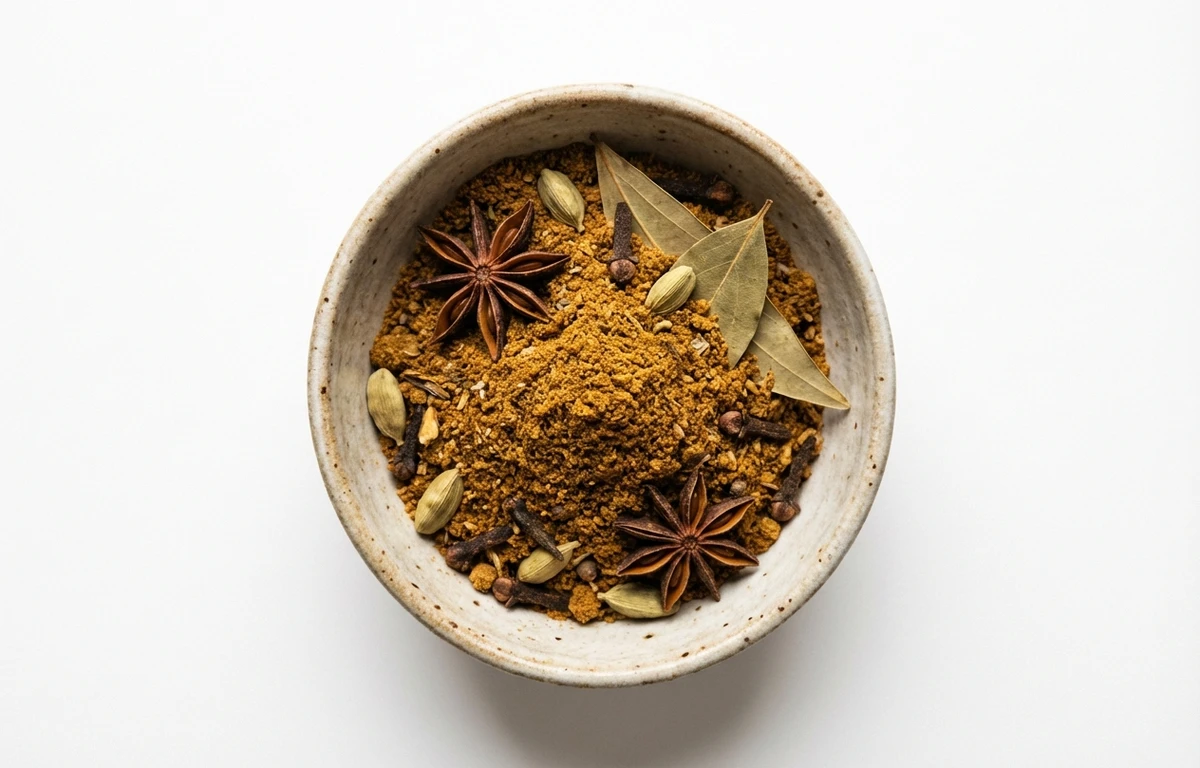
biryani masala powder.
VegetarianVeganGluten-freeDairy-freeNut-freePeanut-freeSoy-freeEgg-freeShellfish-freeHoney-freeAlcohol-free
ALSO KNOWN AS
biryani masalabiryani spice mixbiryani powderhomemade biryani masala
SERVING
CALORIES
354
PROTEIN
11.5g
CARBS
48.2g
FAT
12.8g
FIBER
28.5g
NUTRITION PROFILE · per 100 g
Everything in this ingredient.
MACRONUTRIENTS
Calories354kcal—
Protein11.5g23%
Carbohydrates48.2g18%
Fiber28.5g102%
Sugar1.5g3%
Total fat12.8g16%
Saturated fat1.2g6%
Trans fat0g—
Cholesterol0mg0%
Water8.5g—
MINERALS
Sodium65mg3%
Potassium1150mg24%
Calcium620mg48%
Iron28.5mg158%
Magnesium180mg43%
Phosphorus240mg19%
Zinc3.8mg35%
Copper0.80mg89%
Manganese4.2mg183%
Selenium12.5µg23%
VITAMINS
Vitamin A45µg5%
Vitamin C5.2mg6%
Vitamin D0µg0%
Vitamin E2.5mg17%
Vitamin K15µg13%
Thiamin (B1)0.30mg25%
Riboflavin (B2)0.20mg15%
Niacin (B3)2.8mg18%
Pantothenic acid (B5)0.60mg12%
Vitamin B60.40mg24%
Folate (B9)40µg10%
Vitamin B120µg0%
%DV based on a 2,000 cal diet. Source: USDA FoodData Central. A dash in the %DV column means there’s no established Daily Value for that nutrient.
MEASUREMENT CONVERSIONS
How much is what.
1 cup110g
1 tablespoon7.5g
1 teaspoon2.5g
1 oz28.4g
1 lb453.6g
1 ml1.8g
HEALTH BENEFITS
Why eat it.
- ✓Aids digestion through carminative properties of cumin and fennel
- ✓Contains anti-inflammatory compounds from cloves and cinnamon
- ✓Rich in antioxidants that help fight oxidative stress
- ✓May help boost metabolism and improve appetite
- ✓Provides essential minerals like iron and manganese
COOKING TIPS
In the kitchen.
- 1Bloom the powder in hot oil or ghee to release the full aromatic profile
- 2Add towards the middle of the cooking process for a balanced flavor
- 3Use as a dry rub for meats or vegetables before marinating with yogurt
STORAGE
Keep it fresh.
- Store in an airtight glass container to preserve volatile oils
- Keep in a cool, dark, and dry place away from direct sunlight
- Avoid using a wet spoon to prevent moisture entry and mold growth
FAQ
Frequently asked questions.
How long does biryani masala powder last?
When stored in an airtight container in a cool, dark place, it maintains peak flavor for 6-12 months. It doesn't spoil quickly but loses its aroma over time.
Can I substitute garam masala for biryani masala?
Yes, but biryani masala is more complex. To substitute, use garam masala and add extra ground fennel, star anise, and dried plums or mace if available.
Is biryani masala powder spicy?
It is highly aromatic but the heat level depends on the amount of red chili powder or black pepper in the specific blend. Most commercial blends are medium-spicy.
Does biryani masala contain salt?
Many commercial brands include salt as a preservative and flavor enhancer. Always check the ingredient label or taste before adding extra salt to your dish.
How much biryani masala should I use per kg of rice?
Generally, 2 to 3 tablespoons of biryani masala powder is sufficient for 1 kg of meat and rice combined, depending on your flavor preference.
Is biryani masala powder gluten-free?
Pure spice blends are naturally gluten-free. However, some commercial brands may use anti-caking agents that contain gluten, so check the packaging.
Can I freeze biryani masala powder?
Freezing is not recommended as moisture can enter the container upon opening, causing the powder to clump and lose its essential oils.
What are the main ingredients in biryani masala?
Common ingredients include coriander seeds, cumin, cardamom, cloves, cinnamon, bay leaves, star anise, mace, and black peppercorns.
How can I tell if my biryani masala has gone bad?
If the powder has lost its strong aroma, looks faded in color, or shows any signs of clumping or mold, it should be replaced.
RECIPES
Cook with biryani masala powder.
3 recipes · sorted by what’s quick



















