
Grain
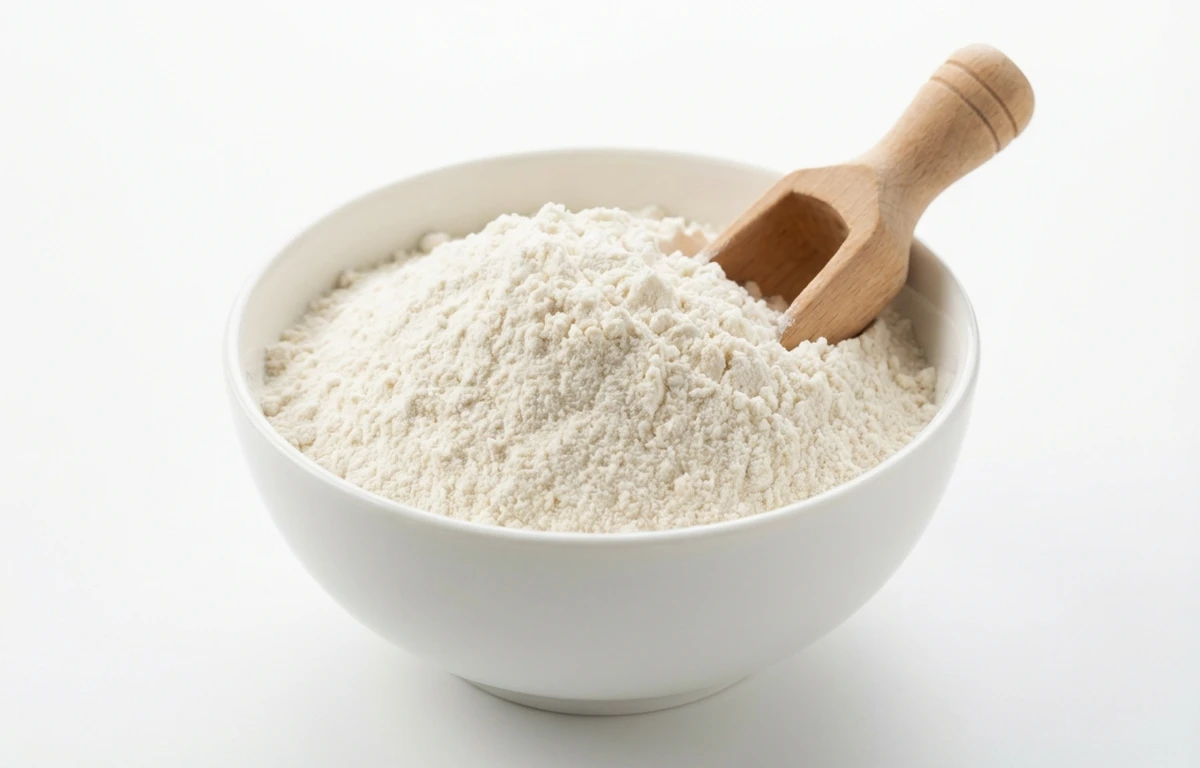
bleached all-purpose wheat flour.
VegetarianVeganGluten-freeDairy-freeNut-freePeanut-freeSoy-freeEgg-freeShellfish-freeHoney-freeAlcohol-free
SERVING
CALORIES
364
PROTEIN
10.3g
CARBS
76.3g
FAT
0.98g
FIBER
2.7g
NUTRITION PROFILE · per 100 g
Everything in this ingredient.
MACRONUTRIENTS
Calories364kcal—
Protein10.3g21%
Carbohydrates76.3g28%
Fiber2.7g10%
Sugar0.27g1%
Total fat0.98g1%
Saturated fat0.15g1%
Trans fat0g—
Cholesterol0mg0%
Water11.9g—
MINERALS
Sodium2.0mg0%
Potassium107mg2%
Calcium15mg1%
Iron4.6mg26%
Magnesium22mg5%
Phosphorus108mg9%
Zinc0.70mg6%
Copper0.14mg16%
Manganese0.68mg30%
Selenium33.9µg62%
VITAMINS
Vitamin A0µg0%
Vitamin C0mg0%
Vitamin D0µg0%
Vitamin E0.06mg0%
Vitamin K0.30µg0%
Thiamin (B1)0.77mg64%
Riboflavin (B2)0.49mg38%
Niacin (B3)5.9mg37%
Pantothenic acid (B5)0.43mg9%
Vitamin B60.04mg2%
Folate (B9)154µg39%
Vitamin B120µg0%
%DV based on a 2,000 cal diet. Source: USDA FoodData Central. A dash in the %DV column means there’s no established Daily Value for that nutrient.
MEASUREMENT CONVERSIONS
How much is what.
1 cup120g
1 tablespoon8g
1 teaspoon2.5g
1 ml0.5g
1 liter533.3g
HEALTH BENEFITS
Why eat it.
- ✓Provides a quick source of energy from refined carbohydrates.
- ✓Often enriched with B vitamins like niacin, thiamin, and folic acid, which support metabolism.
- ✓Frequently fortified with iron, which is crucial for oxygen transport and preventing anemia.
COOKING TIPS
In the kitchen.
- 1Sift before use to aerate the flour, which results in a lighter texture for cakes and pastries.
- 2Ideal for creating a roux (a mixture of fat and flour) as a base for thickening sauces, gravies, and soups.
- 3Avoid over-mixing batters for items like muffins and pancakes to prevent tough results from excessive gluten development.
- 4Its moderate protein content makes it versatile for a wide range of recipes, from cookies and biscuits to quick breads and pie crusts.
STORAGE
Keep it fresh.
- Store in an airtight container in a cool, dry, and dark pantry for up to 6-8 months.
- For longer-term storage (up to 2 years), place the airtight container in the freezer to prevent spoilage and pest infestation.
FAQ
Frequently asked questions.
Is bleached all-purpose flour healthy?
While refined, bleached all-purpose flour provides a quick source of energy and is typically enriched with B vitamins and iron to support metabolism. However, it is lower in fiber than whole-grain flours, so it is best consumed in moderation as part of a balanced diet.
How many calories and carbohydrates are in 100g of this flour?
100g of bleached all-purpose wheat flour contains approximately 364 calories and 76.31g of carbohydrates. It also provides about 10.33g of protein and a very low fat content of 0.98g.
Is bleached all-purpose flour gluten-free?
No, this flour is made from wheat and contains gluten. It is not suitable for individuals with celiac disease or those following a gluten-free diet.
Is bleached all-purpose flour vegan?
Yes, bleached all-purpose flour is a plant-based product made from wheat and is suitable for vegan and vegetarian diets. It contains no animal-derived ingredients.
Can I use this flour on a keto or low-carb diet?
No, this flour is not keto-friendly because it is very high in refined carbohydrates. Those on low-carb diets should opt for alternatives like almond flour or coconut flour instead.
What is the difference between bleached and unbleached all-purpose flour?
Bleached flour is treated with chemical agents to speed up the whitening process and soften the wheat proteins, resulting in a finer, softer texture. Unbleached flour ages naturally, has a slightly off-white color, and provides a bit more structure in baked goods.
What are the best culinary uses for bleached all-purpose flour?
Its fine texture makes it ideal for delicate baked goods like cookies, pie crusts, pancakes, and muffins. It is also a versatile thickener for sauces, gravies, and roux.
How should I store bleached all-purpose flour?
Store flour in an airtight container in a cool, dry, and dark place to protect it from moisture and pests. For long-term storage, it can be kept in the refrigerator or freezer to maintain freshness.
Can I substitute whole wheat flour for bleached all-purpose flour?
Yes, but whole wheat flour is denser and absorbs more liquid. It is generally recommended to substitute only up to 50% of the all-purpose flour with whole wheat to avoid a heavy or dry texture in your recipes.
How do I know if my flour has gone bad?
Fresh flour should have a neutral, mild scent; if it smells sour, musty, or oily, it has likely gone rancid. Additionally, check for any signs of small insects, known as weevils, which indicate the flour should be discarded.



















