
Grain
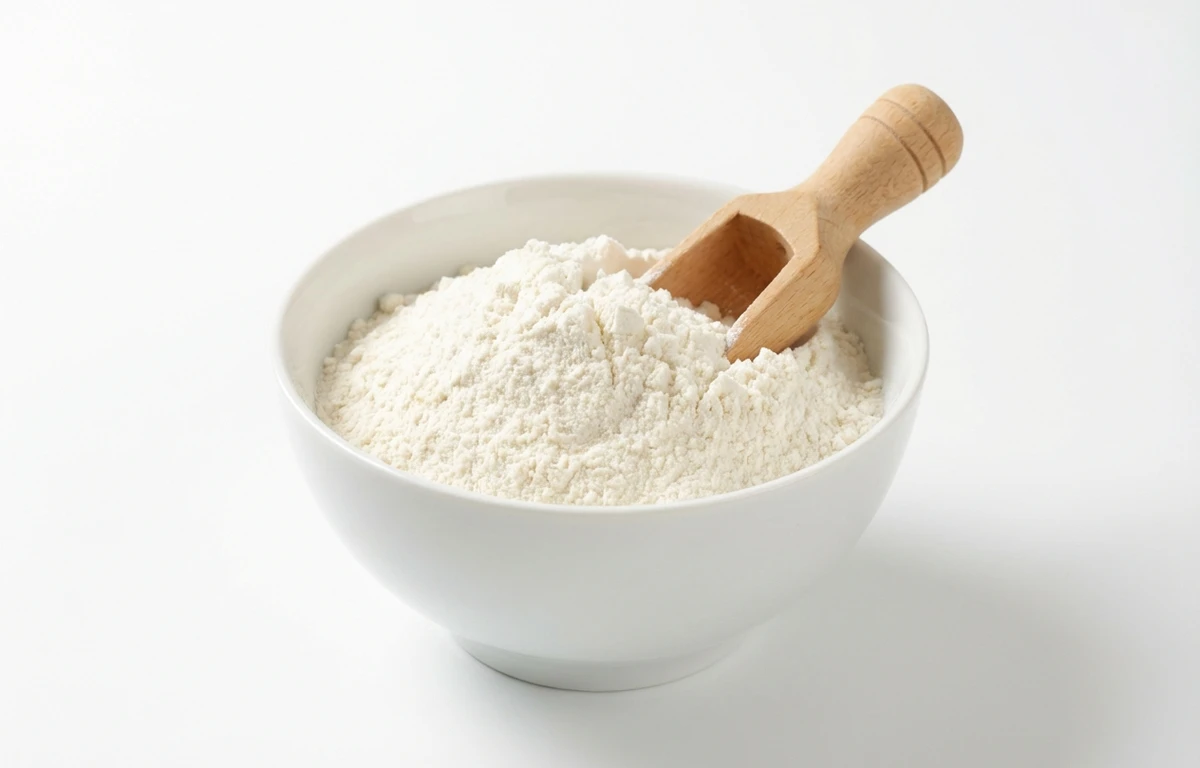
bleached enriched white wheat flour.
VegetarianVeganGluten-freeDairy-freeNut-freePeanut-freeSoy-freeEgg-freeShellfish-freeHoney-freeAlcohol-free
ALSO KNOWN AS
bleached wheat flourenriched wheat flour
SERVING
CALORIES
366
PROTEIN
9.7g
CARBS
76.2g
FAT
1.5g
FIBER
2.4g
NUTRITION PROFILE · per 100 g
Everything in this ingredient.
MACRONUTRIENTS
Calories366kcal—
Protein9.7g19%
Carbohydrates76.2g28%
Fiber2.4g9%
Sugar0.49g1%
Total fat1.5g2%
Saturated fat0.30g2%
Cholesterol0mg0%
Water12g—
MINERALS
Sodium2.0mg0%
Potassium149mg3%
Calcium20mg2%
Iron5.1mg28%
Magnesium25mg6%
Phosphorus107mg9%
Zinc1.0mg9%
Copper0.19mg21%
Manganese0.82mg36%
Selenium14.6µg27%
VITAMINS
Vitamin A0µg0%
Vitamin C0mg0%
Vitamin D0µg0%
Vitamin E0.05mg0%
Vitamin K0.30µg0%
Thiamin (B1)0.74mg62%
Riboflavin (B2)0.45mg35%
Niacin (B3)6.0mg37%
Pantothenic acid (B5)0.25mg5%
Vitamin B60.04mg2%
Folate (B9)170µg43%
Vitamin B120µg0%
%DV based on a 2,000 cal diet. Source: USDA FoodData Central. A dash in the %DV column means there’s no established Daily Value for that nutrient.
MEASUREMENT CONVERSIONS
How much is what.
1 cup125g
1 tablespoon7.8g
1 teaspoon2.6g
1 ml0.5g
1 liter520g
HEALTH BENEFITS
Why eat it.
- ✓Fortified with folic acid, which is crucial for preventing neural tube defects during pregnancy.
- ✓Enriched with iron, which helps prevent anemia and supports oxygen transport in the blood.
- ✓Provides B vitamins like niacin, thiamin, and riboflavin, which are essential for converting food into energy.
- ✓Serves as a quick source of carbohydrates for immediate energy needs.
COOKING TIPS
In the kitchen.
- 1Sift before use to aerate the flour and remove any clumps, resulting in a lighter and more tender texture in cakes, cookies, and pastries.
- 2Due to its fine texture and lower protein content, it is ideal for making delicate baked goods like angel food cake, biscuits, and pie crusts.
- 3When used as a thickening agent for sauces or gravies, mix it with a small amount of cold liquid first to create a slurry, preventing lumps when added to hot liquids.
- 4Avoid over-mixing batters and doughs made with this flour to prevent developing excess gluten, which can make the final product tough.
STORAGE
Keep it fresh.
- Store in a cool, dry, dark place in an airtight container to prevent spoilage and pest infestation. It can typically last for 6-8 months.
- For longer-term storage (up to a year), place the flour in a freezer-safe bag or container and store it in the freezer.
FAQ
Frequently asked questions.
Is bleached enriched white wheat flour healthy?
While highly processed, this flour is fortified with essential nutrients like folic acid, iron, and B vitamins to replace those lost during milling. It provides a quick source of energy but lacks the fiber found in whole wheat, so it is best consumed in moderation as part of a balanced diet.
What does 'enriched' mean in this flour?
Enriched means that specific nutrients—including iron, niacin, thiamin, and riboflavin—are added back into the flour after the refining process. It is also fortified with folic acid, which is crucial for preventing neural tube defects during pregnancy and supporting blood health.
Is bleached enriched white wheat flour gluten-free?
No, this flour is derived from wheat and contains gluten. It is not safe for individuals with celiac disease or those with non-celiac gluten sensitivity.
Is this flour keto-friendly or low-carb?
No, it is very high in carbohydrates, containing approximately 76.22g of carbs per 100g. It is generally avoided on ketogenic and low-carb diets because it can cause a significant spike in blood sugar levels.
Is bleached enriched white wheat flour vegan?
Yes, this flour is a plant-based product made entirely from wheat and mineral/vitamin additives. It contains no animal products and is suitable for vegan and vegetarian diets.
What is the difference between bleached and unbleached flour in baking?
Bleached flour is treated with agents to whiten it and speed up the aging process, resulting in a finer grain and softer texture. It is ideal for delicate baked goods like cakes, cookies, and pastries, whereas unbleached flour is better for crusty breads.
Can I substitute white flour with whole wheat flour?
Yes, but whole wheat flour is denser and absorbs more moisture. When substituting, use about 3/4 cup of whole wheat for every 1 cup of white flour, or use a 50/50 blend to ensure the final product isn't too heavy or dry.
How should I store this flour and how long does it last?
Store flour in an airtight container in a cool, dry place to protect it from moisture and pests. It typically stays fresh for 6 to 12 months at room temperature, or up to two years if kept in the freezer.
Is bleached white flour good for weight loss?
It is not ideal for weight loss as it is calorie-dense (366 calories per 100g) and has a high glycemic index. Because it lacks fiber, it is less filling than whole grains, which may lead to increased hunger and higher calorie consumption.
How do I know if my flour has gone bad?
Fresh flour should have a neutral, mild scent. If it develops a sour, musty, or oily odor, it has likely gone rancid; additionally, check for small brown specks or movement, which indicate the presence of flour weevils.



















