
Grain
bleached unenriched white wheat flour.
VegetarianVeganGluten-freeDairy-freeNut-freePeanut-freeSoy-freeEgg-freeShellfish-freeHoney-freeAlcohol-free
ALSO KNOWN AS
bleached wheat flourunenriched wheat flour
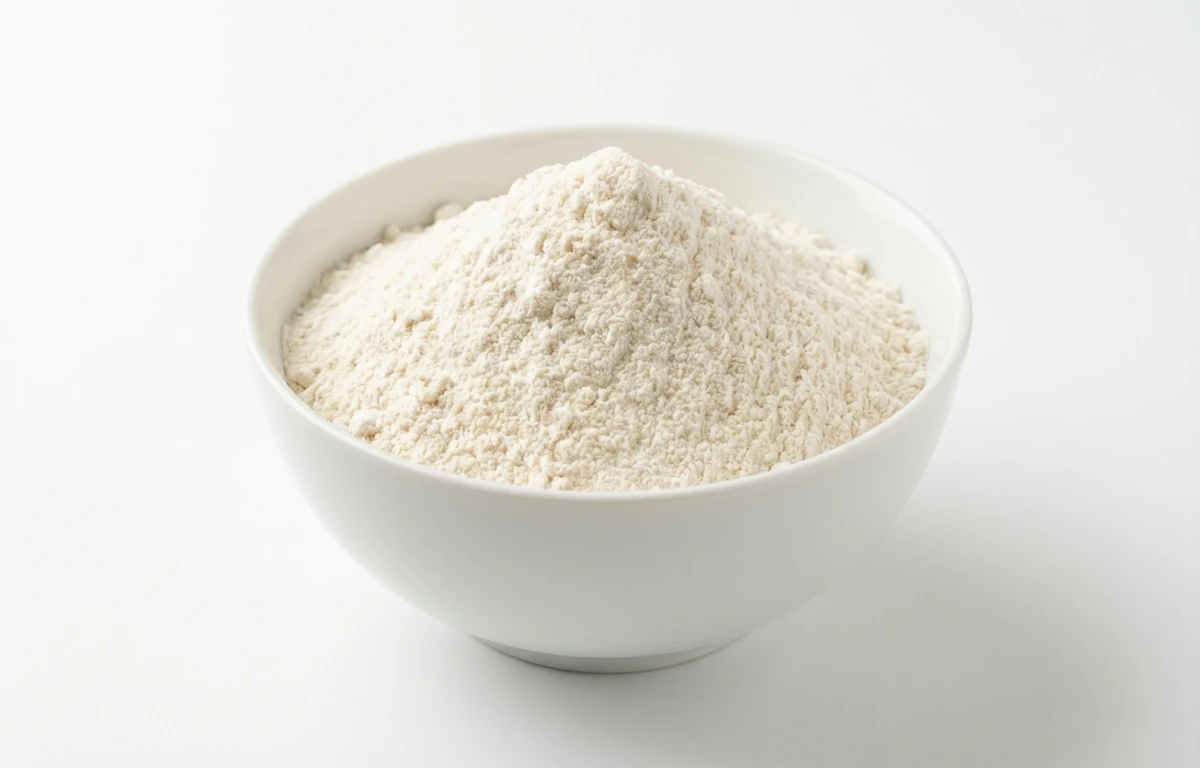
SERVING
CALORIES
366
PROTEIN
9.7g
CARBS
76.2g
FAT
1.5g
FIBER
2.4g
NUTRITION PROFILE · per 100 g
Everything in this ingredient.
MACRONUTRIENTS
Calories366kcal—
Protein9.7g19%
Carbohydrates76.2g28%
Fiber2.4g9%
Sugar0.49g1%
Total fat1.5g2%
Saturated fat0.30g2%
Cholesterol0mg0%
Water12g—
MINERALS
Sodium2.0mg0%
Potassium149mg3%
Calcium20mg2%
Iron1.3mg7%
Magnesium25mg6%
Phosphorus107mg9%
Zinc1.0mg9%
Copper0.19mg21%
Manganese0.82mg36%
Selenium14.6µg27%
VITAMINS
Vitamin A0µg0%
Vitamin C0mg0%
Vitamin D0µg0%
Vitamin E0.05mg0%
Vitamin K0.30µg0%
Thiamin (B1)0.19mg16%
Riboflavin (B2)0.07mg5%
Niacin (B3)1.2mg8%
Pantothenic acid (B5)0.25mg5%
Vitamin B60.04mg2%
Folate (B9)31µg8%
Vitamin B120µg0%
%DV based on a 2,000 cal diet. Source: USDA FoodData Central. A dash in the %DV column means there’s no established Daily Value for that nutrient.
MEASUREMENT CONVERSIONS
How much is what.
1 cup125g
1 tablespoon7.8g
1 teaspoon2.6g
1 ml0.5g
1 liter520g
HEALTH BENEFITS
Why eat it.
- ✓Provides a quick source of simple carbohydrates for immediate energy.
- ✓Naturally low in fat, sodium, and cholesterol.
- ✓Can be easier to digest for some individuals compared to whole grain flours due to its low fiber content.
- ✓Lacks the added nutrients (B vitamins, iron) found in enriched flour, making it less nutritionally dense.
COOKING TIPS
In the kitchen.
- 1Sift before using in recipes like cakes and pastries to aerate the flour, resulting in a lighter, more tender texture.
- 2Ideal for creating delicate baked goods such as pie crusts, biscuits, and cookies where a tough, chewy structure is not desired.
- 3To avoid lumps when thickening sauces or gravies, mix the flour with a small amount of cold liquid to form a smooth paste (slurry) before adding it to the hot liquid.
- 4Avoid overmixing batters for items like muffins and pancakes to prevent excessive gluten development, which can make the final product tough.
STORAGE
Keep it fresh.
- Store in a cool, dry, dark place in an airtight container to prevent moisture absorption and pest infestation for up to 6-8 months.
- For longer-term storage (up to a year), place the airtight container in the freezer to maintain freshness.
FAQ
Frequently asked questions.
Is bleached unenriched white wheat flour healthy?
While it provides a quick source of energy through simple carbohydrates and is naturally low in fat and sodium, it is less nutritionally dense than other flours. Because it is unenriched, it lacks the B vitamins and iron found in enriched varieties, and the milling process removes most of the fiber and minerals found in the original grain.
What is the difference between enriched and unenriched white flour?
Enriched flour has specific nutrients like iron and B vitamins (folic acid, riboflavin, niacin, and thiamine) added back after the milling process. Unenriched flour does not have these nutrients replaced, meaning it provides calories and carbohydrates but fewer essential vitamins and minerals.
How many calories and carbs are in 100g of this flour?
100g of bleached unenriched white wheat flour contains approximately 366 calories and 76.22g of carbohydrates. It also provides about 9.71g of protein and a very low fat content of 1.48g.
Is bleached unenriched white wheat flour gluten-free?
No, this flour is derived from wheat and contains gluten. It is not safe for individuals with celiac disease, non-celiac gluten sensitivity, or wheat allergies.
Is this flour vegan and vegetarian?
Yes, bleached unenriched white wheat flour is both vegan and vegetarian. It is a plant-based product made entirely from wheat grain, and the bleaching agents used are typically mineral-based or gaseous and do not involve animal products.
Is it suitable for a keto or low-carb diet?
No, this flour is not keto-friendly. It is very high in carbohydrates (76.22g per 100g) and contains very little fiber, which leads to a high net carb count that can quickly spike blood sugar levels.
Why is this flour bleached?
Bleaching uses chemical agents to whiten the flour and speed up the aging process. This results in a finer grain, a softer texture in baked goods, and a brighter white color, which is often preferred for delicate cakes and pastries.
What are the best culinary uses for this flour?
Its fine texture makes it ideal for cookies, pie crusts, quick breads, and certain cakes where a soft, tender crumb is desired. It is also commonly used as a thickening agent for gravies and sauces.
Can I substitute this with whole wheat flour?
Yes, but the results will differ. Whole wheat flour is much denser and has a stronger flavor; if substituting, you may need to use slightly less flour and add more liquid to account for the higher fiber content in the whole wheat version.
How should I store this flour and how long does it last?
Store it in an airtight container in a cool, dry, and dark place to prevent it from absorbing moisture or odors. It typically stays fresh for 6 to 12 months at room temperature, or up to two years if stored in the freezer.



















