
Nut Seed
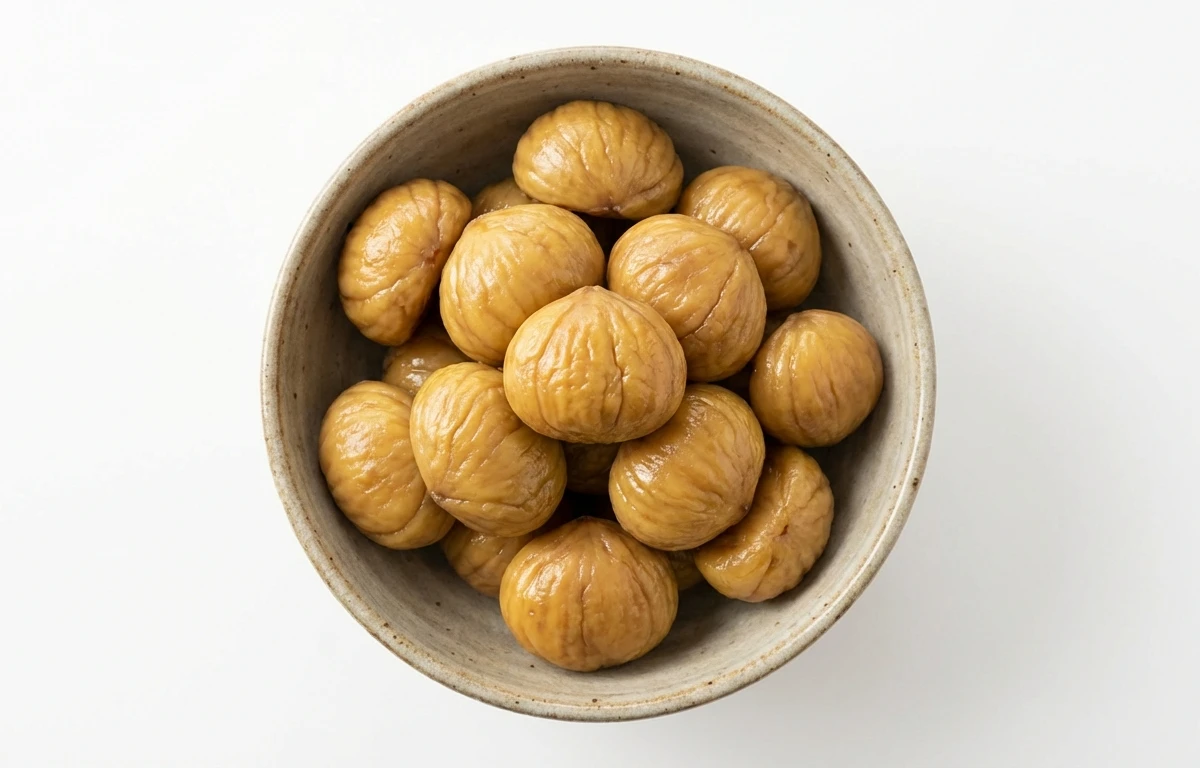
boiled and steamed japanese chestnuts.
VegetarianVeganGluten-freeDairy-freeNut-freePeanut-freeSoy-freeEgg-freeShellfish-freeHoney-freeAlcohol-free
ALSO KNOWN AS
japanese chestnuts
SERVING
CALORIES
131
PROTEIN
2.0g
CARBS
28g
FAT
1.4g
FIBER
6.6g
NUTRITION PROFILE · per 100 g
Everything in this ingredient.
MACRONUTRIENTS
Calories131kcal—
Protein2.0g4%
Carbohydrates28g10%
Fiber6.6g24%
Sugar7.1g14%
Total fat1.4g2%
Saturated fat0.20g1%
Trans fat0g—
Cholesterol0mg0%
Water61g—
MINERALS
Sodium1.0mg0%
Potassium460mg10%
Calcium27mg2%
Iron1.4mg8%
Magnesium45mg11%
Phosphorus68mg5%
Zinc0.40mg4%
Copper0.40mg44%
Manganese0.80mg35%
Selenium0.70µg1%
VITAMINS
Vitamin A1.0µg0%
Vitamin C26mg29%
Vitamin D0µg0%
Vitamin E0.50mg3%
Vitamin K0µg0%
Thiamin (B1)0.15mg13%
Riboflavin (B2)0.05mg4%
Niacin (B3)0.90mg6%
Pantothenic acid (B5)0.50mg10%
Vitamin B60.25mg15%
Folate (B9)62µg16%
Vitamin B120µg0%
%DV based on a 2,000 cal diet. Source: USDA FoodData Central. A dash in the %DV column means there’s no established Daily Value for that nutrient.
MEASUREMENT CONVERSIONS
How much is what.
1 cup190g
1 tablespoon11.9g
1 teaspoon4g
1 oz28.4g
1 lb453.6g
1 ml0.8g
1 liter803g
1 piece20g
HEALTH BENEFITS
Why eat it.
- ✓Rich in complex carbohydrates and fiber, providing sustained energy and supporting digestive health.
- ✓A good source of vitamin C (unusual for a nut), manganese, and copper, which support immune function and bone health.
- ✓Contains antioxidants like gallic acid and ellagic acid that help protect cells from oxidative damage.
- ✓Naturally low in fat and cholesterol-free, making them a heart-healthy choice compared to other nuts.
COOKING TIPS
In the kitchen.
- 1Incorporate whole or chopped chestnuts into savory dishes like stuffings, stews, or traditional Japanese chestnut rice (kurigohan).
- 2Puree the soft, cooked chestnuts with a little sweetener and cream or a dairy-free alternative to create a base for desserts like Mont Blanc.
- 3Gently pan-fry the boiled chestnuts in butter or a neutral oil to enhance their nutty flavor and create a slightly crispy exterior before serving as a snack or side dish.
- 4The starchy texture of pureed chestnuts can be used as a natural, gluten-free thickener for soups and sauces.
STORAGE
Keep it fresh.
- Store cooked chestnuts in an airtight container in the refrigerator for up to 4 days.
- For long-term storage, freeze the cooked chestnuts in a single layer on a baking sheet before transferring to a freezer-safe bag for up to 6 months.
FAQ
Frequently asked questions.
Are boiled and steamed Japanese chestnuts healthy?
Yes, they are highly nutritious and provide a good source of complex carbohydrates and fiber for sustained energy. They are unique among nuts for being low in fat and containing significant amounts of Vitamin C, which supports immune health.
How many calories and carbs are in Japanese chestnuts?
A 100g serving of boiled or steamed Japanese chestnuts contains approximately 131 calories and 28g of carbohydrates. While higher in carbs than other nuts, they are much lower in fat, containing only about 1.4g per serving.
Are Japanese chestnuts gluten-free and vegan?
Yes, boiled and steamed Japanese chestnuts are naturally gluten-free and vegan. They are a safe and healthy snack for individuals with celiac disease or those following a plant-based diet.
Are Japanese chestnuts keto-friendly?
No, Japanese chestnuts are not considered keto-friendly because they are high in starch and carbohydrates. With 28g of carbs per 100g, they can easily exceed the daily carb limit for those on a strict ketogenic diet.
What do boiled Japanese chestnuts taste like?
They have a mild, sweet, and nutty flavor with a texture that is more starchy than crunchy. Their consistency is often compared to a dense, floury sweet potato or a firm potato.
How do you prepare and cook Japanese chestnuts?
To boil, score the shells and simmer in water for 20–30 minutes. To steam, place scored chestnuts in a steamer basket over boiling water for 30–40 minutes until the flesh is tender and the shell peels away easily.
Do I need to peel Japanese chestnuts before eating?
Yes, you must remove both the hard outer shell and the thin, bitter inner skin (pellicle) before consuming. Peeling is easiest while the chestnuts are still warm after boiling or steaming.
How should I store boiled or steamed chestnuts?
Once cooked and peeled, store them in an airtight container in the refrigerator for up to 3–5 days. For longer storage, you can freeze them in a freezer-safe bag for up to six months without significant loss of flavor.
Can I eat Japanese chestnuts raw?
It is not recommended to eat them raw as they are very hard and contain high levels of tannins, which make them bitter and difficult to digest. Boiling or steaming softens the starch and improves the flavor profile.
How can I tell if a cooked chestnut has gone bad?
Spoiled chestnuts may develop a slimy surface, visible mold, or a sour, fermented smell. If the flesh has turned significantly dark or feels mushy rather than starchy, they should be discarded.



















