
Vegetable
boiled drained unsalted zucchini.
VegetarianVeganGluten-freeDairy-freeNut-freePeanut-freeSoy-freeEgg-freeShellfish-freeHoney-freeAlcohol-free
ALSO KNOWN AS
boiled drained unsalted courgetteboiled drained unsalted summer squash
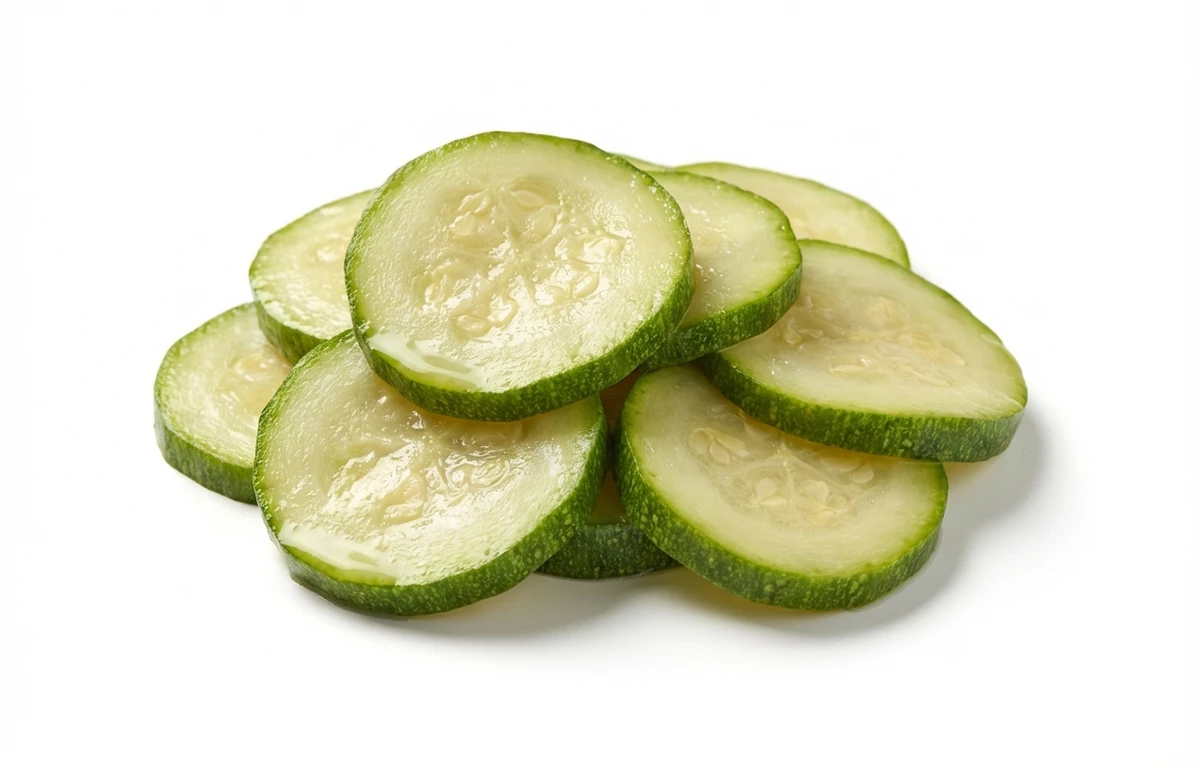
SERVING
CALORIES
22
PROTEIN
1.1g
CARBS
3.4g
FAT
0.40g
FIBER
1.1g
NUTRITION PROFILE · per 100 g
Everything in this ingredient.
MACRONUTRIENTS
Calories21.6kcal—
Protein1.1g2%
Carbohydrates3.4g1%
Fiber1.1g4%
Sugar2.2g4%
Total fat0.40g1%
Saturated fat0.10g1%
Trans fat0g—
Cholesterol0mg0%
Water94.8g—
MINERALS
Sodium3.0mg0%
Potassium264mg6%
Calcium15mg1%
Iron0.40mg2%
Magnesium17mg4%
Phosphorus32mg3%
Zinc0.30mg3%
Copper0.05mg6%
Manganese0.14mg6%
Selenium0.20µg0%
VITAMINS
Vitamin A20µg2%
Vitamin C12.9mg14%
Vitamin D0µg0%
Vitamin E0.10mg1%
Vitamin K4.1µg3%
Thiamin (B1)0.05mg4%
Riboflavin (B2)0.04mg3%
Niacin (B3)0.50mg3%
Pantothenic acid (B5)0.16mg3%
Vitamin B60.10mg6%
Folate (B9)20µg5%
Vitamin B120µg0%
%DV based on a 2,000 cal diet. Source: USDA FoodData Central. A dash in the %DV column means there’s no established Daily Value for that nutrient.
MEASUREMENT CONVERSIONS
How much is what.
1 cup180g
1 tablespoon15g
1 teaspoon5g
1 oz28.4g
1 lb453.6g
1 liter1050g
1 piece150g
HEALTH BENEFITS
Why eat it.
- ✓Low in calories and high in water content for weight management
- ✓Contains lutein and zeaxanthin which support eye health
- ✓Provides moderate amounts of Vitamin C and potassium
- ✓Easy to digest, making it suitable for sensitive stomachs
- ✓Low glycemic index, helpful for blood sugar regulation
COOKING TIPS
In the kitchen.
- 1Boil for only 3-5 minutes to prevent the zucchini from becoming overly soft
- 2Drain thoroughly in a colander to remove excess moisture before serving
- 3Add a pinch of herbs like dill or parsley after draining to enhance flavor without salt
STORAGE
Keep it fresh.
- Store in an airtight container in the refrigerator
- Use within 3 to 4 days for best quality
- Avoid freezing as the high water content causes a mushy texture upon thawing
FAQ
Frequently asked questions.
How long does boiled zucchini last in the fridge?
When stored in an airtight container, boiled zucchini will stay fresh for 3 to 5 days.
Can I freeze boiled zucchini?
It is not recommended. Because zucchini has a high water content, freezing and thawing will make it extremely mushy and watery.
Is boiled zucchini good for weight loss?
Yes, it is very low in calories (about 15 per 100g) and high in water, which helps you feel full.
What is a good substitute for boiled zucchini?
Boiled yellow summer squash or chayote squash are the best substitutes as they have similar textures and flavors.
How do I know when the zucchini is finished boiling?
It should be fork-tender but still hold its shape. This usually takes 3 to 5 minutes depending on the thickness of the slices.
Should I peel zucchini before boiling?
It is not necessary. The skin is thin, edible, and contains most of the fiber and antioxidants.
Is boiled zucchini safe for babies?
Yes, it is an excellent first food for babies because it is soft, easy to mash, and gentle on the digestive system.
Does boiling zucchini remove its nutrients?
Some water-soluble vitamins like Vitamin C and B-vitamins leach into the water. To minimize loss, use a small amount of water or steam instead.
How do I prevent boiled zucchini from being watery?
After boiling, let it sit in a colander for a few minutes to drain completely, or gently pat the slices with a paper towel.
Is boiled zucchini keto-friendly?
Yes, it is very low in net carbs (about 2.3g per 100g), making it ideal for ketogenic diets.



















