
Vegetable
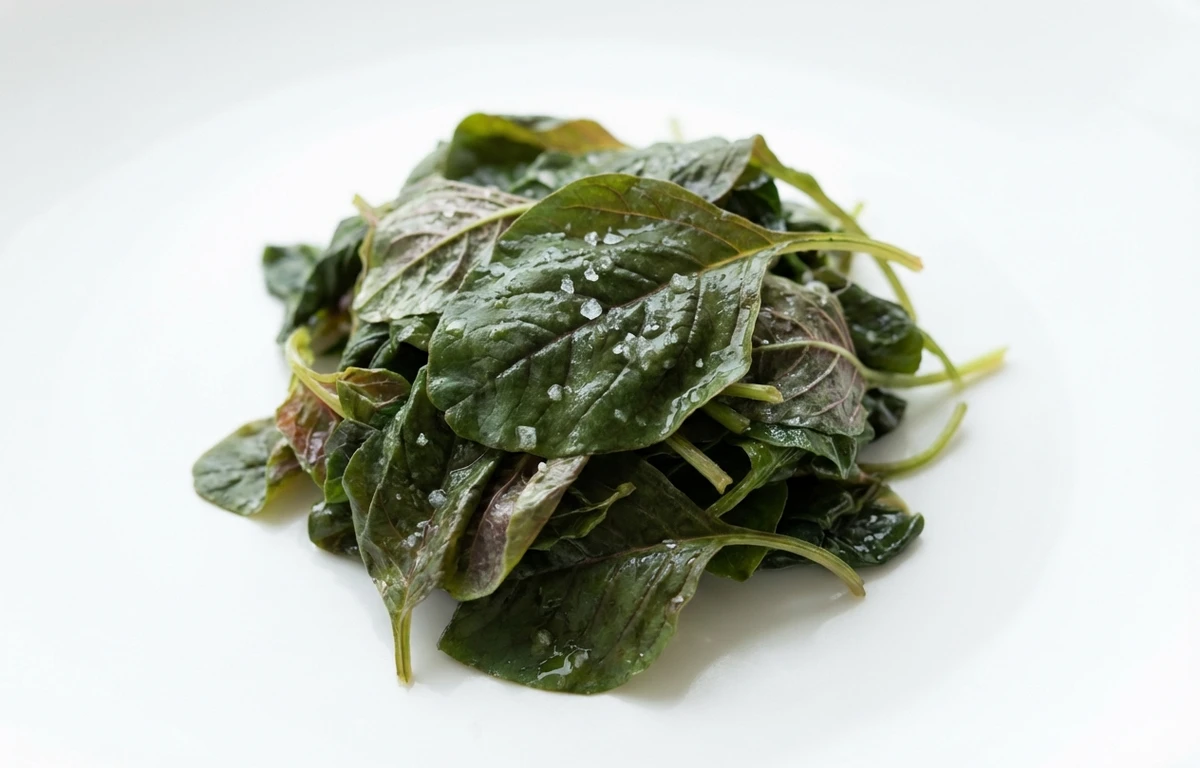
boiled salted amaranth leaves.
VegetarianVeganGluten-freeDairy-freeNut-freePeanut-freeSoy-freeEgg-freeShellfish-freeHoney-freeAlcohol-free
ALSO KNOWN AS
cooked amaranth leavescooked chaulai
SERVING
CALORIES
23
PROTEIN
2.1g
CARBS
4.1g
FAT
0.20g
FIBER
2.1g
NUTRITION PROFILE · per 100 g
Everything in this ingredient.
MACRONUTRIENTS
Calories23kcal—
Protein2.1g4%
Carbohydrates4.1g1%
Fiber2.1g8%
Sugar0.10g0%
Total fat0.20g0%
Saturated fat0.04g0%
Trans fat0g—
Cholesterol0mg0%
Water91.2g—
MINERALS
Sodium320mg14%
Potassium341mg7%
Calcium209mg16%
Iron2.3mg13%
Magnesium55mg13%
Phosphorus45mg4%
Zinc0.60mg5%
Copper0.10mg11%
Manganese0.60mg26%
Selenium0.80µg1%
VITAMINS
Vitamin A146µg16%
Vitamin C12.1mg13%
Vitamin D0µg0%
Vitamin E1.5mg10%
Vitamin K442µg368%
Thiamin (B1)0.02mg2%
Riboflavin (B2)0.12mg9%
Niacin (B3)0.50mg3%
Pantothenic acid (B5)0.05mg1%
Vitamin B60.15mg9%
Folate (B9)58µg14%
Vitamin B120µg0%
%DV based on a 2,000 cal diet. Source: USDA FoodData Central. A dash in the %DV column means there’s no established Daily Value for that nutrient.
MEASUREMENT CONVERSIONS
How much is what.
1 cup132g
1 tablespoon8.3g
1 teaspoon2.8g
1 ml0.6g
1 liter550g
HEALTH BENEFITS
Why eat it.
- ✓Rich in Vitamin K, which is crucial for blood clotting and bone health.
- ✓Excellent source of Vitamin A (as beta-carotene), supporting vision and immune function.
- ✓Provides a good amount of dietary fiber, aiding in digestion and promoting gut health.
- ✓Contains important minerals like calcium, iron, and magnesium, which support various bodily functions.
COOKING TIPS
In the kitchen.
- 1Since the leaves are already boiled and salted, they can be quickly added to stir-fries, soups, or stews near the end of cooking.
- 2Sauté the boiled leaves with garlic, onions, and a pinch of chili flakes for a simple, flavorful side dish.
- 3Chop and incorporate them into lentil dishes (dal), omelets, or savory pastries to boost nutritional value.
- 4Be mindful of the existing salt content when adding them to a recipe; taste before adding more salt.
STORAGE
Keep it fresh.
- Store the cooked amaranth leaves in an airtight container in the refrigerator and consume within 3-4 days.
- For longer storage, squeeze out excess water, portion, and freeze in freezer-safe bags for up to 3 months.
FAQ
Frequently asked questions.
Are boiled salted amaranth leaves healthy?
Yes, they are highly nutritious and low in calories. They are an excellent source of Vitamin K for bone health, Vitamin A for immune support, and essential minerals like iron and calcium, making them a dense source of micronutrients.
How many calories and carbs are in boiled salted amaranth leaves?
A 100g serving contains approximately 23 calories and 4.1g of carbohydrates. This low-calorie profile, combined with 2.1g of protein, makes it a very light yet nutrient-rich side dish.
Are boiled salted amaranth leaves good for weight loss?
Yes, they are excellent for weight loss because they are very low in calories and fat (0.2g per 100g). The dietary fiber content also helps promote a feeling of fullness, which can reduce overall calorie intake throughout the day.
Are boiled salted amaranth leaves keto-friendly?
Yes, they are very keto-friendly. With only 4.1g of total carbohydrates per 100g, they can easily fit into a low-carb or ketogenic lifestyle while providing essential electrolytes like magnesium and calcium.
Are boiled salted amaranth leaves vegan and gluten-free?
Yes, this preparation is naturally vegan and gluten-free. It consists entirely of plant-based ingredients and contains no wheat or animal products, making it suitable for a wide variety of dietary needs.
What do boiled salted amaranth leaves taste like?
They have a mild, earthy flavor that is often compared to spinach but with a slightly sweeter, nuttier undertone. The addition of salt during boiling enhances their natural savoriness and reduces any slight bitterness.
How do you prepare and boil amaranth leaves?
Thoroughly wash the leaves to remove grit, then submerge them in a pot of boiling water with a teaspoon of salt. Boil for 3 to 5 minutes until the stems are tender, then drain immediately to prevent them from becoming mushy.
How long do boiled amaranth leaves last in the refrigerator?
Once boiled and drained, they should be stored in an airtight container in the fridge, where they will stay fresh for 3 to 5 days. Reheat them gently in a pan or microwave before serving.
Can you freeze boiled amaranth leaves?
Yes, you can freeze them for long-term storage. After boiling, squeeze out as much excess water as possible and store them in freezer-safe bags for up to 6 months; they are best used in soups or stews after thawing.
Does boiling amaranth leaves affect their nutritional value?
Boiling can cause some water-soluble vitamins, like Vitamin C, to leach into the water. However, fat-soluble vitamins like A and K, as well as minerals like iron and calcium, remain largely intact and become easier for the body to absorb.



















