
Vegetable
boiled salted butterbur.
VegetarianVeganGluten-freeDairy-freeNut-freePeanut-freeSoy-freeEgg-freeShellfish-freeHoney-freeAlcohol-freeHalalKosher
ALSO KNOWN AS
boiled salted fukicooked salted butterburboiled salted giant butterburboiled salted bog rhubarb
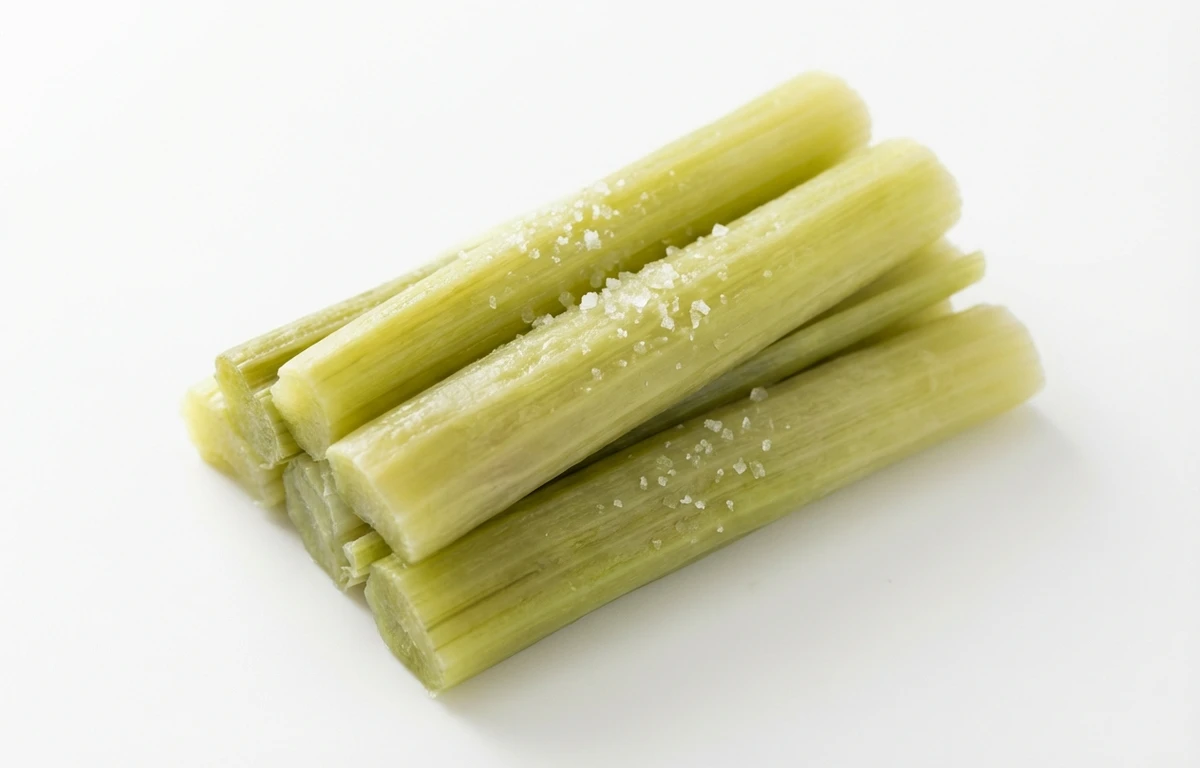
SERVING
CALORIES
14
PROTEIN
0.40g
CARBS
3.2g
FAT
0.10g
FIBER
1.3g
NUTRITION PROFILE · per 100 g
Everything in this ingredient.
MACRONUTRIENTS
Calories14kcal—
Protein0.40g1%
Carbohydrates3.2g1%
Fiber1.3g5%
Sugar0.20g0%
Total fat0.10g0%
Saturated fat0g0%
Trans fat0g—
Cholesterol0mg0%
Water94.5g—
MINERALS
Sodium450mg20%
Potassium180mg4%
Calcium45mg3%
Iron0.30mg2%
Magnesium12mg3%
Phosphorus18mg1%
Zinc0.10mg1%
Copper0.04mg4%
Manganese0.15mg7%
Selenium0.20µg0%
VITAMINS
Vitamin A5.0µg1%
Vitamin C1.0mg1%
Vitamin D0µg0%
Vitamin E0.20mg1%
Vitamin K12µg10%
Thiamin (B1)0.01mg1%
Riboflavin (B2)0.02mg2%
Niacin (B3)0.20mg1%
Pantothenic acid (B5)0.10mg2%
Vitamin B60.02mg1%
Folate (B9)8.0µg2%
Vitamin B120µg0%
%DV based on a 2,000 cal diet. Source: USDA FoodData Central. A dash in the %DV column means there’s no established Daily Value for that nutrient.
MEASUREMENT CONVERSIONS
How much is what.
1 cup150g
1 tablespoon10g
1 oz28.4g
1 lb453.6g
1 piece45g
HEALTH BENEFITS
Why eat it.
- ✓Extremely low in calories for weight management
- ✓Contains potassium which helps balance sodium intake
- ✓Provides dietary fiber for digestive health
- ✓Traditional use for anti-inflammatory properties
- ✓Contains trace minerals like manganese and copper
COOKING TIPS
In the kitchen.
- 1If too salty, soak in fresh water for 10-20 minutes before using
- 2Add to miso soups or stir-fries at the end of cooking to maintain shape
- 3Pairs excellently with soy sauce, mirin, and sesame oil
STORAGE
Keep it fresh.
- Store in an airtight container in the refrigerator for up to 5 days
- Keep submerged in a light brine to maintain texture and prevent oxidation
- Can be frozen if tightly wrapped, though texture may become softer
FAQ
Frequently asked questions.
How long does boiled salted butterbur last?
When stored in an airtight container in the refrigerator, it typically lasts 3 to 5 days.
What is a good substitute for butterbur?
Celery or rhubarb stalks are the best substitutes for texture, though the flavor profile is unique.
Do I need to peel boiled butterbur?
Usually, butterbur is peeled before boiling to remove the tough outer skin. If it was not peeled before salting, you may need to remove the fibrous skin.
Is butterbur the same as rhubarb?
No, they are different plants. Butterbur (Fuki) is a member of the sunflower family, while rhubarb is in the buckwheat family, though they look similar.
Why is butterbur often salted?
Salting is a traditional preservation method that also helps draw out bitterness (aku) and seasons the vegetable.
Can I eat boiled salted butterbur raw?
It is already boiled (cooked), so it is safe to eat directly, though it is often used as an ingredient in other dishes.
Is butterbur healthy?
Yes, it is very low in calories and contains minerals, though the salted version is high in sodium and should be eaten in moderation.
How do I reduce the saltiness?
Soak the butterbur in cold water for about 15 minutes, then drain and pat dry before adding to your recipe.



















