
Vegetable
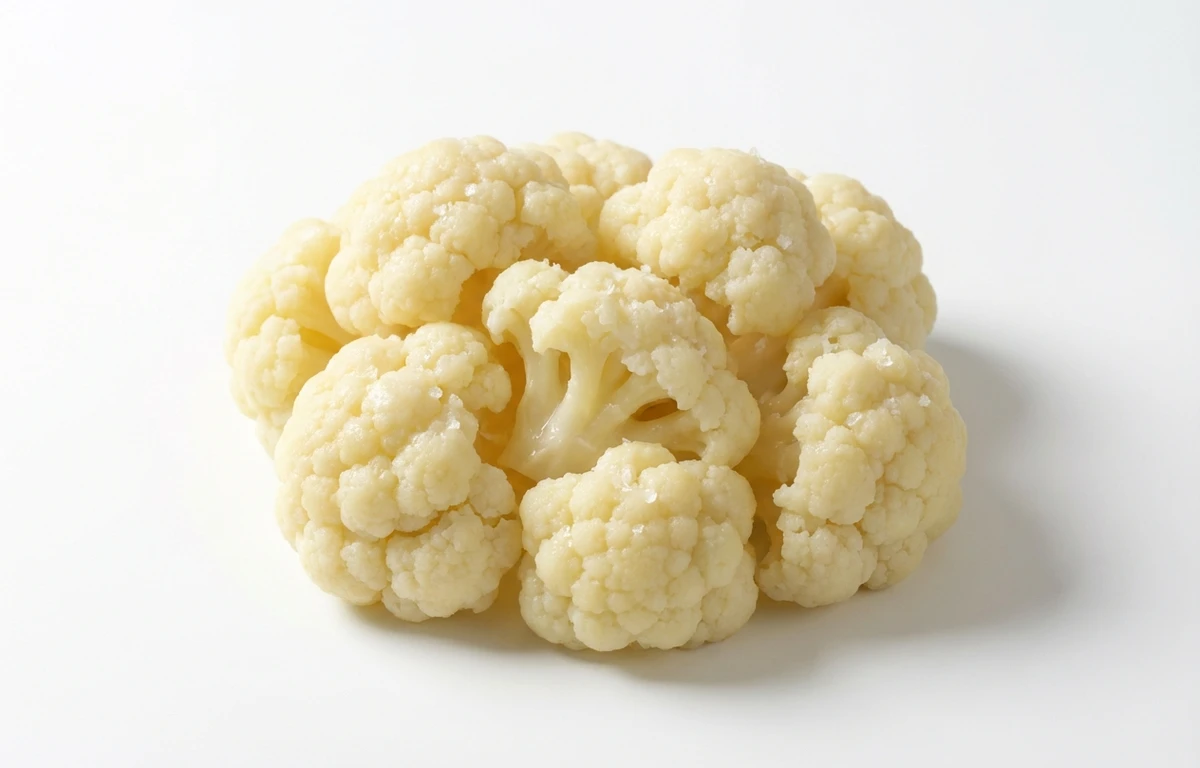
boiled salted frozen cauliflower.
VegetarianVeganGluten-freeDairy-freeNut-freePeanut-freeSoy-freeEgg-freeShellfish-freeHoney-freeAlcohol-free
SERVING
CALORIES
17
PROTEIN
1.6g
CARBS
3.2g
FAT
0.22g
FIBER
2.7g
NUTRITION PROFILE · per 100 g
Everything in this ingredient.
MACRONUTRIENTS
Calories17kcal—
Protein1.6g3%
Carbohydrates3.2g1%
Fiber2.7g10%
Sugar0.46g1%
Total fat0.22g0%
Saturated fat0.03g0%
Trans fat0g—
Cholesterol0mg0%
Water94g—
MINERALS
Sodium254mg11%
Potassium139mg3%
Calcium17mg1%
Iron0.41mg2%
Magnesium9.0mg2%
Phosphorus24mg2%
Zinc0.13mg1%
Copper0.02mg2%
Manganese0.15mg7%
Selenium0.60µg1%
VITAMINS
Vitamin A0µg0%
Vitamin C31.3mg35%
Vitamin D0µg0%
Vitamin E0.06mg0%
Vitamin K11.9µg10%
Thiamin (B1)0.04mg3%
Riboflavin (B2)0.05mg4%
Niacin (B3)0.31mg2%
Pantothenic acid (B5)0.10mg2%
Vitamin B60.09mg5%
Folate (B9)41µg10%
Vitamin B120µg0%
%DV based on a 2,000 cal diet. Source: USDA FoodData Central. A dash in the %DV column means there’s no established Daily Value for that nutrient.
MEASUREMENT CONVERSIONS
How much is what.
1 cup180g
1 tablespoon11.3g
1 teaspoon3.8g
1 ml0.8g
1 liter750g
HEALTH BENEFITS
Why eat it.
- ✓Rich in Vitamin C and Vitamin K, supporting immune function and bone health.
- ✓Good source of dietary fiber, which aids in digestion and promotes satiety.
- ✓Contains antioxidants and sulfur compounds like sulforaphane, which may have anti-inflammatory properties.
- ✓Low in calories and carbohydrates, making it a suitable choice for weight management and low-carb diets.
COOKING TIPS
In the kitchen.
- 1Since it is pre-cooked and salted, adjust the seasoning in your recipe accordingly. Taste before adding more salt.
- 2For a quick side dish, reheat by steaming, microwaving, or sautéing briefly until hot. Avoid overcooking to prevent a mushy texture.
- 3Thaw and pat dry, then roast at 400°F (200°C) with olive oil and spices to enhance flavor and create a firmer, slightly crispy texture.
- 4Easily incorporate into soups, stews, casseroles, or blend into a creamy, low-carb soup base or a substitute for mashed potatoes.
STORAGE
Keep it fresh.
- Store in the freezer at 0°F (-18°C) or below. Keep the package sealed to prevent freezer burn.
- Once thawed, do not refreeze. Keep refrigerated in an airtight container and consume within 1-2 days.
FAQ
Frequently asked questions.
Is boiled salted frozen cauliflower healthy?
Yes, it is very healthy as it is rich in Vitamin C for immune support and Vitamin K for bone health. It also contains sulforaphane, an antioxidant with anti-inflammatory properties, and provides dietary fiber for digestive health.
How many calories and carbs are in this cauliflower?
This cauliflower is very low in energy, containing only 17 calories and 3.16g of carbohydrates per 100g. This makes it an ideal volume-filler for those monitoring their macronutrient intake.
Is boiled salted frozen cauliflower keto-friendly?
Yes, it is highly keto-friendly. With only 3.16g of total carbs per 100g (and even fewer net carbs once fiber is subtracted), it fits easily into a low-carb or ketogenic lifestyle.
Is this ingredient vegan and gluten-free?
Yes, boiled salted frozen cauliflower is naturally vegan and gluten-free. It contains no animal products or wheat-based ingredients, making it safe for those with celiac disease or plant-based diets.
How do you prepare frozen boiled cauliflower?
Since it is already boiled, you only need to reheat it. You can steam it for 3-5 minutes, microwave it with a tablespoon of water, or sauté it in a pan with spices until heated through.
What does boiled salted frozen cauliflower taste like?
It has a mild, slightly nutty, and earthy flavor with a subtle saltiness from the brine. Because it has been boiled and frozen, the texture is softer and less crunchy than fresh raw cauliflower.
Is it good for weight loss?
Absolutely. Its high fiber content helps you feel full longer, while its extremely low calorie count (17 per 100g) allows you to eat large portions without significantly increasing your daily calorie intake.
How long does frozen cauliflower last in the freezer?
When stored in an airtight bag at 0°F (-18°C), it will maintain peak quality for about 8 to 12 months. While it remains safe to eat after this period, it may develop freezer burn or lose some flavor.
Can I use this to make cauliflower rice?
While you can pulse it in a food processor, the result will be much softer than rice made from fresh cauliflower. It is better suited for making cauliflower mash, purees, or adding to soups and stews.
Should I be concerned about the salt content?
The salt is used for seasoning and preservation, but if you are on a low-sodium diet, you can rinse the cauliflower under cold water after thawing to remove excess surface salt before cooking.



















