
Vegetable
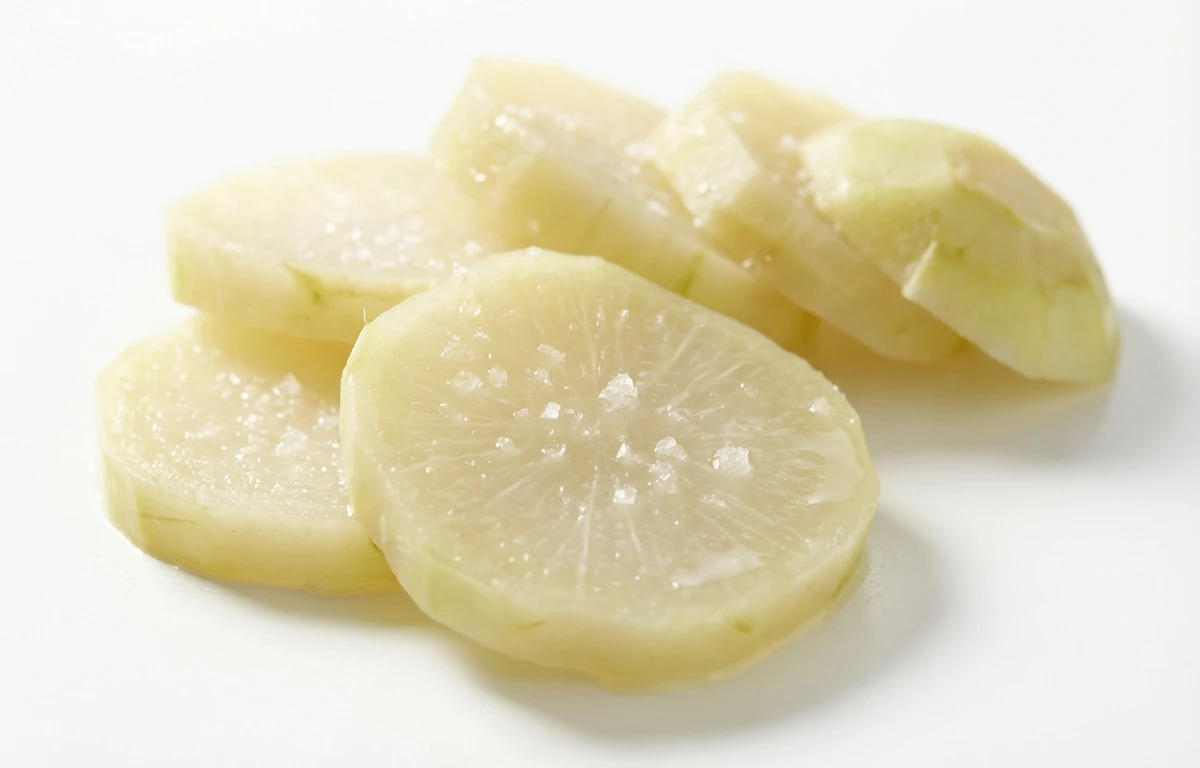
boiled salted kohlrabi.
VegetarianVeganGluten-freeDairy-freeNut-freePeanut-freeSoy-freeEgg-freeShellfish-freeHoney-freeAlcohol-freeHalalKosher
SERVING
CALORIES
29
PROTEIN
1.8g
CARBS
6.7g
FAT
0.11g
FIBER
1.1g
NUTRITION PROFILE · per 100 g
Everything in this ingredient.
MACRONUTRIENTS
Calories29kcal—
Protein1.8g4%
Carbohydrates6.7g2%
Fiber1.1g4%
Sugar2.8g6%
Total fat0.11g0%
Saturated fat0.01g0%
Trans fat0g—
Cholesterol0mg0%
Water90.3g—
MINERALS
Sodium257mg11%
Potassium340mg7%
Calcium25mg2%
Iron0.40mg2%
Magnesium19mg5%
Phosphorus45mg4%
Zinc0.31mg3%
Copper0.13mg14%
Manganese0.14mg6%
Selenium0.80µg1%
VITAMINS
Vitamin A2.0µg0%
Vitamin C54mg60%
Vitamin D0µg0%
Vitamin E0.52mg3%
Vitamin K0.10µg0%
Thiamin (B1)0.04mg3%
Riboflavin (B2)0.02mg2%
Niacin (B3)0.39mg2%
Pantothenic acid (B5)0.16mg3%
Vitamin B60.15mg9%
Folate (B9)12µg3%
Vitamin B120µg0%
%DV based on a 2,000 cal diet. Source: USDA FoodData Central. A dash in the %DV column means there’s no established Daily Value for that nutrient.
MEASUREMENT CONVERSIONS
How much is what.
1 cup165g
1 tablespoon10.3g
1 teaspoon3.4g
1 ml0.7g
1 liter687.5g
HEALTH BENEFITS
Why eat it.
- ✓Excellent source of Vitamin C, an antioxidant that supports immune function and skin health.
- ✓High in dietary fiber, which aids digestion, promotes gut health, and contributes to feelings of fullness.
- ✓Contains beneficial plant compounds like glucosinolates and anthocyanins, which may have anti-inflammatory and anti-cancer properties.
- ✓Good source of potassium, a mineral essential for maintaining healthy blood pressure and fluid balance.
COOKING TIPS
In the kitchen.
- 1After boiling, toss with melted butter, fresh dill, and a pinch of nutmeg for a classic European-style side dish.
- 2Mash the boiled kohlrabi with potatoes or cauliflower for a nutrient-dense, lower-carb alternative to traditional mashed potatoes.
- 3Chill and dice the boiled kohlrabi to add a tender, slightly sweet element to potato salads, grain bowls, or mixed vegetable salads.
- 4Avoid over-boiling, as it can become mushy and develop a stronger cabbage-like flavor. Cook until just tender when pierced with a fork.
STORAGE
Keep it fresh.
- Store leftover boiled kohlrabi in an airtight container in the refrigerator for up to 4 days.
- For longer storage, freeze the boiled pieces. First, pat them dry, then flash-freeze on a baking sheet before transferring to a freezer bag to prevent clumping.
FAQ
Frequently asked questions.
Is boiled salted kohlrabi healthy?
Yes, boiled salted kohlrabi is very healthy. It is an excellent source of Vitamin C for immune support and high in dietary fiber, which aids digestion and promotes gut health while remaining very low in calories.
How many calories and carbs are in boiled salted kohlrabi?
A 100g serving contains approximately 29 calories and 6.69g of carbohydrates. It is a low-energy-density food, providing 1.8g of protein and only 0.11g of fat.
Is boiled salted kohlrabi good for weight loss?
Yes, it is an ideal food for weight loss. Its high fiber content helps you feel full longer, and its low calorie count allows for large, satisfying portions without a high caloric intake.
Is boiled salted kohlrabi keto-friendly?
Yes, it can be included in a keto diet. With roughly 6.7g of total carbs per 100g, it is considered a low-carb vegetable, though you should monitor your portion sizes to stay within daily macro limits.
Is boiled salted kohlrabi vegan and gluten-free?
Yes, boiled salted kohlrabi is naturally vegan and gluten-free. It is a simple vegetable preparation that contains no animal products or wheat-based ingredients.
What does boiled kohlrabi taste like?
Boiled kohlrabi has a mild, slightly sweet flavor that is often described as a cross between a broccoli stem and a turnip. Boiling it with salt mellows its peppery notes and creates a tender, succulent texture.
How do you prepare and boil kohlrabi?
First, peel the tough, fibrous outer skin and cut the bulb into cubes or slices. Place them in a pot of boiling salted water and cook for 10 to 15 minutes until fork-tender, then drain before serving.
How long does boiled kohlrabi last in the refrigerator?
Once cooked, boiled kohlrabi should be stored in an airtight container in the fridge. It will stay fresh and safe to consume for 3 to 5 days.
Does boiling kohlrabi reduce its nutritional value?
Boiling can cause some water-soluble nutrients, like Vitamin C and potassium, to leach into the water. To retain more nutrients, avoid overcooking the vegetable or use the cooking water for soups and sauces.
Can I eat the leaves of the kohlrabi as well?
Yes, kohlrabi leaves are edible and very nutritious, similar to kale or collard greens. You can boil or sauté them, though they typically require less cooking time than the bulb itself.



















