
Vegetable
boiled salted oriental radish.
VegetarianVeganGluten-freeDairy-freeNut-freePeanut-freeSoy-freeEgg-freeShellfish-freeHoney-freeAlcohol-free
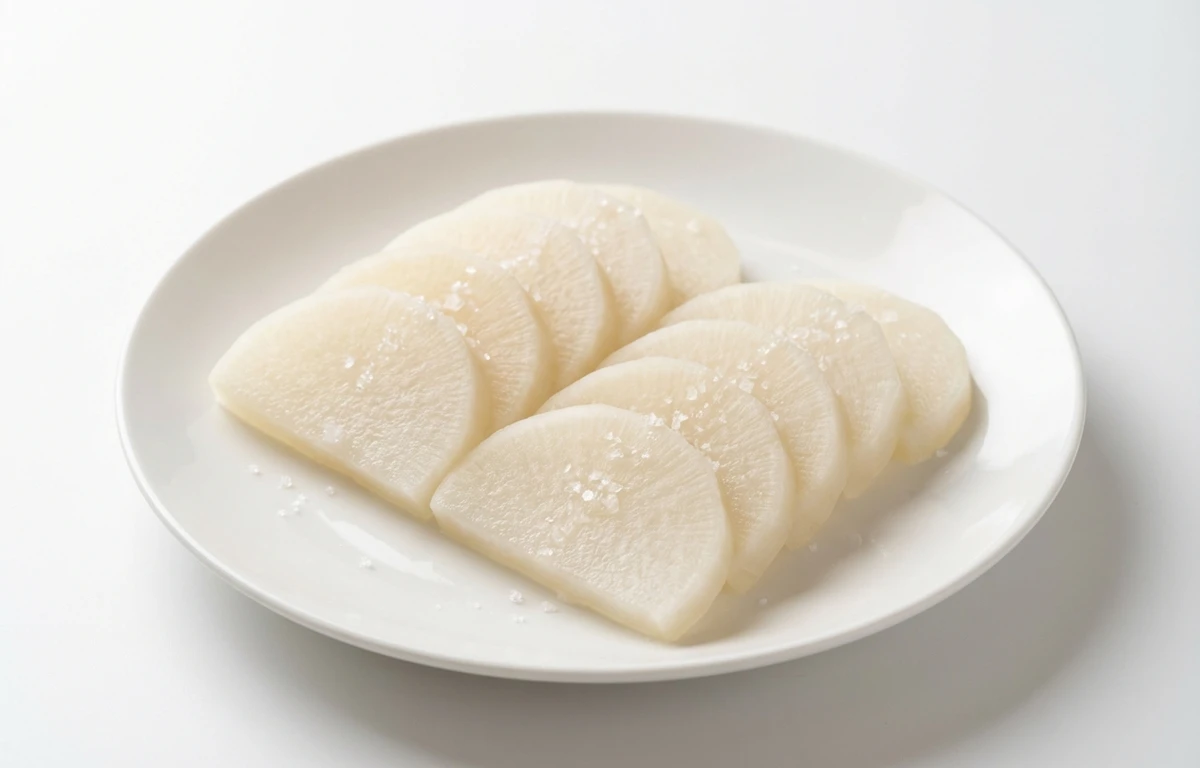
SERVING
CALORIES
17
PROTEIN
0.67g
CARBS
3.4g
FAT
0.24g
FIBER
1.6g
NUTRITION PROFILE · per 100 g
Everything in this ingredient.
MACRONUTRIENTS
Calories17kcal—
Protein0.67g1%
Carbohydrates3.4g1%
Fiber1.6g6%
Sugar1.8g4%
Total fat0.24g0%
Saturated fat0.07g0%
Trans fat0g—
Cholesterol0mg0%
Water95g—
MINERALS
Sodium249mg11%
Potassium285mg6%
Calcium17mg1%
Iron0.15mg1%
Magnesium9.0mg2%
Phosphorus24mg2%
Zinc0.13mg1%
Copper0.10mg11%
Manganese0.03mg1%
Selenium0.70µg1%
VITAMINS
Vitamin A0µg0%
Vitamin C15.1mg17%
Vitamin D0µg0%
Vitamin E0mg0%
Vitamin K0.30µg0%
Thiamin (B1)0mg0%
Riboflavin (B2)0.02mg2%
Niacin (B3)0.15mg1%
Pantothenic acid (B5)0.11mg2%
Vitamin B60.04mg2%
Folate (B9)17µg4%
Vitamin B120µg0%
%DV based on a 2,000 cal diet. Source: USDA FoodData Central. A dash in the %DV column means there’s no established Daily Value for that nutrient.
MEASUREMENT CONVERSIONS
How much is what.
1 cup147g
1 tablespoon9.2g
1 teaspoon3.1g
1 ml0.6g
1 liter612.5g
HEALTH BENEFITS
Why eat it.
- ✓Low in calories and high in dietary fiber, which can aid in digestion and promote a feeling of fullness.
- ✓A good source of Vitamin C, an antioxidant that supports immune system function and skin health.
- ✓Contains beneficial plant compounds like glucosinolates, which may have anti-inflammatory properties.
- ✓Hydrating due to its high water content, even after boiling.
COOKING TIPS
In the kitchen.
- 1Add to soups, stews, or curries during the last 10-15 minutes of cooking to absorb flavors without becoming overly soft.
- 2Serve as a simple side dish, drizzled with sesame oil and garnished with scallions or sesame seeds.
- 3Mash the boiled radish as a low-carb alternative to mashed potatoes.
- 4Since it is pre-salted, be mindful when adding other salty ingredients like soy sauce or miso to the dish.
STORAGE
Keep it fresh.
- Store in an airtight container in the refrigerator for up to 4-5 days.
- For longer storage, freeze in a single layer on a baking sheet before transferring to a freezer-safe bag. This can preserve it for up to 3 months, though texture may soften upon thawing.
FAQ
Frequently asked questions.
Is boiled salted oriental radish healthy?
Yes, it is highly nutritious and low in calories. It provides a good source of Vitamin C for immune support and contains glucosinolates, which are plant compounds known for their anti-inflammatory properties.
How many calories and carbs are in boiled salted oriental radish?
A 100g serving contains approximately 17 calories and 3.43g of carbohydrates. This makes it an excellent low-calorie, low-carb vegetable option for most diets.
Is boiled salted oriental radish good for weight loss?
Yes, it is very effective for weight management. Its high water content and dietary fiber help promote a feeling of fullness, which can reduce overall calorie intake throughout the day.
Is this ingredient keto-friendly?
Yes, with only 3.43g of carbs per 100g, boiled oriental radish is very keto-friendly. It can be used as a low-carb substitute for higher-starch root vegetables like potatoes in soups and stews.
Is boiled salted oriental radish vegan and gluten-free?
Yes, it is naturally both vegan and gluten-free. It consists simply of the vegetable, water, and salt, making it safe for those with these dietary restrictions.
What does boiled salted oriental radish taste like?
Boiling removes the sharp, peppery bite found in raw radish, leaving a mild, slightly sweet, and savory flavor. The texture becomes tender and it easily absorbs the flavors of other ingredients it is cooked with.
How do you use boiled salted oriental radish in cooking?
It is most commonly used in Asian soups, stews, and braised dishes. It can also be served as a simple side dish (banchan) or added to salads once cooled for a soft, savory element.
How long does boiled salted oriental radish last in the fridge?
When stored in an airtight container with a bit of its cooking liquid, it will stay fresh in the refrigerator for 3 to 5 days. The salt helps preserve it slightly longer than unseasoned boiled vegetables.
Does boiling the radish remove its nutrients?
While some water-soluble vitamins like Vitamin C may decrease during boiling, the radish retains its beneficial fiber and minerals. To preserve more nutrients, avoid overcooking and consider using the cooking liquid in your recipe.
Should I be concerned about the salt content?
If you are on a low-sodium diet, you should be mindful of the salt added during boiling. You can reduce the sodium impact by rinsing the radish under cold water before consumption or using minimal salt during the preparation process.



















