
Vegetable
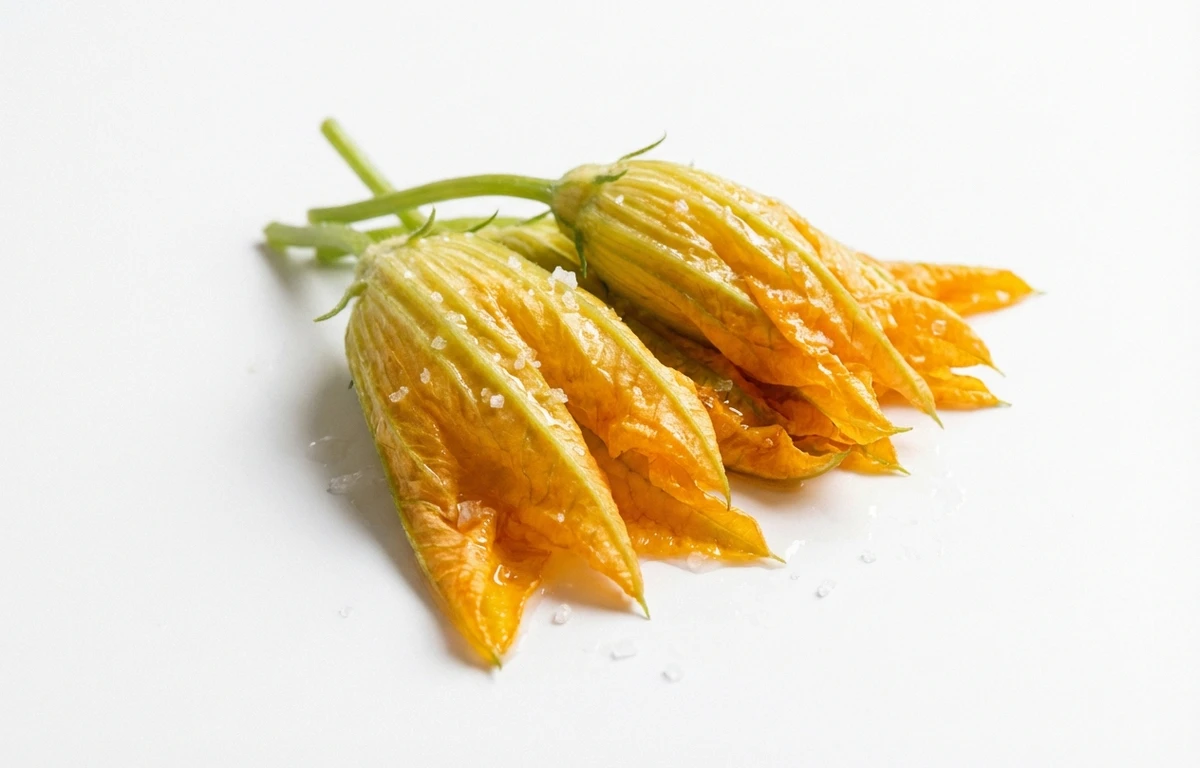
boiled salted pumpkin flower.
VegetarianVeganGluten-freeDairy-freeNut-freePeanut-freeSoy-freeEgg-freeShellfish-freeHoney-freeAlcohol-free
SERVING
CALORIES
15
PROTEIN
1.1g
CARBS
3.2g
FAT
0.08g
FIBER
0.90g
NUTRITION PROFILE · per 100 g
Everything in this ingredient.
MACRONUTRIENTS
Calories15kcal—
Protein1.1g2%
Carbohydrates3.2g1%
Fiber0.90g3%
Sugar2.4g5%
Total fat0.08g0%
Saturated fat0.04g0%
Trans fat0g—
Cholesterol0mg0%
Water95.2g—
MINERALS
Sodium242mg11%
Potassium106mg2%
Calcium37mg3%
Iron0.88mg5%
Magnesium25mg6%
Phosphorus34mg3%
Zinc0.10mg1%
Copper0.10mg11%
Selenium0.90µg2%
VITAMINS
Vitamin A87µg10%
Vitamin C5.0mg6%
Vitamin D0µg0%
Vitamin E0.04mg0%
Vitamin K0µg0%
Thiamin (B1)0.02mg2%
Riboflavin (B2)0.03mg2%
Niacin (B3)0.31mg2%
Vitamin B60.05mg3%
Folate (B9)41µg10%
Vitamin B120µg0%
%DV based on a 2,000 cal diet. Source: USDA FoodData Central. A dash in the %DV column means there’s no established Daily Value for that nutrient.
MEASUREMENT CONVERSIONS
How much is what.
1 cup134g
1 tablespoon8.4g
1 teaspoon2.8g
1 ml0.6g
1 liter558.3g
HEALTH BENEFITS
Why eat it.
- ✓Rich in antioxidants, including flavonoids and carotenoids, which help protect cells from damage.
- ✓Good source of Vitamin A (from beta-carotene) and Vitamin C, supporting immune function and vision health.
- ✓Low in calories and fat, making it a suitable ingredient for weight-conscious diets.
- ✓Contains minerals like calcium and phosphorus, which are important for bone health.
COOKING TIPS
In the kitchen.
- 1Before boiling, gently remove the stamen or pistil from inside the flower as it can be bitter.
- 2Boil for only 1-2 minutes until just tender to avoid them becoming mushy. Plunging them in an ice bath after boiling can help retain their color.
- 3Use boiled flowers in soups, stews, or as a filling for quesadillas, tacos, or omelets.
- 4Sauté the boiled flowers with garlic, onions, and chili for a simple and flavorful side dish.
STORAGE
Keep it fresh.
- Store boiled pumpkin flowers in an airtight container in the refrigerator for up to 3 days.
- For longer storage, boiled flowers can be frozen. Place them in a single layer on a tray to freeze, then transfer to a freezer-safe bag for up to 3 months.
FAQ
Frequently asked questions.
Is boiled salted pumpkin flower healthy?
Yes, boiled salted pumpkin flower is highly nutritious. It is rich in antioxidants like flavonoids and carotenoids, and provides essential vitamins A and C, which support immune health and vision while remaining very low in calories.
How many calories and carbs are in boiled salted pumpkin flower?
A 100g serving contains approximately 15 calories, 3.18g of carbohydrates, and 1.09g of protein. It is an extremely light vegetable option with negligible fat content (0.08g).
Is boiled salted pumpkin flower good for weight loss?
Yes, it is an excellent food for weight management. Because it is very low in calories and fat, it allows you to add volume to your meals and consume essential minerals like calcium and phosphorus without a high caloric cost.
Is boiled salted pumpkin flower vegan and gluten-free?
Yes, this ingredient is naturally both vegan and gluten-free. As a simple vegetable prepared with water and salt, it is suitable for most restrictive diets, including plant-based and Celiac-friendly lifestyles.
Is it keto-friendly?
Yes, boiled salted pumpkin flower is keto-friendly. With only 3.18g of total carbohydrates per 100g, it can be easily incorporated into a low-carb or ketogenic diet without significantly impacting daily carb limits.
What does boiled salted pumpkin flower taste like?
It has a delicate, mild, and slightly sweet flavor with earthy undertones. The texture is soft and velvety once boiled, and the salt helps to enhance its subtle floral notes.
How do you prepare and boil pumpkin flowers?
Clean the flowers by removing the internal stamen and tough green sepals at the base. Drop them into boiling salted water for 1 to 3 minutes until tender but not mushy, then drain them immediately.
How long does boiled salted pumpkin flower last in the fridge?
Once boiled, the flowers should be stored in an airtight container in the refrigerator and consumed within 2 to 3 days. Because they have a high water content, they can become soggy if stored for too long.
Can I eat the entire flower, including the stem?
The petals and the base of the flower are the most commonly eaten parts. While the stems are edible, they can be fibrous; many people prefer to trim them or peel the outer skin of the stem before boiling for a better texture.
Does boiling pumpkin flowers remove their nutrients?
Boiling can cause some water-soluble vitamins, like Vitamin C, to leach into the water. To minimize nutrient loss, boil them for the shortest time possible or use the leftover cooking water in soups to retain the minerals.



















