
Vegetable
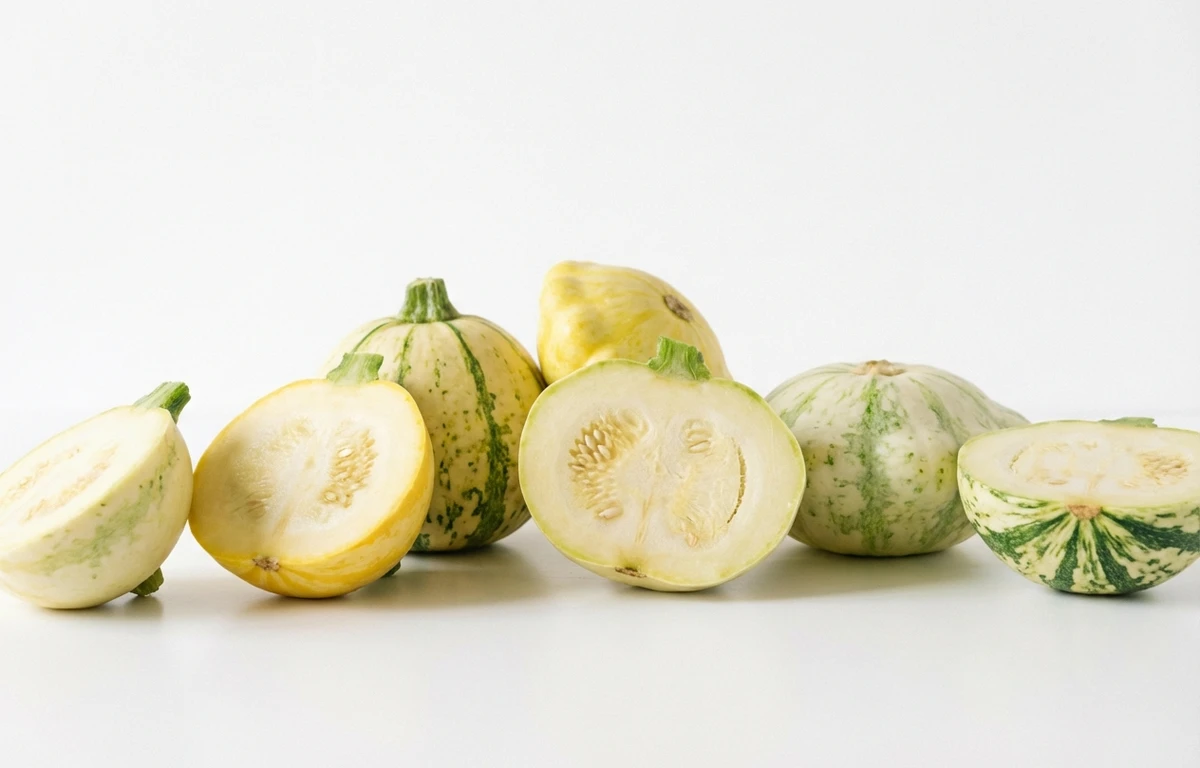
boiled salted scallop squash.
VegetarianVeganGluten-freeDairy-freeNut-freePeanut-freeSoy-freeEgg-freeShellfish-freeHoney-freeAlcohol-free
ALSO KNOWN AS
boiled salted pattypan squashboiled salted sunburst squash
SERVING
CALORIES
19
PROTEIN
1.2g
CARBS
3.8g
FAT
0.20g
FIBER
1.2g
NUTRITION PROFILE · per 100 g
Everything in this ingredient.
MACRONUTRIENTS
Calories19kcal—
Protein1.2g2%
Carbohydrates3.8g1%
Fiber1.2g4%
Sugar2.1g4%
Total fat0.20g0%
Saturated fat0.04g0%
Trans fat0g—
Cholesterol0mg0%
Water94g—
MINERALS
Sodium250mg11%
Potassium182mg4%
Calcium18mg1%
Iron0.40mg2%
Magnesium17mg4%
Phosphorus30mg2%
Zinc0.30mg3%
Copper0.05mg6%
Manganese0.15mg7%
Selenium0.20µg0%
VITAMINS
Vitamin A10µg1%
Vitamin C12.5mg14%
Vitamin D0µg0%
Vitamin E0.12mg1%
Vitamin K3.5µg3%
Thiamin (B1)0.04mg3%
Riboflavin (B2)0.03mg2%
Niacin (B3)0.50mg3%
Pantothenic acid (B5)0.15mg3%
Vitamin B60.10mg6%
Folate (B9)18µg5%
Vitamin B120µg0%
%DV based on a 2,000 cal diet. Source: USDA FoodData Central. A dash in the %DV column means there’s no established Daily Value for that nutrient.
MEASUREMENT CONVERSIONS
How much is what.
1 cup180g
1 tablespoon15g
1 teaspoon5g
1 oz28.4g
1 lb453.6g
1 liter1000g
1 piece100g
HEALTH BENEFITS
Why eat it.
- ✓Low in calories and high in water content for hydration
- ✓Good source of Vitamin C for immune support
- ✓Contains dietary fiber for digestive health
- ✓Provides potassium for heart health
- ✓Rich in antioxidants like lutein and zeaxanthin
COOKING TIPS
In the kitchen.
- 1Boil in salted water just until tender-crisp to avoid mushiness
- 2Drain thoroughly to prevent the dish from becoming watery
- 3Season with black pepper or fresh herbs after boiling to enhance flavor
STORAGE
Keep it fresh.
- Store in an airtight container in the refrigerator
- Consume within 3-4 days for best quality
- Can be frozen, though texture will become significantly softer
FAQ
Frequently asked questions.
How long does boiled scallop squash last in the fridge?
When stored in an airtight container, it will stay fresh for 3 to 4 days.
Can I freeze boiled scallop squash?
Yes, but the high water content means it will become very soft upon thawing; it is best used in soups or mashes after freezing.
Do I need to peel scallop squash before boiling?
No, the skin of scallop (pattypan) squash is thin and entirely edible, especially when the squash is small.
What is a good substitute for scallop squash?
Zucchini or yellow summer squash are the best substitutes as they have similar texture and flavor profiles.
How do I know when the squash is finished boiling?
It is done when a fork can easily pierce the flesh but it still holds its shape, usually taking 5-8 minutes.
Is boiled scallop squash keto-friendly?
Yes, it is relatively low in carbohydrates, making it suitable for most ketogenic diets in moderation.
Why add salt to the boiling water?
Salt seasons the squash from the inside out and helps preserve its bright color during the cooking process.
What does scallop squash taste like?
It has a mild, slightly sweet, and nutty flavor, very similar to zucchini but slightly denser.
Are the seeds edible?
Yes, the seeds in young scallop squash are very small and soft, making them perfectly fine to eat.
Is this ingredient gluten-free?
Yes, boiled salted scallop squash is naturally gluten-free.



















