
Vegetable
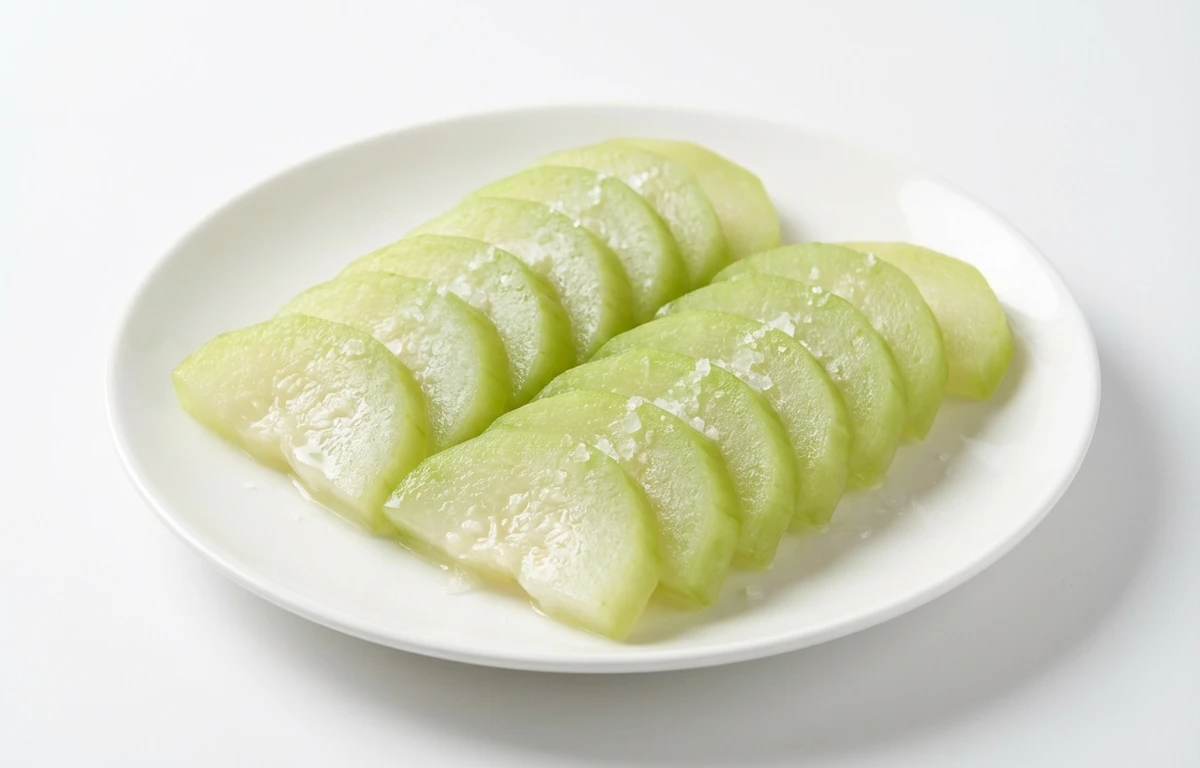
boiled salted waxgourd.
VegetarianVeganGluten-freeDairy-freeNut-freePeanut-freeSoy-freeEgg-freeShellfish-freeHoney-freeAlcohol-free
ALSO KNOWN AS
chinese preserving melon
SERVING
CALORIES
11
PROTEIN
0.40g
CARBS
2.5g
FAT
0.20g
FIBER
1.0g
NUTRITION PROFILE · per 100 g
Everything in this ingredient.
MACRONUTRIENTS
Calories11kcal—
Protein0.40g1%
Carbohydrates2.5g1%
Fiber1.0g4%
Sugar1.2g2%
Total fat0.20g0%
Saturated fat0.02g0%
Trans fat0g—
Cholesterol0mg0%
Water96.1g—
MINERALS
Sodium343mg15%
Potassium5.0mg0%
Calcium18mg1%
Iron0.38mg2%
Magnesium10mg2%
Phosphorus17mg1%
Zinc0.59mg5%
Copper0.02mg2%
Manganese0.06mg3%
Selenium0.20µg0%
VITAMINS
Vitamin A0µg0%
Vitamin C10.5mg12%
Vitamin D0µg0%
Vitamin E0.08mg1%
Vitamin K2.8µg2%
Thiamin (B1)0.03mg3%
Riboflavin (B2)0mg0%
Niacin (B3)0.38mg2%
Pantothenic acid (B5)0.12mg2%
Vitamin B60.03mg2%
Folate (B9)4.0µg1%
Vitamin B120µg0%
%DV based on a 2,000 cal diet. Source: USDA FoodData Central. A dash in the %DV column means there’s no established Daily Value for that nutrient.
MEASUREMENT CONVERSIONS
How much is what.
1 cup175g
1 tablespoon10.9g
1 teaspoon3.6g
1 ml0.7g
1 liter729.2g
HEALTH BENEFITS
Why eat it.
- ✓Extremely hydrating due to its high water content (around 96%), which helps maintain fluid balance.
- ✓Low in calories and a good source of soluble fiber, aiding in weight management and promoting digestive health.
- ✓Contains antioxidants like flavonoids and carotenoids that help neutralize harmful free radicals.
- ✓Traditionally used in Ayurvedic medicine for its cooling properties and to support urinary tract health.
COOKING TIPS
In the kitchen.
- 1Boiled wax gourd has a very mild, neutral flavor and a tender texture, making it excellent for absorbing the flavors of broths, soups, and stews.
- 2Since it's already cooked and salted, add it towards the end of cooking in stir-fries or curries to prevent it from becoming mushy and to control the overall saltiness of the dish.
- 3Pair with strong, aromatic ingredients like ginger, garlic, white pepper, or star anise to complement its subtle taste.
- 4The soft texture makes it a great 'filler' vegetable in dumplings, stuffed buns, or savory cakes.
STORAGE
Keep it fresh.
- Store leftover boiled wax gourd in an airtight container in the refrigerator for up to 3-4 days.
- For longer storage, freeze the boiled pieces in a single layer on a baking sheet before transferring to a freezer-safe bag to prevent clumping.
FAQ
Frequently asked questions.
Is boiled salted waxgourd healthy?
Yes, it is highly nutritious and very low in calories, containing only 11 calories per 100g. It is exceptionally hydrating due to its 96% water content and provides essential antioxidants like flavonoids and carotenoids that support overall health.
Is boiled salted waxgourd good for weight loss?
It is an excellent food for weight management because it is low in calories and fat while providing soluble fiber. The high water content helps you feel full longer, reducing overall calorie intake throughout the day.
Is boiled salted waxgourd keto-friendly?
Yes, it is very keto-friendly. With only 2.45g of carbohydrates per 100g, it can easily fit into a low-carb or ketogenic diet without spiking blood sugar levels.
What does boiled salted waxgourd taste like?
It has a very mild, neutral flavor similar to a cucumber or the white rind of a watermelon. Because it is boiled with salt, it has a light savory note and readily absorbs the flavors of any spices or broths it is prepared with.
Is boiled salted waxgourd vegan and gluten-free?
Yes, it is naturally vegan and gluten-free. It is a plant-based ingredient prepared simply with water and salt, making it safe for those with gluten sensitivities or those following a vegan lifestyle.
How do you store boiled salted waxgourd?
Store the boiled waxgourd in an airtight container in the refrigerator. It will typically stay fresh for 3 to 5 days, though it may release some additional water during storage.
Can I freeze boiled salted waxgourd?
You can freeze it, but the texture will become much softer and slightly mushy once thawed due to its high water content. It is best used in soups or purees after it has been frozen and thawed.
What are the medicinal benefits of waxgourd?
In traditional Ayurvedic medicine, waxgourd is valued for its cooling properties, which help balance body heat. It is also used to support urinary tract health and act as a natural diuretic.
How do you use boiled salted waxgourd in recipes?
It is most commonly used in savory soups, stews, and curries where it can soak up the surrounding flavors. It can also be chilled and served as a simple, hydrating side dish or added to stir-fries.
Should I be concerned about the salt content in this dish?
While the vegetable itself is very healthy, the added salt increases the sodium content. If you are monitoring your sodium intake for heart health or blood pressure, you can rinse the boiled gourd or reduce the amount of salt used during the boiling process.



















