
Vegetable
boiled unsalted chopped frozen onion.
VegetarianVeganGluten-freeDairy-freeNut-freePeanut-freeSoy-freeEgg-freeShellfish-freeHoney-freeAlcohol-free
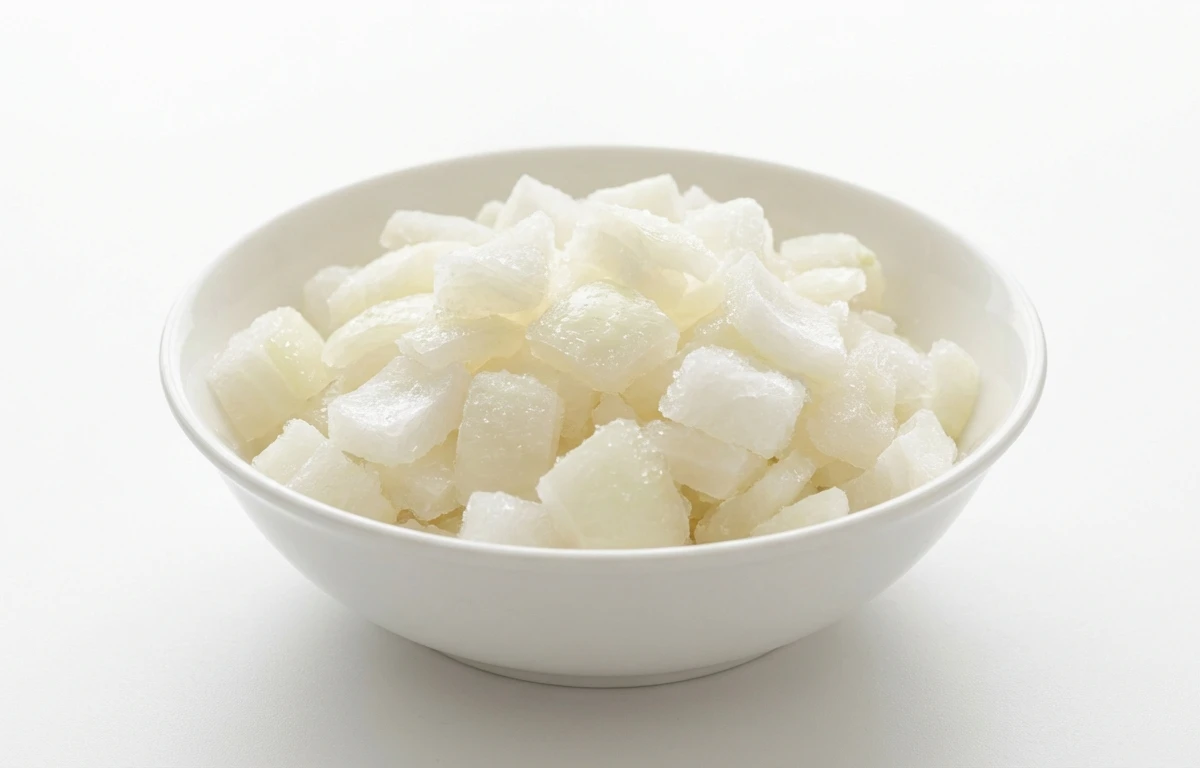
SERVING
CALORIES
28
PROTEIN
0.77g
CARBS
6.6g
FAT
0.10g
FIBER
1.8g
NUTRITION PROFILE · per 100 g
Everything in this ingredient.
MACRONUTRIENTS
Calories28kcal—
Protein0.77g2%
Carbohydrates6.6g2%
Fiber1.8g6%
Sugar2.9g6%
Total fat0.10g0%
Saturated fat0.02g0%
Trans fat0g—
Cholesterol0mg0%
Water92.2g—
MINERALS
Sodium12mg1%
Potassium108mg2%
Calcium16mg1%
Iron0.30mg2%
Magnesium6.0mg1%
Phosphorus19mg2%
Zinc0.07mg1%
Copper0.02mg2%
Manganese0.07mg3%
Selenium0.40µg1%
VITAMINS
Vitamin A0µg0%
Vitamin C2.6mg3%
Vitamin D0µg0%
Vitamin E0.01mg0%
Vitamin K0.30µg0%
Thiamin (B1)0.02mg2%
Riboflavin (B2)0.03mg2%
Niacin (B3)0.14mg1%
Pantothenic acid (B5)0.10mg2%
Vitamin B60.07mg4%
Folate (B9)13µg3%
Vitamin B120µg0%
%DV based on a 2,000 cal diet. Source: USDA FoodData Central. A dash in the %DV column means there’s no established Daily Value for that nutrient.
MEASUREMENT CONVERSIONS
How much is what.
1 cup160g
1 tablespoon10g
1 teaspoon3g
HEALTH BENEFITS
Why eat it.
- ✓Rich in antioxidants like quercetin, which may help reduce inflammation and support heart health.
- ✓Contains prebiotic fibers, such as inulin and fructooligosaccharides, that promote a healthy gut microbiome.
- ✓Provides a source of Vitamin C and B vitamins, though some water-soluble vitamins may be reduced by boiling.
COOKING TIPS
In the kitchen.
- 1The soft texture and mild flavor make them ideal for pureeing into soups, sauces, or gravies to add depth without a sharp taste.
- 2Easily add to dishes like casseroles, stews, or meatloaf where a subtle, non-crunchy onion element is desired.
- 3Mash with boiled potatoes or other root vegetables for a simple, flavorful side dish.
- 4Since they are already cooked, they can be added directly to recipes without the need for sautéing, saving preparation time.
STORAGE
Keep it fresh.
- Store the boiled onions in an airtight container in the refrigerator and consume within 3-4 days.
- For longer storage, re-freeze in a freezer-safe bag or container for up to 3 months. Freeze in a single layer on a tray first to prevent clumping.
FAQ
Frequently asked questions.
Is boiled unsalted chopped frozen onion healthy?
Yes, it is very healthy as it is low in calories and fat while providing essential antioxidants like quercetin and prebiotic fibers. These components support heart health and a healthy gut microbiome, though some water-soluble vitamins are reduced during the boiling process.
How many calories and carbs are in boiled unsalted chopped frozen onion?
A 100g serving contains approximately 28 calories and 6.59g of carbohydrates. It is a very low-density food, containing only 0.1g of fat and 0.77g of protein per serving.
Is this ingredient keto-friendly?
Yes, it is generally considered keto-friendly. With roughly 6.6g of total carbohydrates per 100g, it can be easily incorporated into a low-carb or ketogenic diet when used in standard recipe portions.
Is boiled unsalted chopped frozen onion vegan and gluten-free?
Yes, this ingredient is naturally vegan and gluten-free. It consists solely of onions and water, making it safe for those with celiac disease or those following a plant-based diet.
How do you use boiled frozen onions in cooking?
Because they are already cooked and soft, they are best added directly to liquid-based dishes like soups, stews, gravies, and casseroles. Simply stir them into your recipe during the final stages of cooking to heat them through.
What does boiled frozen onion taste like?
Boiled onions have a much milder, sweeter, and less pungent flavor than raw or sautéed onions. Their texture is soft and translucent, allowing them to blend seamlessly into sauces without the crunch of fresh onions.
Can I sauté or fry boiled frozen onions?
While you can, it is not recommended for achieving a crisp texture. Because they have been boiled and frozen, they have a high moisture content and will likely turn mushy rather than browning or caramelizing like fresh onions.
Does boiling onions remove their nutritional value?
Boiling can cause some water-soluble nutrients, such as Vitamin C and B vitamins, to leach into the cooking water. However, they still retain significant amounts of fiber and heat-stable antioxidants like quercetin.
How long can I store boiled chopped onions in the freezer?
When kept in an airtight container or heavy-duty freezer bag, they will maintain best quality for about 8 to 12 months. They remain safe to eat beyond that time if kept constantly frozen at 0°F.
Is this ingredient good for weight loss?
Yes, it is an excellent ingredient for weight management. At only 28 calories per 100g, it allows you to add volume and savory flavor to meals without adding significant calories, sodium, or fat.



















