
Vegetable
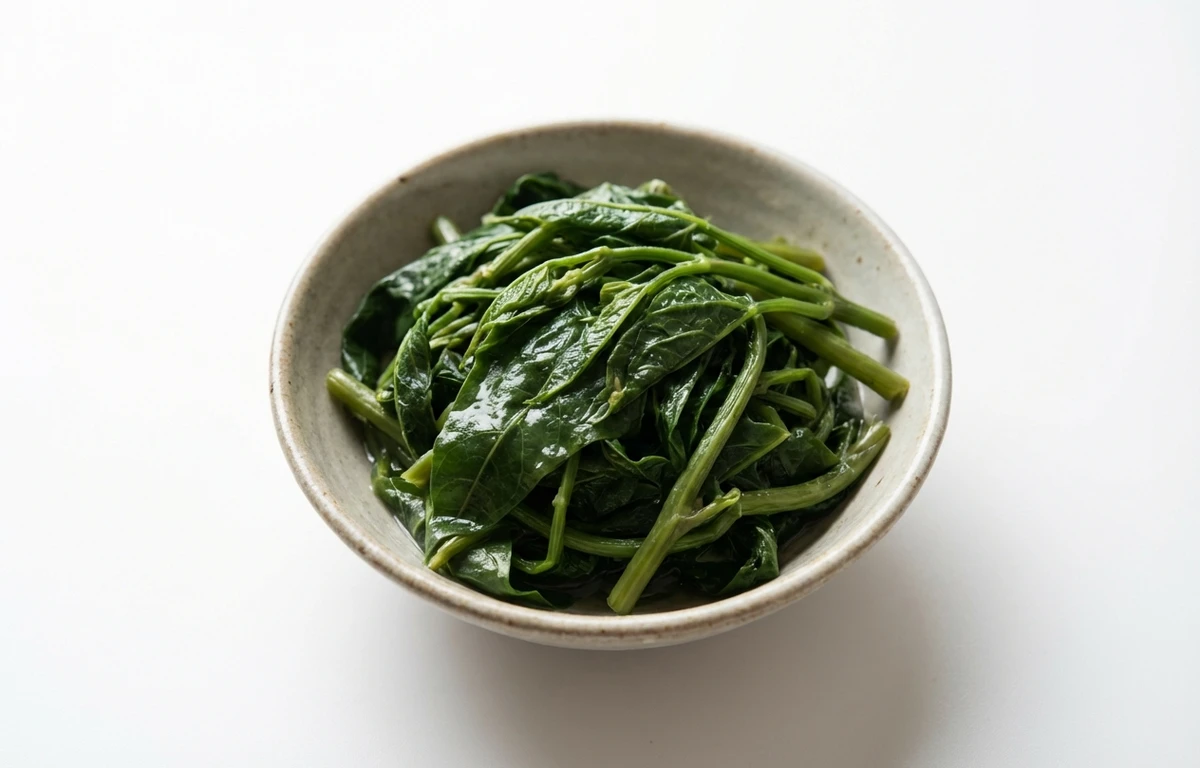
boiled unsalted cowpea leafy tips.
VegetarianVeganGluten-freeDairy-freeNut-freePeanut-freeSoy-freeEgg-freeShellfish-freeHoney-freeAlcohol-free
ALSO KNOWN AS
boiled cowpea leavescooked cowpea greensboiled vigne unguiculata leavesboiled kundongboiled lobiya saagboiled black-eyed pea leaves
SERVING
CALORIES
32
PROTEIN
3.8g
CARBS
4.5g
FAT
0.30g
FIBER
2.6g
NUTRITION PROFILE · per 100 g
Everything in this ingredient.
MACRONUTRIENTS
Calories32kcal—
Protein3.8g8%
Carbohydrates4.5g2%
Fiber2.6g9%
Sugar0.50g1%
Total fat0.30g0%
Saturated fat0.07g0%
Trans fat0g—
Cholesterol0mg0%
Water88.5g—
MINERALS
Sodium6.0mg0%
Potassium350mg7%
Calcium110mg8%
Iron2.1mg12%
Magnesium45mg11%
Phosphorus55mg4%
Zinc0.40mg4%
Copper0.15mg17%
Manganese0.60mg26%
Selenium0.80µg1%
VITAMINS
Vitamin A320µg36%
Vitamin C18.5mg21%
Vitamin D0µg0%
Vitamin E1.5mg10%
Vitamin K280µg233%
Thiamin (B1)0.08mg7%
Riboflavin (B2)0.15mg12%
Niacin (B3)0.90mg6%
Pantothenic acid (B5)0.20mg4%
Vitamin B60.12mg7%
Folate (B9)95µg24%
Vitamin B120µg0%
%DV based on a 2,000 cal diet. Source: USDA FoodData Central. A dash in the %DV column means there’s no established Daily Value for that nutrient.
MEASUREMENT CONVERSIONS
How much is what.
1 cup170g
1 tablespoon12g
1 teaspoon4g
1 oz3.5g
1 lb0.2g
HEALTH BENEFITS
Why eat it.
- ✓Excellent source of Vitamin A for maintaining healthy vision
- ✓High in Vitamin K which is essential for bone health and blood clotting
- ✓Rich in folate (B9) which supports cell growth and red blood cell formation
- ✓Contains dietary fiber that aids in healthy digestion
- ✓Provides plant-based iron to help prevent anemia
COOKING TIPS
In the kitchen.
- 1Boil in a small amount of water to minimize nutrient leaching
- 2Add a squeeze of lemon juice before serving to enhance iron absorption
- 3The leftover cooking water (pot liquor) is nutrient-rich and can be used in soups
STORAGE
Keep it fresh.
- Store boiled leaves in an airtight container in the refrigerator for up to 3 days
- Can be frozen for up to 3 months if drained well and stored in freezer bags
- Keep away from strong-smelling foods as greens can absorb odors
FAQ
Frequently asked questions.
How long do boiled cowpea leaves last in the fridge?
When stored in an airtight container, they will stay fresh for 2 to 3 days.
Can I freeze boiled cowpea leafy tips?
Yes, you can freeze them. Drain the excess water, let them cool completely, and store in a freezer-safe bag for up to 3 months.
What is a good substitute for cowpea leaves?
Spinach, amaranth leaves (chaulai), or sweet potato leaves are excellent substitutes with similar textures.
Are cowpea leaves healthier than the peas themselves?
They offer different benefits; the leaves are much higher in Vitamins A and K, while the peas are higher in protein and calories.
How do I pick the best cowpea leaves for boiling?
Look for bright green, tender leaves and tips. Avoid any that are yellowing, wilted, or have large, tough stems.
Do I need to remove the stems before boiling?
Tender tips and thin stems are edible, but thicker, fibrous stems should be removed as they remain tough even after boiling.
Are boiled cowpea leaves good for weight loss?
Yes, they are very low in calories and high in fiber, which helps you feel full longer.
What do boiled cowpea leaves taste like?
They have a mild, slightly nutty, and earthy flavor, similar to spinach but with a slightly denser texture.
Is this ingredient safe for a Jain diet?
Yes, cowpea leafy tips are not root vegetables and are considered acceptable in a Jain diet.



















