
Vegetable
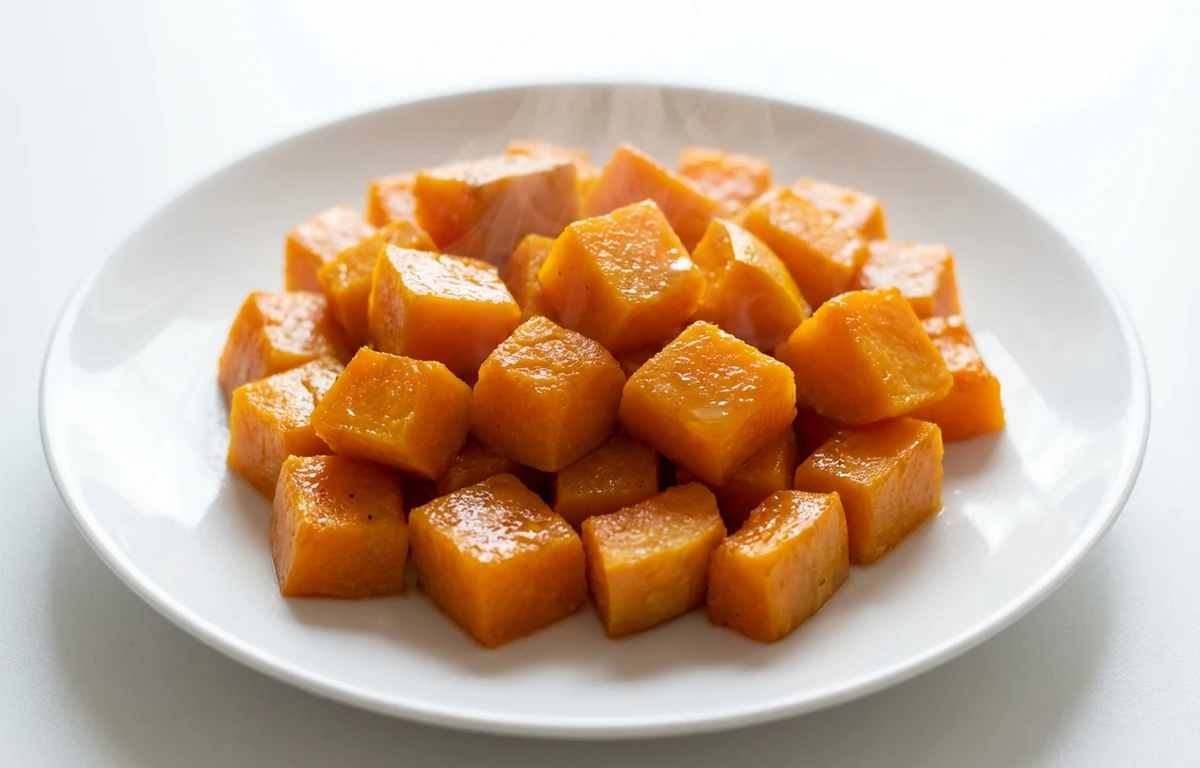
boiled unsalted frozen butternut squash.
VegetarianVeganGluten-freeDairy-freeNut-freePeanut-freeSoy-freeEgg-freeShellfish-freeHoney-freeAlcohol-free
SERVING
CALORIES
40
PROTEIN
0.90g
CARBS
10.5g
FAT
0.10g
FIBER
2.0g
NUTRITION PROFILE · per 100 g
Everything in this ingredient.
MACRONUTRIENTS
Calories40kcal—
Protein0.90g2%
Carbohydrates10.5g4%
Fiber2.0g7%
Sugar2.0g4%
Total fat0.10g0%
Saturated fat0.02g0%
Trans fat0g—
Cholesterol0mg0%
Water87.5g—
MINERALS
Sodium4.0mg0%
Potassium284mg6%
Calcium33mg3%
Iron0.60mg3%
Magnesium24mg6%
Phosphorus21mg2%
Zinc0.13mg1%
Copper0.05mg6%
Manganese0.16mg7%
Selenium0.50µg1%
VITAMINS
Vitamin A532µg59%
Vitamin C11mg12%
Vitamin D0µg0%
Vitamin E1.1mg7%
Vitamin K1.1µg1%
Thiamin (B1)0.05mg4%
Riboflavin (B2)0.02mg2%
Niacin (B3)0.90mg6%
Pantothenic acid (B5)0.30mg6%
Vitamin B60.13mg8%
Folate (B9)19µg5%
Vitamin B120µg0%
%DV based on a 2,000 cal diet. Source: USDA FoodData Central. A dash in the %DV column means there’s no established Daily Value for that nutrient.
MEASUREMENT CONVERSIONS
How much is what.
1 cup240g
1 tablespoon15g
1 teaspoon5g
1 ml1g
1 liter1000g
HEALTH BENEFITS
Why eat it.
- ✓Rich in Vitamin A (from beta-carotene), essential for vision health and immune function.
- ✓Good source of Vitamin C, an antioxidant that supports skin health and helps protect cells from damage.
- ✓High in dietary fiber, which aids digestion, promotes feelings of fullness, and helps regulate blood sugar levels.
- ✓Contains important minerals like potassium and magnesium, which support heart health and blood pressure regulation.
COOKING TIPS
In the kitchen.
- 1For a silky smooth soup or puree, blend the thawed squash with broth or a creamy liquid like coconut milk until the desired consistency is reached.
- 2Drain the thawed squash thoroughly to remove excess water before adding to recipes like casseroles or baked goods to prevent a watery result.
- 3Since it is unsalted, it's a versatile base. Enhance its flavor with savory herbs like sage and thyme, or sweet spices like cinnamon and nutmeg.
- 4To add depth of flavor, toss the thawed, boiled squash with olive oil and roast at 400°F (200°C) until the edges begin to caramelize.
STORAGE
Keep it fresh.
- Keep frozen in an airtight container or its original packaging at 0°F (-18°C) or below for up to 12 months.
- Once thawed, store in an airtight container in the refrigerator and consume within 3 to 4 days.
FAQ
Frequently asked questions.
Is boiled unsalted frozen butternut squash healthy?
Yes, it is highly nutritious and low in calories. It is an excellent source of Vitamin A for vision health, Vitamin C for immune support, and dietary fiber which aids in digestion and heart health.
How many calories and carbs are in a 100g serving?
A 100g serving contains approximately 40 calories and 10.5g of carbohydrates. It is very low in fat (0.1g) and provides about 0.9g of protein, making it a light yet nutrient-dense side dish.
Is this squash good for weight loss?
Yes, it is an ideal food for weight management. Its high fiber content promotes a feeling of fullness, while its low calorie density allows you to eat a satisfying volume of food without consuming excessive calories.
Is boiled butternut squash keto-friendly?
With 10.5g of carbs per 100g, it is considered a moderate-carb vegetable. While it can be included in a keto diet in small portions, those on a strict ketogenic protocol should monitor their intake compared to lower-carb options like leafy greens.
Is this ingredient vegan and gluten-free?
Yes, boiled unsalted butternut squash is naturally vegan and gluten-free. As a plain vegetable with no added seasonings or preservatives, it is safe for individuals with celiac disease or those following a plant-based diet.
How do you prepare frozen boiled butternut squash?
Since it is already boiled, you only need to reheat it. You can microwave it for 2-3 minutes, steam it briefly, or sauté it in a pan with a little olive oil or spices until it is warmed through.
What does boiled butternut squash taste like?
It has a mild, sweet, and slightly nutty flavor, similar to a cross between a sweet potato and a pumpkin. Because this version is unsalted, its natural sweetness is the most prominent characteristic.
How long does frozen butternut squash last in the freezer?
When stored in an airtight container or a vacuum-sealed bag, it can last for 8 to 12 months. For the best flavor and texture, it is recommended to consume it within 6 months of freezing.
Can I use this squash in smoothies or baking?
Yes, it is very versatile. Because it is already soft from boiling, it blends easily into smoothies for a creamy texture or can be mashed and used as a healthy substitute for oil or butter in muffins and breads.
How do I know if the frozen squash has gone bad?
Check for signs of freezer burn, such as dry white patches or ice crystals, which can affect the taste. If the squash has a sour smell or a slimy texture once thawed, it should be discarded.



















