
Vegetable
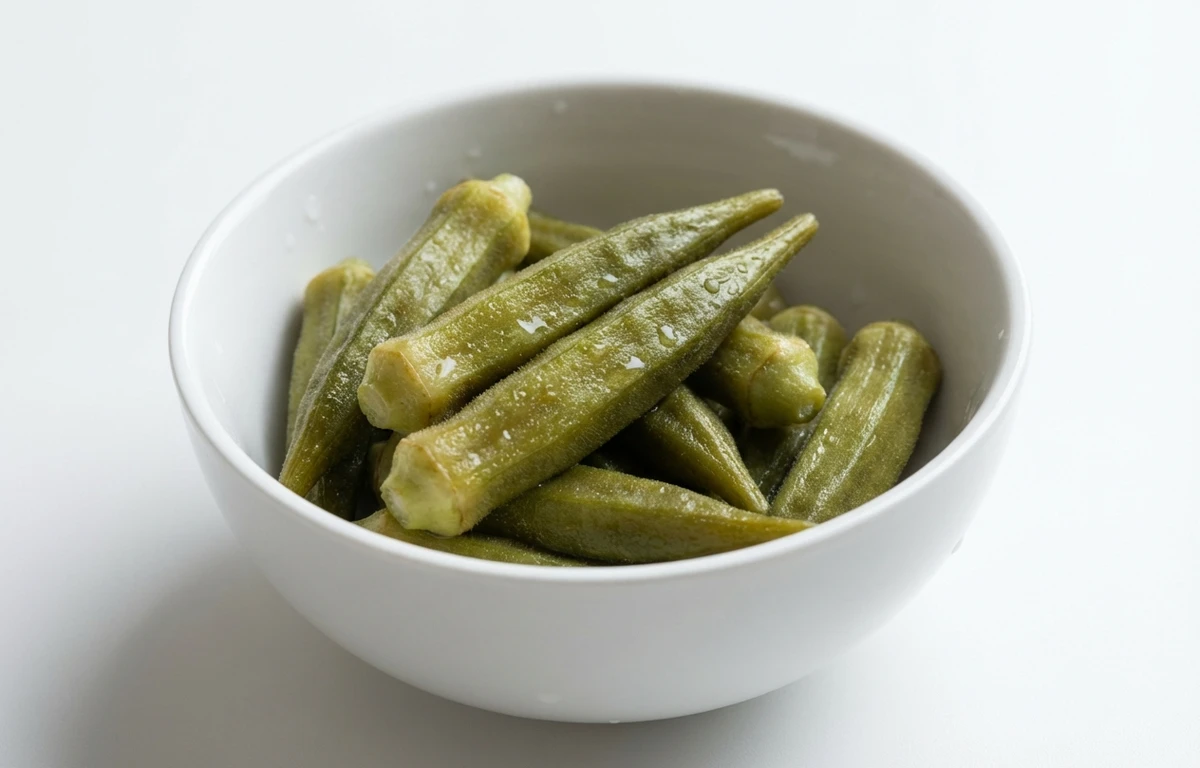
boiled unsalted frozen okra.
VegetarianVeganGluten-freeDairy-freeNut-freePeanut-freeSoy-freeEgg-freeShellfish-freeHoney-freeAlcohol-free
ALSO KNOWN AS
ladyfinger
SERVING
CALORIES
29
PROTEIN
1.6g
CARBS
6.4g
FAT
0.24g
FIBER
2.1g
NUTRITION PROFILE · per 100 g
Everything in this ingredient.
MACRONUTRIENTS
Calories29kcal—
Protein1.6g3%
Carbohydrates6.4g2%
Fiber2.1g8%
Sugar2.9g6%
Total fat0.24g0%
Saturated fat0.06g0%
Trans fat0g—
Cholesterol0mg0%
Water91.1g—
MINERALS
Sodium3.0mg0%
Potassium184mg4%
Calcium74mg6%
Iron0.52mg3%
Magnesium40mg10%
Phosphorus37mg3%
Zinc0.49mg4%
Copper0.08mg9%
Manganese0.84mg37%
Selenium0.60µg1%
VITAMINS
Vitamin A15µg2%
Vitamin C9.6mg11%
Vitamin D0µg0%
Vitamin E0.32mg2%
Vitamin K47.8µg40%
Thiamin (B1)0.07mg6%
Riboflavin (B2)0.10mg8%
Niacin (B3)0.62mg4%
Pantothenic acid (B5)0.21mg4%
Vitamin B60.04mg2%
Folate (B9)100µg25%
Vitamin B120µg0%
%DV based on a 2,000 cal diet. Source: USDA FoodData Central. A dash in the %DV column means there’s no established Daily Value for that nutrient.
MEASUREMENT CONVERSIONS
How much is what.
1 cup92g
1 tablespoon5.8g
1 teaspoon1.9g
1 ml0.4g
1 liter383.3g
HEALTH BENEFITS
Why eat it.
- ✓Rich in soluble fiber (mucilage), which aids in digestion, promotes gut health, and can help stabilize blood sugar levels.
- ✓Good source of Vitamin K, essential for blood clotting and bone health, and Vitamin C, an antioxidant that supports the immune system.
- ✓Contains antioxidants like polyphenols and flavonoids, which help protect the body against damage from harmful free radicals.
- ✓Low in calories and fat, making it a suitable food for weight management diets.
COOKING TIPS
In the kitchen.
- 1Add directly from frozen to soups, gumbos, or stews, where its natural mucilage will act as a thickener.
- 2To minimize the slimy texture, cook with acidic ingredients like tomatoes, lemon juice, or vinegar.
- 3After thawing, it can be quickly sautéed with spices, garlic, and onions for a simple side dish.
- 4Mash the boiled okra with olive oil, garlic, and a pinch of salt for a simple and nutritious purée.
STORAGE
Keep it fresh.
- Store in an airtight container or heavy-duty freezer bag in the freezer at 0°F (-18°C) or below for up to 12 months.
- Once thawed, keep refrigerated and consume within 1-2 days. Do not refreeze thawed okra as it will result in a mushy texture.
FAQ
Frequently asked questions.
Is boiled unsalted frozen okra healthy?
Yes, it is highly nutritious and low in calories. It is a great source of Vitamin K for bone health, Vitamin C for immune support, and soluble fiber which aids in digestion and heart health.
How many calories and carbs are in boiled unsalted frozen okra?
A 100g serving contains approximately 29 calories and 6.41g of carbohydrates. This low-calorie profile makes it an excellent choice for weight management and volume eating.
Is boiled unsalted frozen okra keto-friendly?
Yes, it is considered keto-friendly. With only about 6.41g of total carbs per 100g and a significant portion of that being fiber, it has a low net carb count that fits well into a ketogenic lifestyle.
Can diabetics eat boiled unsalted frozen okra?
Okra is often recommended for diabetics because its high soluble fiber content (mucilage) can help slow down sugar absorption in the digestive tract, leading to more stable blood sugar levels.
Is this ingredient vegan and gluten-free?
Yes, boiled unsalted frozen okra is a single-ingredient plant food. It is naturally vegan, vegetarian, and gluten-free, making it safe for those with celiac disease or gluten sensitivities.
What does boiled okra taste like?
It has a mild, slightly earthy, and grassy flavor. The texture is soft and can be somewhat 'slimy' due to the natural mucilage, which many people use as a thickener for soups and stews.
How do I prepare boiled unsalted frozen okra?
Since it is already boiled, you can simply steam or microwave it to heat it through. It is best used by adding it directly to liquid-based dishes like gumbos, stews, or curries during the last few minutes of cooking.
Can I roast or fry frozen okra that has already been boiled?
While you can pan-sear it, it will not become as crispy as fresh or raw frozen okra because the boiling process has already softened the cell walls. It is better suited for moist-heat cooking methods.
How long does frozen okra last in the freezer?
When stored in an airtight container or freezer bag, it can last for 8 to 12 months. For the best quality and to avoid freezer burn, try to consume it within 6 months.
How do I know if frozen okra has gone bad?
Check for signs of freezer burn, such as large ice crystals or a shriveled, dry appearance. If the okra has a sour smell after thawing or shows signs of mold or dark discoloration, it should be discarded.



















