
Vegetable
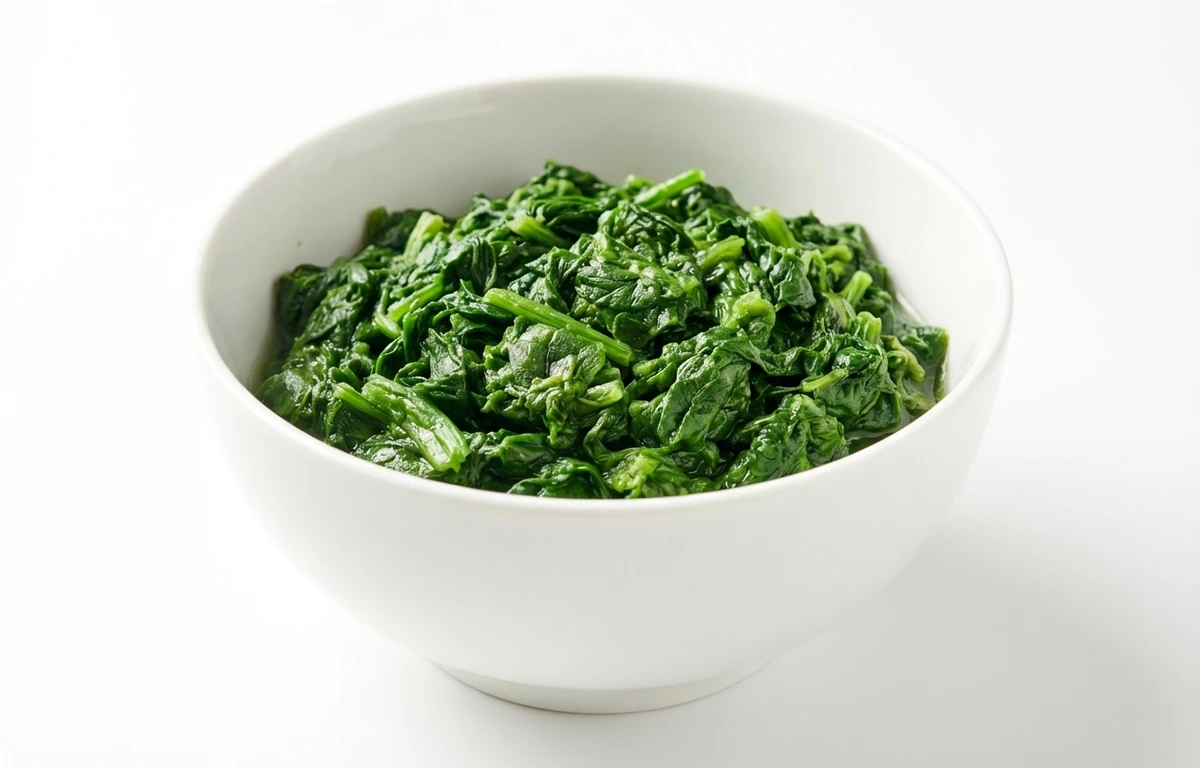
boiled unsalted frozen spinach.
VegetarianVeganGluten-freeDairy-freeNut-freePeanut-freeSoy-freeEgg-freeShellfish-freeHoney-freeAlcohol-free
ALSO KNOWN AS
cooked spinachpalakblanched spinachfrozen spinach (boiled)drained spinach
SERVING
CALORIES
30
PROTEIN
3.0g
CARBS
3.8g
FAT
0.30g
FIBER
2.4g
NUTRITION PROFILE · per 100 g
Everything in this ingredient.
MACRONUTRIENTS
Calories29.9kcal—
Protein3.0g6%
Carbohydrates3.8g1%
Fiber2.4g9%
Sugar0.40g1%
Total fat0.30g0%
Saturated fat0.05g0%
Trans fat0g—
Cholesterol0mg0%
Water91.2g—
MINERALS
Sodium70mg3%
Potassium466mg10%
Calcium136mg10%
Iron3.6mg20%
Magnesium87mg21%
Phosphorus45mg4%
Zinc0.53mg5%
Copper0.13mg14%
Manganese0.90mg39%
Selenium1.5µg3%
VITAMINS
Vitamin A524µg58%
Vitamin C9.8mg11%
Vitamin D0µg0%
Vitamin E2.1mg14%
Vitamin K494µg412%
Thiamin (B1)0.08mg7%
Riboflavin (B2)0.19mg15%
Niacin (B3)0.50mg3%
Pantothenic acid (B5)0.06mg1%
Vitamin B60.20mg12%
Folate (B9)146µg37%
Vitamin B120µg0%
%DV based on a 2,000 cal diet. Source: USDA FoodData Central. A dash in the %DV column means there’s no established Daily Value for that nutrient.
MEASUREMENT CONVERSIONS
How much is what.
1 cup185g
1 tablespoon12g
1 teaspoon4g
1 oz28.4g
1 lb453.6g
1 ml1.3g
1 liter1300g
HEALTH BENEFITS
Why eat it.
- ✓Excellent source of Vitamin K for bone health
- ✓High in iron which supports oxygen transport in blood
- ✓Contains lutein and zeaxanthin for eye health
- ✓Rich in antioxidants that reduce oxidative stress
- ✓Good source of folate for cellular function
COOKING TIPS
In the kitchen.
- 1Squeeze out excess water thoroughly before adding to dips or fillings
- 2Add to soups or stews at the very end to maintain color and nutrients
- 3Season with lemon juice or vinegar to help the body absorb the plant-based iron
STORAGE
Keep it fresh.
- Store in an airtight container in the refrigerator for 3-5 days
- Can be refrozen if it was thawed in the fridge, though texture may degrade
- Keep tightly sealed to prevent the absorption of other fridge odors
FAQ
Frequently asked questions.
How long does boiled frozen spinach last in the fridge?
Once boiled and drained, it should be consumed within 3 to 5 days when stored in an airtight container.
Do I need to squeeze the water out?
Yes, for most recipes like quiches, dips, or pasta fillings, you must squeeze the spinach dry to prevent the dish from becoming watery.
Is frozen spinach as healthy as fresh?
Yes, frozen spinach is often flash-frozen at peak ripeness, preserving most of its vitamins and minerals, sometimes even more than fresh spinach that has traveled long distances.
What can I use as a substitute?
Cooked kale, Swiss chard, or beet greens are the best substitutes for boiled spinach.
How do I pick the best frozen spinach?
Look for bags where the contents feel loose; if it's one solid block, it may have thawed and refrozen.
Why is the cup weight so much higher than fresh spinach?
Cooking causes spinach to wilt and lose volume significantly. One cup of cooked spinach contains much more leaf matter than one cup of raw leaves.
Can I use this in smoothies?
Yes, boiled and cooled frozen spinach is excellent for smoothies as it blends more easily than raw fibrous stems.
Does it contain a lot of sodium?
Naturally, spinach has some sodium (about 70mg per 100g), but as long as no salt was added during the boiling process, it is considered a low-sodium food.



















