
Vegetable
boiled unsalted lotus root.
VegetarianVeganGluten-freeDairy-freeNut-freePeanut-freeSoy-freeEgg-freeShellfish-freeHoney-freeAlcohol-free
ALSO KNOWN AS
boiled kamal kakdiboiled nadruboiled renkoncooked lotus rootboiled nelumbo nuciferaboiled bhen
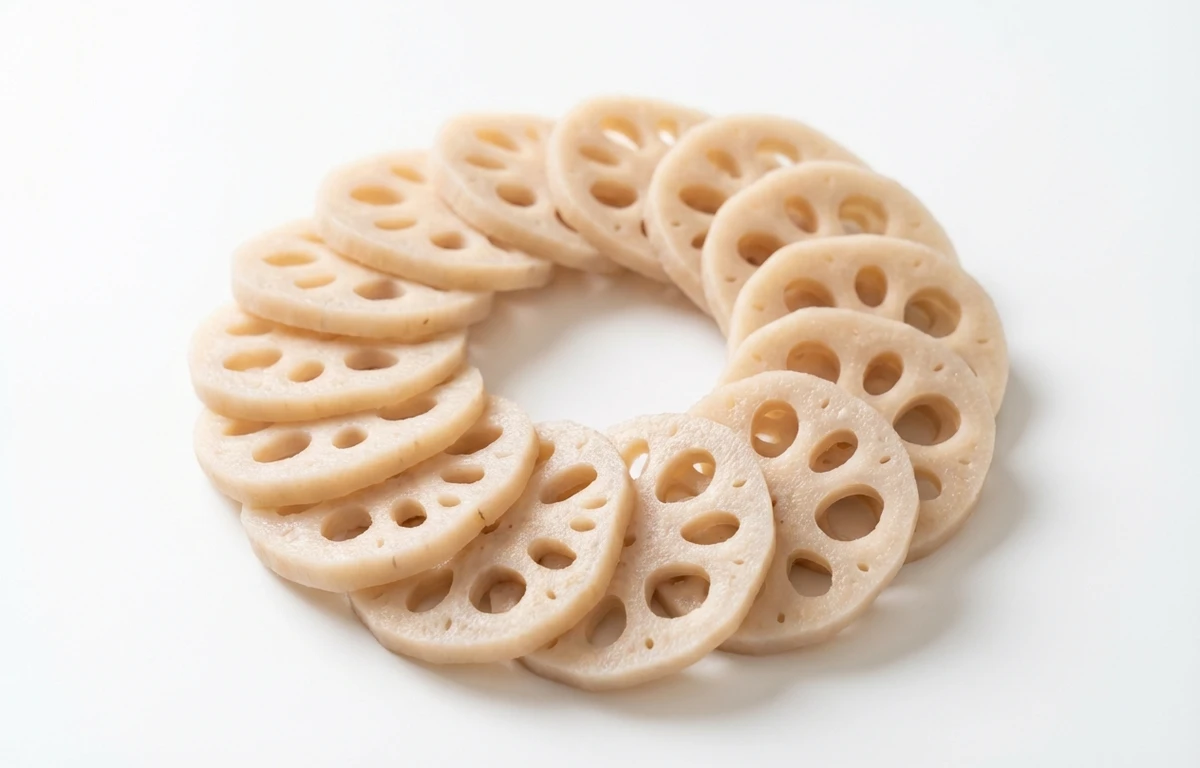
SERVING
CALORIES
66
PROTEIN
1.6g
CARBS
16g
FAT
0.10g
FIBER
3.1g
NUTRITION PROFILE · per 100 g
Everything in this ingredient.
MACRONUTRIENTS
Calories66kcal—
Protein1.6g3%
Carbohydrates16g6%
Fiber3.1g11%
Sugar0.50g1%
Total fat0.10g0%
Saturated fat0.02g0%
Trans fat0g—
Cholesterol0mg0%
Water81.4g—
MINERALS
Sodium40mg2%
Potassium363mg8%
Calcium26mg2%
Iron0.90mg5%
Magnesium22mg5%
Phosphorus78mg6%
Zinc0.33mg3%
Copper0.21mg23%
Manganese0.22mg10%
Selenium0.60µg1%
VITAMINS
Vitamin A0µg0%
Vitamin C27.4mg30%
Vitamin D0µg0%
Vitamin E0mg0%
Vitamin K0.10µg0%
Thiamin (B1)0.13mg11%
Riboflavin (B2)0.01mg1%
Niacin (B3)0.30mg2%
Pantothenic acid (B5)0.55mg11%
Vitamin B60.22mg13%
Folate (B9)8.0µg2%
Vitamin B120µg0%
%DV based on a 2,000 cal diet. Source: USDA FoodData Central. A dash in the %DV column means there’s no established Daily Value for that nutrient.
MEASUREMENT CONVERSIONS
How much is what.
1 cup130g
1 tablespoon10g
1 teaspoon3g
1 oz28.4g
1 lb453.6g
1 ml1g
1 liter1000g
1 piece150g
HEALTH BENEFITS
Why eat it.
- ✓High in dietary fiber which aids digestive health and prevents constipation
- ✓Excellent source of Vitamin C to boost immunity and skin health
- ✓Contains potassium which helps regulate blood pressure and heart function
- ✓Low in calories and fat, making it ideal for weight management
- ✓Provides complex carbohydrates for sustained energy release
COOKING TIPS
In the kitchen.
- 1Add a splash of vinegar to the boiling water to prevent the lotus root from turning brown
- 2Do not overcook if you want to maintain its signature crunchy texture
- 3Peel the outer skin thoroughly before boiling to remove any bitterness
STORAGE
Keep it fresh.
- Store boiled lotus root in an airtight container with a little water in the refrigerator
- Consume within 3 to 5 days for best texture and flavor
- Can be frozen for up to 3 months if stored in a vacuum-sealed bag
FAQ
Frequently asked questions.
How long does boiled lotus root last in the fridge?
When stored in an airtight container, it typically lasts for 3 to 5 days.
Can I freeze boiled lotus root?
Yes, you can freeze it. It is best to freeze it in a single layer first and then transfer to a freezer bag to prevent sticking.
What is a good substitute for lotus root?
Jicama or water chestnuts are the best substitutes as they provide a similar crunchy texture.
Is lotus root considered a root vegetable?
Technically it is a rhizome (an underwater stem), but in culinary and dietary contexts like Jainism, it is treated as a root vegetable.
Does boiling lotus root remove its nutrients?
Some water-soluble vitamins like Vitamin C may decrease, but it remains a high-fiber, nutrient-dense food.
How do I pick a good lotus root before boiling?
Look for roots that are heavy, firm, and light brown with no soft spots or deep bruising.
What does boiled lotus root taste like?
It has a very mild, slightly sweet flavor and a unique crunchy texture similar to a raw potato or water chestnut.
Do I need to peel it before boiling?
Yes, the skin is tough and can be bitter; it is best to peel it with a vegetable peeler before cooking.
Is boiled lotus root keto-friendly?
It is relatively high in carbohydrates (16g per 100g) compared to leafy greens, so it should be consumed in moderation on a strict keto diet.
Common dishes using boiled lotus root?
It is frequently used in Asian soups, stir-fries, salads (like Kinpira Renkon), and Indian curries (Kamal Kakdi Sabzi).



















