
Vegetable
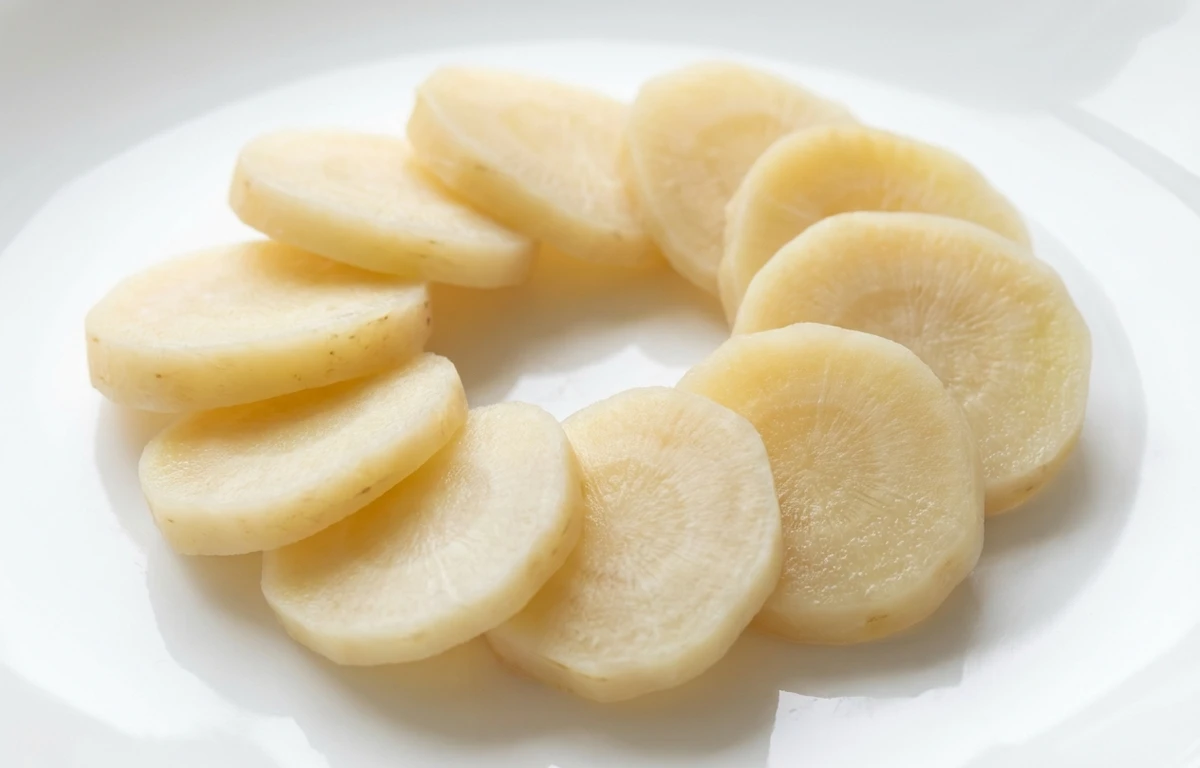
boiled unsalted parsnip.
VegetarianVeganGluten-freeDairy-freeNut-freePeanut-freeSoy-freeEgg-freeShellfish-freeHoney-freeAlcohol-free
ALSO KNOWN AS
cooked unsalted parsnipboiled unsalted white carrot
SERVING
CALORIES
71
PROTEIN
1.3g
CARBS
17g
FAT
0.30g
FIBER
4.7g
NUTRITION PROFILE · per 100 g
Everything in this ingredient.
MACRONUTRIENTS
Calories71kcal—
Protein1.3g3%
Carbohydrates17g6%
Fiber4.7g17%
Sugar4.5g9%
Total fat0.30g0%
Saturated fat0.05g0%
Trans fat0g—
Cholesterol0mg0%
Water80g—
MINERALS
Sodium10mg0%
Potassium367mg8%
Calcium37mg3%
Iron0.60mg3%
Magnesium29mg7%
Phosphorus69mg6%
Zinc0.50mg5%
Copper0.10mg11%
Manganese0.50mg22%
Selenium0.70µg1%
VITAMINS
Vitamin A0µg0%
Vitamin C13.3mg15%
Vitamin D0µg0%
Vitamin E1.5mg10%
Vitamin K22.3µg19%
Thiamin (B1)0.08mg7%
Riboflavin (B2)0.05mg4%
Niacin (B3)0.70mg4%
Pantothenic acid (B5)0.60mg12%
Vitamin B60.10mg6%
Folate (B9)58µg14%
Vitamin B120µg0%
%DV based on a 2,000 cal diet. Source: USDA FoodData Central. A dash in the %DV column means there’s no established Daily Value for that nutrient.
MEASUREMENT CONVERSIONS
How much is what.
1 cup156g
1 oz28.4g
1 lb453.6g
1 piece120g
HEALTH BENEFITS
Why eat it.
- ✓High in dietary fiber which aids digestive health
- ✓Rich in Vitamin C and E to support the immune system
- ✓Good source of folate (B9) essential for cell division
- ✓Contains potassium which helps maintain healthy blood pressure
- ✓Low in calories and fat-free, making it heart-healthy
COOKING TIPS
In the kitchen.
- 1Avoid overboiling to prevent the parsnips from becoming too mushy or losing flavor
- 2Boil with the skin on to retain more nutrients, then peel easily after cooking
- 3Add a splash of lemon juice to the boiling water to prevent the parsnips from discoloring
STORAGE
Keep it fresh.
- Store boiled parsnips in an airtight container in the refrigerator for up to 3-5 days
- Can be frozen for up to 10 months; for best results, mash or slice before freezing
- Keep away from strong-smelling foods as they can absorb odors
FAQ
Frequently asked questions.
How long do boiled parsnips last in the fridge?
Boiled parsnips will stay fresh for 3 to 5 days when stored in a sealed airtight container in the refrigerator.
Can you freeze boiled parsnips?
Yes, you can freeze them. It is best to freeze them in a single layer on a tray first or as a puree to maintain texture.
What is a good substitute for boiled parsnips?
Carrots are the closest substitute in texture and sweetness. Parsley roots or celery roots (celeriac) also work well.
Do I need to peel parsnips before boiling?
You can peel them before boiling, but boiling them with the skin on helps retain nutrients; the skin can be easily rubbed off after cooking.
Are boiled parsnips healthy?
Yes, they are very healthy, providing significant amounts of fiber, Vitamin C, and potassium while being low in calories.
Why do my boiled parsnips taste woody?
Large, older parsnips often have a woody core. It is best to remove the central core of very large parsnips before or after boiling.
How do I know when boiled parsnips are done?
They are done when they are fork-tender, similar to a boiled potato, which usually takes 10-15 minutes depending on size.
Can I use boiled parsnips in a mash?
Absolutely. Boiled parsnips make an excellent sweet and nutty puree or can be mashed with potatoes for extra flavor.



















