
Vegetable
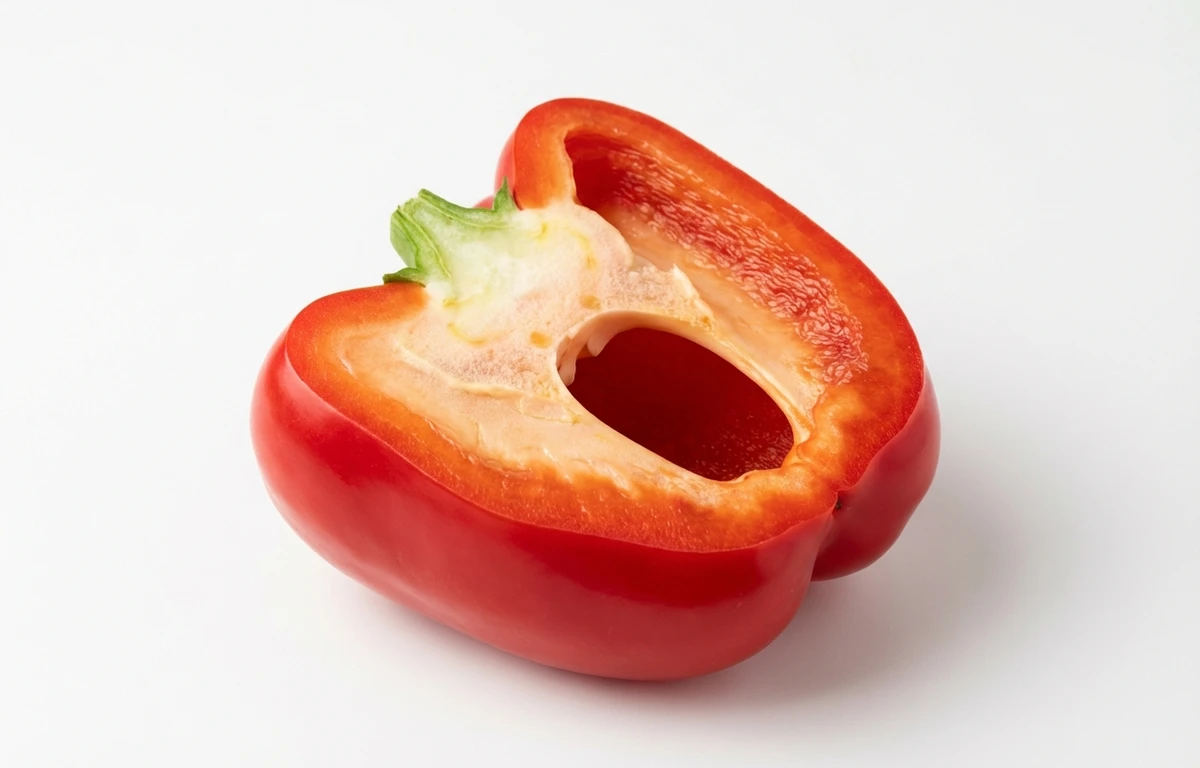
boiled unsalted red bell pepper.
VegetarianVeganGluten-freeDairy-freeNut-freePeanut-freeSoy-freeEgg-freeShellfish-freeHoney-freeAlcohol-free
ALSO KNOWN AS
boiled red capsicumboiled sweet pepperboiled red pepper
SERVING
CALORIES
28
PROTEIN
0.90g
CARBS
6.7g
FAT
0.20g
FIBER
1.4g
NUTRITION PROFILE · per 100 g
Everything in this ingredient.
MACRONUTRIENTS
Calories28kcal—
Protein0.90g2%
Carbohydrates6.7g2%
Fiber1.4g5%
Sugar4.4g9%
Total fat0.20g0%
Saturated fat0.03g0%
Trans fat0g—
Cholesterol0mg0%
Water91.5g—
MINERALS
Sodium2.0mg0%
Potassium163mg3%
Calcium7.0mg1%
Iron0.40mg2%
Magnesium10mg2%
Phosphorus20mg2%
Zinc0.13mg1%
Copper0.06mg7%
Manganese0.10mg4%
Selenium0.10µg0%
VITAMINS
Vitamin A157µg17%
Vitamin C121mg134%
Vitamin D0µg0%
Vitamin E1.6mg11%
Vitamin K4.9µg4%
Thiamin (B1)0.05mg4%
Riboflavin (B2)0.08mg6%
Niacin (B3)0.98mg6%
Pantothenic acid (B5)0.32mg6%
Vitamin B60.29mg17%
Folate (B9)18µg5%
Vitamin B120µg0%
%DV based on a 2,000 cal diet. Source: USDA FoodData Central. A dash in the %DV column means there’s no established Daily Value for that nutrient.
MEASUREMENT CONVERSIONS
How much is what.
1 cup135g
1 oz28.4g
1 lb453.6g
1 piece120g
HEALTH BENEFITS
Why eat it.
- ✓Exceptionally high in Vitamin C for immune support
- ✓Contains beta-carotene which supports eye health
- ✓Rich in antioxidants that help reduce inflammation
- ✓Low in calories and high in water content for hydration
- ✓Provides Vitamin B6 which is essential for brain health
COOKING TIPS
In the kitchen.
- 1Boil for only 3-5 minutes to maintain a slightly firm texture and preserve nutrients
- 2Remove seeds and white membranes before boiling for a sweeter flavor
- 3Use the leftover boiling water for vegetable stocks as it contains leached nutrients
STORAGE
Keep it fresh.
- Store in an airtight container in the refrigerator for up to 5 days
- Can be frozen for up to 6 months if drained and sealed properly
- Keep separate from raw vegetables to prevent cross-contamination
FAQ
Frequently asked questions.
How long does boiled red bell pepper last in the fridge?
When stored in an airtight container, it will stay fresh for 3 to 5 days.
Can I freeze boiled red bell peppers?
Yes, you can freeze them. Drain them well and store in a freezer-safe bag for up to 6 months.
Does boiling remove the nutrients from red peppers?
Boiling causes some Vitamin C and B vitamins to leach into the water, but they remain a very healthy, nutrient-dense choice.
What is a good substitute for boiled red bell pepper?
Boiled yellow or orange bell peppers are the best substitutes as they have a similar sweetness and texture.
How do I pick the best red pepper for boiling?
Choose peppers that are firm, heavy for their size, and have a bright, shiny skin without soft spots.
Should I peel the skin after boiling?
It is not necessary, but if the skin becomes loose, you can easily slip it off for a smoother texture in purees.
Is boiled red bell pepper good for weight loss?
Yes, it is very low in calories and fat while providing fiber and essential vitamins.
What dishes can I use boiled red bell peppers in?
They are excellent in pasta sauces, pureed into soups, added to salads, or served as a simple side dish.



















