
Vegetable
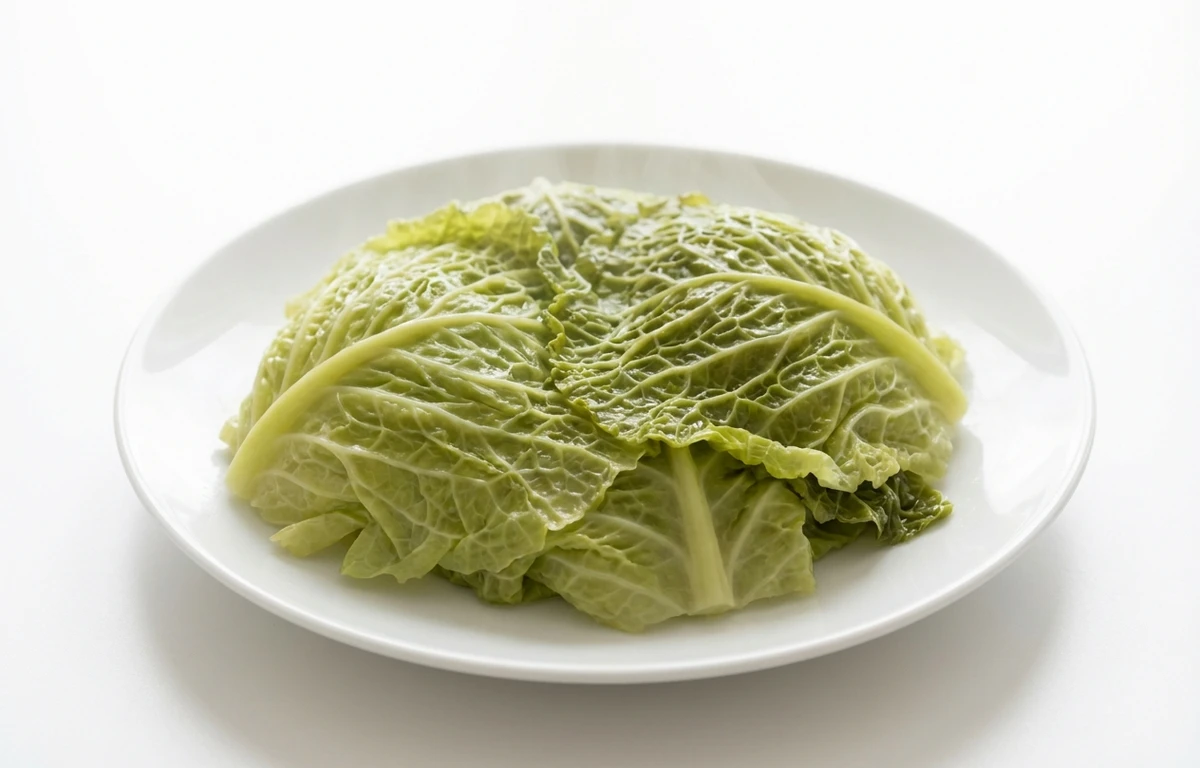
boiled unsalted savoy cabbage.
VegetarianVeganGluten-freeDairy-freeNut-freePeanut-freeSoy-freeEgg-freeShellfish-freeHoney-freeAlcohol-freeHalalKosher
SERVING
CALORIES
27
PROTEIN
1.5g
CARBS
6.1g
FAT
0.10g
FIBER
2.5g
NUTRITION PROFILE · per 100 g
Everything in this ingredient.
MACRONUTRIENTS
Calories27kcal—
Protein1.5g3%
Carbohydrates6.1g2%
Fiber2.5g9%
Sugar2.3g5%
Total fat0.10g0%
Saturated fat0.02g0%
Trans fat0g—
Cholesterol0mg0%
Water91.2g—
MINERALS
Sodium20mg1%
Potassium180mg4%
Calcium35mg3%
Iron0.40mg2%
Magnesium15mg4%
Phosphorus28mg2%
Zinc0.20mg2%
Copper0.02mg2%
Manganese0.15mg7%
Selenium0.70µg1%
VITAMINS
Vitamin A50µg6%
Vitamin C15mg17%
Vitamin D0µg0%
Vitamin E0.10mg1%
Vitamin K68µg57%
Thiamin (B1)0.05mg4%
Riboflavin (B2)0.03mg2%
Niacin (B3)0.30mg2%
Pantothenic acid (B5)0.15mg3%
Vitamin B60.15mg9%
Folate (B9)60µg15%
Vitamin B120µg0%
%DV based on a 2,000 cal diet. Source: USDA FoodData Central. A dash in the %DV column means there’s no established Daily Value for that nutrient.
MEASUREMENT CONVERSIONS
How much is what.
1 cup145g
1 tablespoon9.1g
1 teaspoon3g
1 ml0.6g
1 liter604.2g
HEALTH BENEFITS
Why eat it.
- ✓Excellent source of Vitamin K, which is crucial for blood clotting and bone health.
- ✓Rich in Vitamin C, an antioxidant that supports the immune system and collagen production.
- ✓Provides dietary fiber, aiding in digestive health and promoting a feeling of fullness.
- ✓Contains glucosinolates, compounds studied for their potential anti-cancer properties.
COOKING TIPS
In the kitchen.
- 1To preserve nutrients and a pleasant texture, boil savoy cabbage until just tender, typically for 5-10 minutes.
- 2After boiling, toss with butter, olive oil, fresh herbs like dill or parsley, and a squeeze of lemon to enhance its flavor.
- 3Use boiled savoy cabbage as a simple side dish, or incorporate it into soups, stews, or casseroles.
- 4For a classic dish, mash the boiled cabbage with potatoes to make colcannon.
STORAGE
Keep it fresh.
- Store leftover boiled cabbage in an airtight container in the refrigerator for up to 3-4 days.
- To prevent sogginess, ensure the cabbage is well-drained before storing.
FAQ
Frequently asked questions.
Is boiled savoy cabbage healthy?
Yes, boiled savoy cabbage is highly nutritious. It is an excellent source of Vitamin K for bone health and Vitamin C for immune support, while also providing dietary fiber and cancer-fighting glucosinolates.
How many calories and carbs are in boiled savoy cabbage?
A 100g serving of boiled unsalted savoy cabbage contains approximately 27 calories and 6.1g of carbohydrates. It is also very low in fat, containing only 0.1g per serving.
Is boiled savoy cabbage good for weight loss?
Absolutely. With only 27 calories per 100g and a high fiber content, it helps promote a feeling of fullness and satiety, making it an ideal low-calorie volume food for weight management.
Is boiled savoy cabbage keto-friendly?
Yes, it is keto-friendly. With 6.1g of total carbs per 100g, it can easily fit into a low-carb or ketogenic diet, especially when paired with healthy fats.
Is this ingredient suitable for a low-sodium diet?
Yes, boiled unsalted savoy cabbage is ideal for low-sodium diets. Since no salt is added during the cooking process, it is a heart-healthy choice that helps manage blood pressure.
What does boiled savoy cabbage taste like?
Savoy cabbage has a milder, sweeter flavor compared to standard green cabbage. When boiled, it becomes tender and earthy, with a more delicate texture than other cabbage varieties.
How do you boil savoy cabbage properly?
Shred or cut the cabbage into wedges and place in boiling water for 3 to 5 minutes until tender but still slightly crisp. Avoid overcooking to prevent it from becoming mushy or developing a strong sulfur-like odor.
How long does boiled savoy cabbage last in the fridge?
Once cooked, boiled savoy cabbage should be stored in an airtight container in the refrigerator. It will typically stay fresh and safe to eat for 3 to 5 days.
Can you freeze boiled savoy cabbage?
Yes, you can freeze it. Drain the cabbage thoroughly and store it in a freezer-safe bag or container for up to 10-12 months, though the texture may become softer upon thawing.
Does boiling savoy cabbage remove its nutrients?
Some water-soluble vitamins, like Vitamin C, can leach into the cooking water during boiling. To minimize nutrient loss, use a small amount of water or boil for the shortest time possible until just tender.



















