
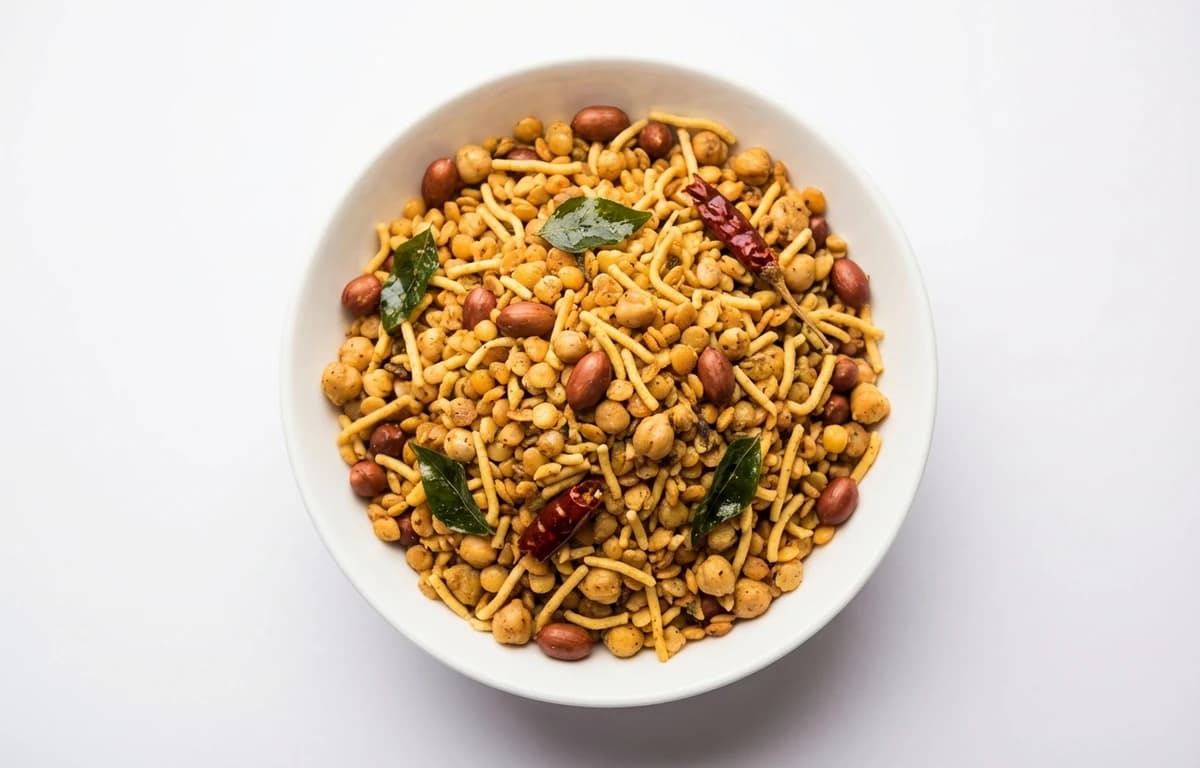
bombay mix
Also known as: Chanachur, Chevdo, Indian Mixture, Madras Mix, Punjabi Mix, Namkeen Mixture
Loading...
Also known as: Chanachur, Chevdo, Indian Mixture, Madras Mix, Punjabi Mix, Namkeen Mixture
Per 100g
Nutrition data source: USDA FoodData Central
Common measurement equivalents in grams
When stored in an airtight container in a cool, dry place, it typically lasts for 2-3 months. Check the 'best before' date on commercial packs.
It is not recommended to freeze Bombay Mix as the moisture from thawing will make the fried components soggy and ruin the texture.
Generally no. While the base is chickpea flour, many commercial varieties include wheat flour or are processed in facilities that handle wheat.
It usually contains fried chickpea flour noodles (sev), peanuts, fried lentils, chickpeas, and a variety of spices like turmeric and chili.
It originated in the Indian subcontinent and was popularized in the UK under this name, referring to the city of Mumbai (formerly Bombay).
It is high in calories, fats, and sodium. While it offers protein and fiber, it should be consumed in moderation as a treat.
Bhujia, Sev, or a spicy trail mix can serve as good alternatives depending on the desired spice level.
Yes, most traditional and commercial versions contain peanuts and sometimes cashews or other tree nuts.
It will develop a stale or rancid smell due to the oil content oxidizing, and the texture will lose its crunch.
bombay mix is a versatile ingredient found in cuisines around the world. With 525 calories per 100g and 14.2 grams of protein, it's a nutritious addition to many dishes.
Explore more ingredients in the other category with complete nutrition information.
View all other →Usually no, as most commercial mixes contain garlic powder or onion powder, and some may contain ginger.