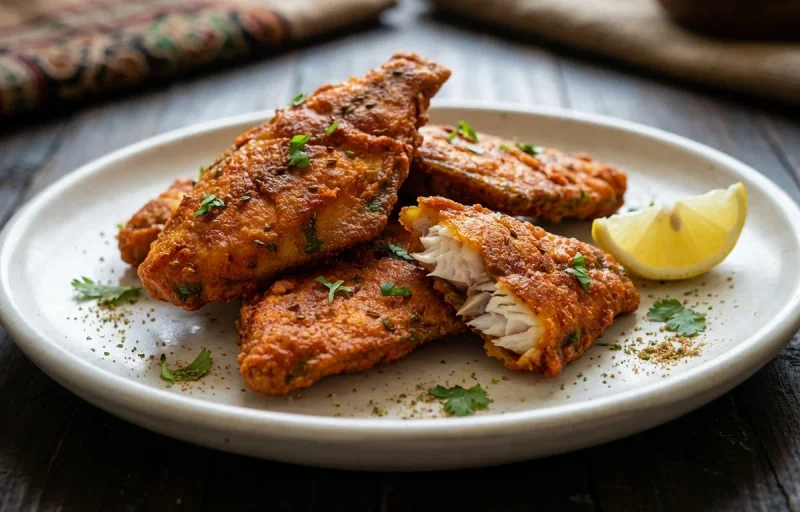
Protein10 recipes
boneless fish.
VegetarianVeganGluten-freeDairy-freeNut-freePeanut-freeSoy-freeEgg-freeShellfish-freeHoney-freeAlcohol-free
ALSO KNOWN AS
fish filletboneless fish fillet

SERVING
CALORIES
105
PROTEIN
20g
CARBS
0g
FAT
2.5g
FIBER
0g
NUTRITION PROFILE · per 100 g
Everything in this ingredient.
MACRONUTRIENTS
Calories105kcal—
Protein20g40%
Carbohydrates0g0%
Fiber0g0%
Sugar0g0%
Total fat2.5g3%
Saturated fat0.60g3%
Trans fat0g—
Cholesterol55mg18%
Water76.5g—
MINERALS
Sodium70mg3%
Potassium350mg7%
Calcium15mg1%
Iron0.50mg3%
Magnesium30mg7%
Phosphorus210mg17%
Zinc0.40mg4%
Copper0.05mg6%
Manganese0.02mg1%
Selenium32µg58%
VITAMINS
Vitamin A15µg2%
Vitamin C0mg0%
Vitamin D2.0µg10%
Vitamin E0.80mg5%
Vitamin K0.10µg0%
Thiamin (B1)0.06mg5%
Riboflavin (B2)0.07mg5%
Niacin (B3)3.5mg22%
Pantothenic acid (B5)0.75mg15%
Vitamin B60.30mg18%
Folate (B9)5.0µg1%
Vitamin B121.5µg63%
%DV based on a 2,000 cal diet. Source: USDA FoodData Central. A dash in the %DV column means there’s no established Daily Value for that nutrient.
MEASUREMENT CONVERSIONS
How much is what.
1 cup225g
1 oz28.4g
1 lb453.6g
1 piece170g
HEALTH BENEFITS
Why eat it.
- ✓High-quality lean protein source for muscle repair
- ✓Rich in Omega-3 fatty acids which support heart health
- ✓Excellent source of Vitamin B12 for nerve function
- ✓Contains Selenium, a powerful antioxidant
- ✓Low in calories and saturated fat compared to red meat
COOKING TIPS
In the kitchen.
- 1Pat the fish completely dry with paper towels before cooking to ensure a good sear
- 2Season with salt and pepper just before cooking to prevent moisture loss
- 3Cook until the internal temperature reaches 145°F (63°C) or until the flesh is opaque and flakes easily
STORAGE
Keep it fresh.
- Store in the coldest part of the refrigerator for 1-2 days maximum
- Keep in original vacuum-sealed packaging or wrap tightly in plastic wrap
- Freeze in airtight bags for up to 6 months for best quality
FAQ
Frequently asked questions.
How long does raw boneless fish last in the fridge?
Raw fish is highly perishable and should be cooked or frozen within 1 to 2 days of purchase.
Can I freeze boneless fish?
Yes, boneless fish freezes very well. Wrap it tightly to prevent freezer burn and it will stay good for 3-6 months.
How can I tell if the fish is fresh?
Fresh fish should have a mild, sea-like scent, not a 'fishy' or ammonia smell. The flesh should be firm to the touch and spring back when pressed.
What are the best substitutes for boneless fish?
Depending on the recipe, you can use chicken breast, tofu, or even cauliflower steaks for a vegetarian alternative.
Do I need to wash boneless fish before cooking?
No, washing fish is not recommended as it can spread bacteria around your kitchen. Cooking to the proper temperature will kill any bacteria.
Are there still bones in 'boneless' fish?
While processors try to remove all bones, small 'pin bones' can sometimes remain. It is always best to run your finger along the fillet to check before cooking.
What is the healthiest way to cook boneless fish?
Baking, steaming, poaching, or grilling are the healthiest methods as they require minimal added fats.
How should I thaw frozen boneless fish?
The safest way is to thaw it overnight in the refrigerator. For faster thawing, place the sealed fish in a bowl of cold water, changing the water every 30 minutes.
How do I prevent fish from sticking to the pan?
Ensure the pan and oil are hot before adding the fish, and do not try to flip it until it naturally releases from the surface.
Is boneless fish high in mercury?
It depends on the species. Smaller fish like tilapia and cod are generally low in mercury, while larger predatory fish like swordfish or tuna have higher levels.
RECIPES
Cook with boneless fish.
10 recipes · sorted by what’s quick