
Protein1 recipes
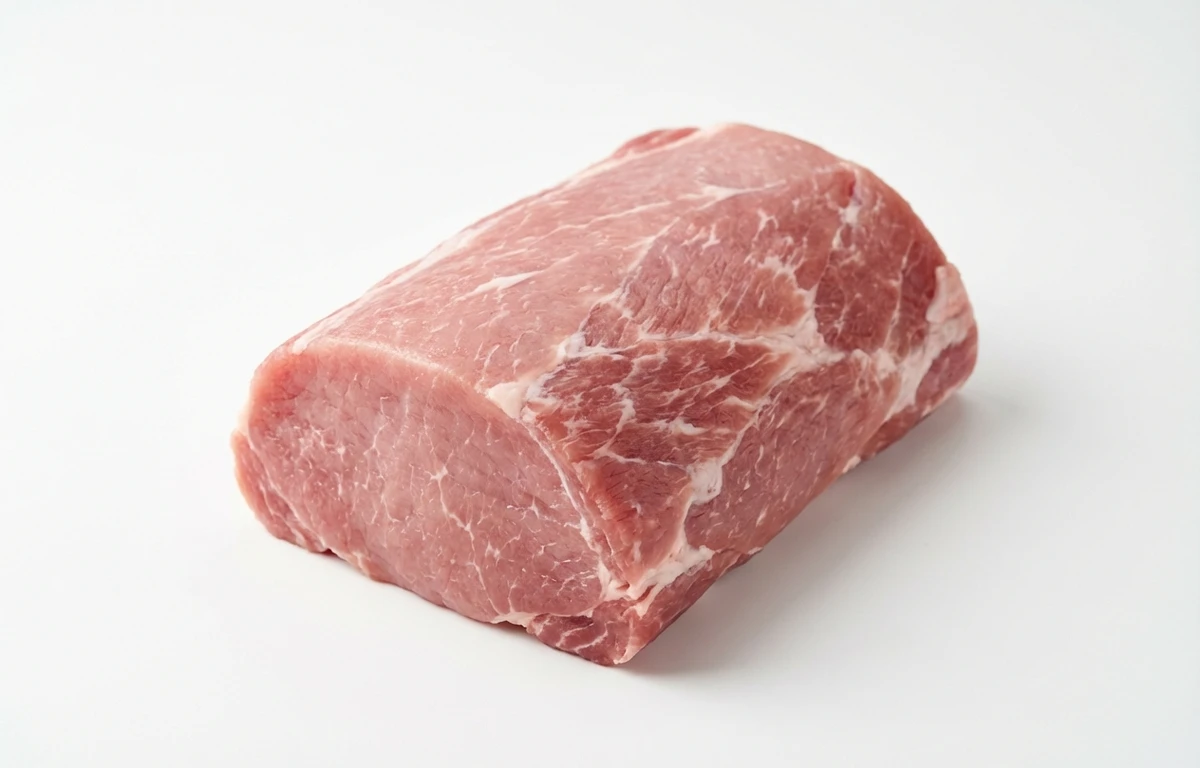
boneless pork loin roast.
VegetarianVeganGluten-freeDairy-freeNut-freePeanut-freeSoy-freeEgg-freeShellfish-freeHoney-freeAlcohol-freeHalalKosher
ALSO KNOWN AS
pork loin roastpork center loin roastpork center cut roastboneless pork loin roastpork loin center cut roast
SERVING
CALORIES
152
PROTEIN
22.5g
CARBS
0g
FAT
6.2g
FIBER
0g
NUTRITION PROFILE · per 100 g
Everything in this ingredient.
MACRONUTRIENTS
Calories152kcal—
Protein22.5g45%
Carbohydrates0g0%
Fiber0g0%
Sugar0g0%
Total fat6.2g8%
Saturated fat2.1g11%
Trans fat0g—
Cholesterol58mg19%
Water70.5g—
MINERALS
Sodium48mg2%
Potassium358mg8%
Calcium6.0mg0%
Iron0.70mg4%
Magnesium24mg6%
Phosphorus210mg17%
Zinc1.9mg17%
Copper0.06mg7%
Manganese0.01mg0%
Selenium31.1µg57%
VITAMINS
Vitamin A0µg0%
Vitamin C0mg0%
Vitamin D0.50µg3%
Vitamin E0.20mg1%
Vitamin K0µg0%
Thiamin (B1)0.81mg68%
Riboflavin (B2)0.31mg24%
Niacin (B3)5.1mg32%
Pantothenic acid (B5)0.65mg13%
Vitamin B60.48mg28%
Folate (B9)4.0µg1%
Vitamin B120.60µg25%
%DV based on a 2,000 cal diet. Source: USDA FoodData Central. A dash in the %DV column means there’s no established Daily Value for that nutrient.
MEASUREMENT CONVERSIONS
How much is what.
1 cup150g
1 oz28.4g
1 lb453.6g
1 piece120g
HEALTH BENEFITS
Why eat it.
- ✓Excellent source of high-quality complete protein, essential for muscle building, maintenance, and repair.
- ✓Rich in B vitamins, particularly thiamine (B1), niacin (B3), and vitamin B6, which are crucial for energy metabolism and nervous system function.
- ✓Provides key minerals like selenium, a powerful antioxidant that protects cells from damage, and zinc, which supports immune function and wound healing.
- ✓As a leaner cut of pork, it offers a favorable protein-to-fat ratio when visible fat is trimmed, supporting lean body mass.
COOKING TIPS
In the kitchen.
- 1To ensure a juicy result, sear the roast on all sides in a hot, oiled pan before transferring it to the oven. This creates a flavorful crust.
- 2Cook to a safe internal temperature of 145°F (63°C), measured with a meat thermometer inserted into the thickest part. Allow the roast to rest for at least 3-5 minutes before slicing to allow juices to redistribute.
- 3Brining the pork loin in a saltwater solution for a few hours before cooking can significantly enhance its moisture and flavor.
- 4Season generously with salt, pepper, garlic powder, and herbs like rosemary, thyme, or sage to complement its mild flavor.
STORAGE
Keep it fresh.
- Refrigerate raw pork loin at or below 40°F (4°C) in its original packaging for 3-5 days. If the package is opened, re-wrap it tightly in plastic wrap or place it in an airtight container.
- For long-term storage, wrap the roast tightly in plastic wrap and then heavy-duty aluminum foil or place it in a freezer bag, and freeze at 0°F (-18°C) for up to 6 months for best quality.
- Store cooked pork loin in an airtight container in the refrigerator and consume within 3-4 days.
FAQ
Frequently asked questions.
Is boneless pork loin roast healthy?
Yes, boneless pork loin roast is a lean and nutrient-dense protein source. It is rich in B vitamins, selenium, and zinc, and provides high-quality protein for muscle maintenance while being lower in fat than many other cuts of pork.
How much protein is in a boneless pork loin roast?
A 100g serving of boneless pork loin roast contains approximately 22.5g of protein. This makes it an excellent source of complete protein, providing all the essential amino acids your body needs.
Is boneless pork loin roast good for weight loss?
Yes, it can be a great addition to a weight loss diet due to its high protein-to-calorie ratio (152 calories per 100g). The high protein content helps promote satiety, keeping you full for longer periods.
Is boneless pork loin roast keto-friendly?
Absolutely. With 0g of carbohydrates and a solid protein and fat profile, it is an ideal food for ketogenic and other low-carb diets.
Is boneless pork loin roast gluten-free?
In its raw, natural state, boneless pork loin roast is 100% gluten-free. However, if you are buying pre-marinated or seasoned roasts, check the label for gluten-containing additives like soy sauce or certain thickeners.
How do you cook a boneless pork loin roast without drying it out?
To keep it juicy, sear the outside in a pan first, then roast it in the oven at 325°F (165°C) until it reaches the safe internal temperature. Avoid overcooking, as this lean cut lacks the fat needed to stay moist if cooked too long.
What is the safe internal temperature for pork loin?
The USDA recommends cooking pork loin to an internal temperature of 145°F (63°C), followed by a three-minute rest. This results in a safe, tender, and slightly pink center.
How long can I store a raw pork loin roast in the fridge?
Raw boneless pork loin roast can be stored in the refrigerator for 3 to 5 days. For the best quality, keep it in its original vacuum-sealed packaging or wrap it tightly to prevent exposure to air.
Can I freeze a boneless pork loin roast?
Yes, you can freeze it for 4 to 12 months. For best results, use vacuum sealing or heavy-duty freezer wrap to prevent freezer burn, and thaw it slowly in the refrigerator before cooking.
What is the difference between pork loin and pork tenderloin?
Pork loin is a large, wide cut that is often roasted whole, while pork tenderloin is a much smaller, thinner, and more tender muscle. They are not interchangeable in recipes because their size and required cooking times are very different.
RECIPES
Cook with boneless pork loin roast.
1 recipes · sorted by what’s quick



















