
Loading...
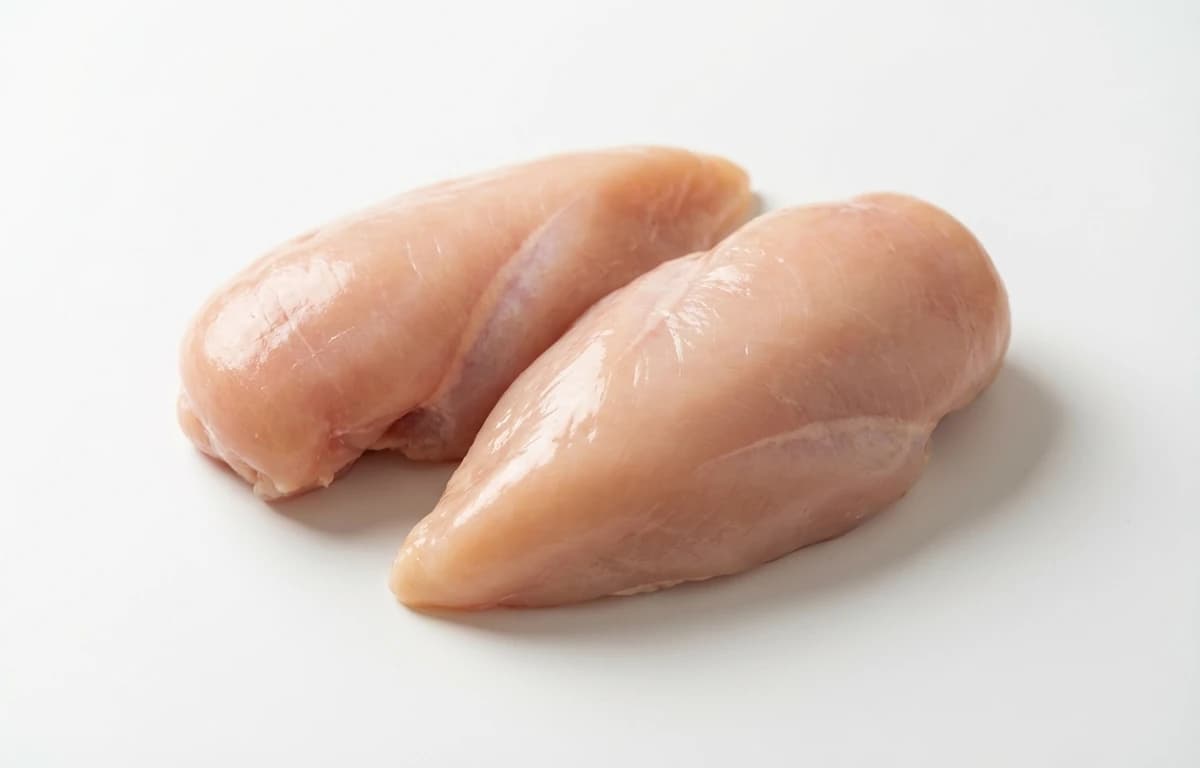
Also known as: skinless boneless chicken breast, boneless skinless chicken fillet
Per 100g
Nutrition data source: USDA FoodData Central
Common measurement equivalents in grams
Raw boneless, skinless chicken breasts should be used within 1 to 2 days of purchase if kept in the refrigerator.
Yes, but for long-term storage, it is better to wrap it in an extra layer of plastic wrap or foil to prevent freezer burn.
Check for a sour or ammonia-like smell, a slimy texture, or a greyish/greenish tint to the meat.
No, washing raw chicken can spread bacteria like Salmonella to your sink and kitchen surfaces. Cooking to the right temperature kills bacteria.
Chicken thighs are the best meat substitute; for plant-based options, use tofu, seitan, or soy-based 'chicken' strips.
Chicken breast is very lean and overcooks quickly. Use a meat thermometer to stop cooking exactly at 165°F (74°C).
Chicken breast is lower in calories and fat, making it 'healthier' for low-fat diets, though thighs contain more iron and zinc.
An average medium-sized boneless, skinless chicken breast (approx. 170g) contains about 200-210 calories.
boneless, skinless chicken breasts is a versatile ingredient found in cuisines around the world. With 120 calories per 100g and 23 grams of protein, it's a nutritious addition to many dishes.
Explore more ingredients in the protein category with complete nutrition information.
View all protein →Discover 10 recipes featuring boneless, skinless chicken breasts with step-by-step instructions.
Browse recipes →