
Protein2 recipes
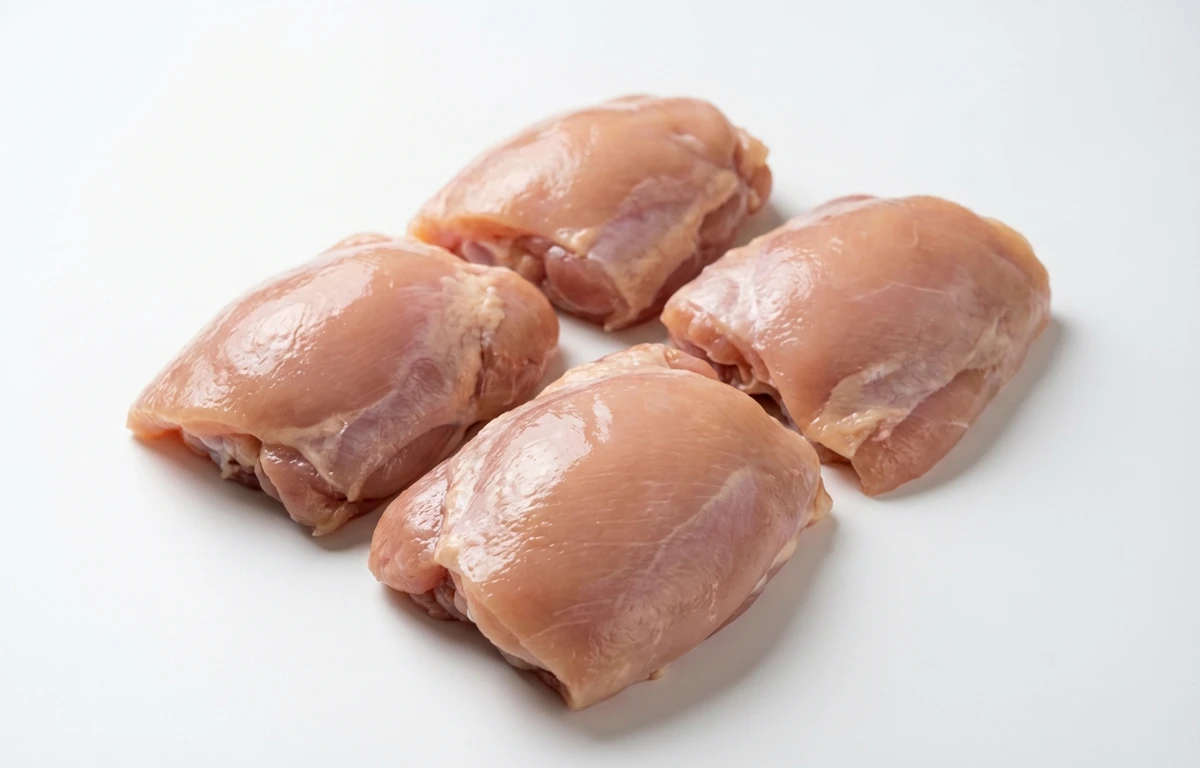
boneless skinless chicken thighs.
VegetarianVeganGluten-freeDairy-freeNut-freePeanut-freeSoy-freeEgg-freeShellfish-freeHoney-freeAlcohol-free
ALSO KNOWN AS
skinless chicken thighchicken thigh filletsskinless boneless chicken thighsboneless, skinless chicken thighs
SERVING
CALORIES
121
PROTEIN
19.7g
CARBS
0g
FAT
4.7g
FIBER
0g
NUTRITION PROFILE · per 100 g
Everything in this ingredient.
MACRONUTRIENTS
Calories121kcal—
Protein19.7g39%
Carbohydrates0g0%
Fiber0g0%
Sugar0g0%
Total fat4.7g6%
Saturated fat1.3g7%
Trans fat0g—
Cholesterol80mg27%
Water74.8g—
MINERALS
Sodium84mg4%
Potassium248mg5%
Calcium11mg1%
Iron1.1mg6%
Magnesium20mg5%
Phosphorus178mg14%
Zinc1.8mg16%
Copper0.06mg7%
Manganese0.01mg0%
Selenium20.1µg37%
VITAMINS
Vitamin A12µg1%
Vitamin C0mg0%
Vitamin D0.10µg1%
Vitamin E0.20mg1%
Vitamin K0.10µg0%
Thiamin (B1)0.06mg5%
Riboflavin (B2)0.18mg14%
Niacin (B3)5.1mg32%
Pantothenic acid (B5)1.2mg24%
Vitamin B60.35mg21%
Folate (B9)5.0µg1%
Vitamin B120.40µg17%
%DV based on a 2,000 cal diet. Source: USDA FoodData Central. A dash in the %DV column means there’s no established Daily Value for that nutrient.
MEASUREMENT CONVERSIONS
How much is what.
1 cup155g
1 tablespoon9.7g
1 teaspoon3.2g
1 oz28.4g
1 lb453.6g
1 ml0.6g
1 liter645.8g
1 piece115g
HEALTH BENEFITS
Why eat it.
- ✓Excellent source of high-quality complete protein, crucial for muscle growth, repair, and overall body function.
- ✓Rich in niacin (Vitamin B3) and pyridoxine (Vitamin B6), which support energy metabolism, brain function, and red blood cell formation.
- ✓Contains higher levels of zinc and iron compared to chicken breast, supporting immune function and preventing anemia.
- ✓Provides selenium, a powerful antioxidant that helps protect cells from damage and supports thyroid health.
COOKING TIPS
In the kitchen.
- 1Due to their higher fat content, chicken thighs are more flavorful and forgiving than breasts, remaining moist and tender when grilled, roasted, or pan-seared.
- 2For a perfect sear, pat the thighs completely dry with a paper towel before seasoning and placing them in a preheated, oiled pan.
- 3Chicken thighs are ideal for slow cooking, braising, or adding to stews and curries, as they become exceptionally tender over long cooking times.
- 4Always cook chicken thighs to a safe internal temperature of 165°F (74°C), measured with a meat thermometer in the thickest part.
STORAGE
Keep it fresh.
- Refrigerate raw chicken thighs immediately at 40°F (4°C) or below and use within 1-2 days. Store on the bottom shelf to prevent juices from contaminating other foods.
- For long-term storage, freeze at 0°F (-18°C) in an airtight container or freezer bag for up to 9 months for optimal quality.
- Thaw frozen chicken thighs safely in the refrigerator, in cold water, or in the microwave. Never thaw at room temperature.
FAQ
Frequently asked questions.
Are boneless skinless chicken thighs healthy?
Yes, they are a nutrient-dense source of high-quality complete protein, which is essential for muscle repair and immune function. They are rich in B vitamins, iron, and zinc, making them a healthy choice for most balanced diets.
How much protein and fat are in chicken thighs?
A 100g serving of boneless skinless chicken thighs contains approximately 19.7g of protein and 4.7g of fat. While slightly higher in fat than chicken breasts, they remain a relatively lean protein source with 121 calories per serving.
Are chicken thighs better for you than chicken breasts?
It depends on your goals; while breasts are lower in calories and fat, thighs contain higher levels of iron, zinc, and selenium. Thighs also provide more Vitamin B3 and B6, which are crucial for energy metabolism and brain health.
Are boneless skinless chicken thighs keto-friendly?
Yes, they are excellent for keto and low-carb diets as they contain 0g of carbohydrates. Their moderate fat content and high protein profile help maintain ketosis while providing essential micronutrients.
Are chicken thighs naturally gluten-free?
Raw, unseasoned chicken thighs are naturally 100% gluten-free. However, if you are buying pre-marinated or breaded thighs, always check the label for hidden gluten in thickeners, soy sauce, or coatings.
What is the best way to cook boneless skinless chicken thighs?
They are highly versatile and can be grilled, pan-seared, roasted, or air-fried. Because they have more fat than breasts, they stay juicy and flavorful even under high heat, making them harder to overcook.
How do I know when chicken thighs are fully cooked?
Chicken thighs are safe to eat when they reach an internal temperature of 165°F (74°C). Many chefs prefer cooking thighs to 175°F (79°C) as the extra heat helps break down connective tissue, resulting in a more tender texture.
Can I substitute chicken thighs for chicken breasts in recipes?
Yes, you can substitute them in almost any recipe. Thighs are more forgiving and less likely to dry out than breasts, though they may require a few extra minutes of cooking time due to their density.
How long do raw chicken thighs last in the refrigerator?
Raw chicken thighs should be stored in the coldest part of the fridge and used within 1 to 2 days of purchase. For longer storage, wrap them tightly in freezer-safe packaging and freeze for up to 9 months.
Why is the meat in chicken thighs darker than in the breast?
The darker color comes from a higher concentration of myoglobin, a protein that supplies oxygen to frequently used muscles. This higher myoglobin content is also why thighs contain more iron and zinc than white meat.
RECIPES
Cook with boneless skinless chicken thighs.
2 recipes · sorted by what’s quick



















